

You’ve noticed your feet are swollen, and you’re wondering whether it’s a temporary inconvenience or something more serious. Peripheral edema—the clinical term for foot swelling—stems from fluid accumulation in your lower extremities, triggered by everything from prolonged standing to heart failure. Before you dismiss it as harmless or panic unnecessarily, you need to understand the underlying mechanisms at work and recognize which symptoms demand urgent evaluation versus those you can address effectively at home.
Understanding Why Your Feet Swell: Common Triggers and Root Causes
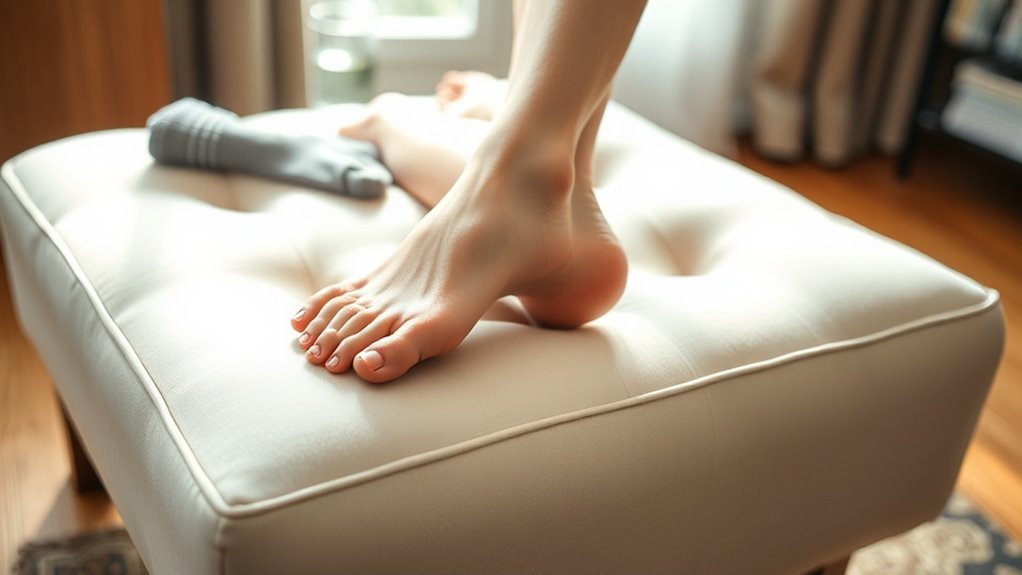
When fluid accumulates in your feet and ankles, it’s typically the result of increased hydrostatic pressure, impaired venous return, or compromised lymphatic drainage. Prolonged standing or sitting creates gravitational fluid pooling in lower extremities, while venous insufficiency prevents adequate blood return to your heart.
Obesity increases venous pressure, and excessive sodium intake triggers water retention through osmotic mechanisms. Pregnancy-related hormonal changes reduce circulation to lower limbs, with preeclampsia presenting as severe edema accompanied by hypertension and neurological symptoms.
Hot weather causes vasodilation and subsequent fluid extravasation into tissues. Localized inflammation from sprains, fractures, infections, or phlebitis produces targeted swelling. Lymphedema results from obstructed lymphatic drainage. Medical conditions such as heart problems, kidney disease, and blood clots can also contribute to fluid accumulation and swelling in the feet and ankles. Age-related decline in circulation further compromises the body’s ability to regulate fluid balance in the lower extremities, making older adults increasingly susceptible to persistent swelling.
Understanding these pathophysiological mechanisms helps identify appropriate swollen feet remedies, though persistent edema warrants clinical evaluation to exclude underlying cardiovascular, renal, or hepatic dysfunction.
Medical Conditions and Medications That Lead to Foot Swelling
Beyond environmental and lifestyle factors, numerous systemic medical conditions directly precipitate foot and ankle edema through distinct pathophysiological mechanisms. Congestive heart failure impairs venous return, causing dependent fluid accumulation. Chronic kidney disease and nephrotic syndrome disrupt fluid excretion and oncotic pressure, producing generalized edema. Hepatic cirrhosis reduces albumin synthesis, permitting plasma extravasation. Chronic venous insufficiency and post-thrombotic syndrome compromise venous valves, leading to stasis and progressive swelling.
| Condition Category | Primary Mechanism |
|---|---|
| Cardiac (CHF) | Reduced cardiac output, venous congestion |
| Renal (CKD, nephrotic syndrome) | Impaired sodium excretion, hypoalbuminemia |
| Hepatic (cirrhosis) | Decreased oncotic pressure, portal hypertension |
Medication-induced edema occurs frequently with calcium channel blockers, NSAIDs, corticosteroids, and certain antidepressants through sodium retention or altered capillary dynamics. Lymphedema, cellulitis, and inflammatory arthropathies represent additional etiologies requiring targeted diagnostic evaluation. Additionally, diabetes and arthritis can trigger lower extremity edema through various pathophysiological pathways that affect fluid regulation and circulation. Phlebitis, characterized by inflammation of veins, commonly presents with leg pain accompanied by localized swelling.
Warning Signs That Require Immediate Medical Attention
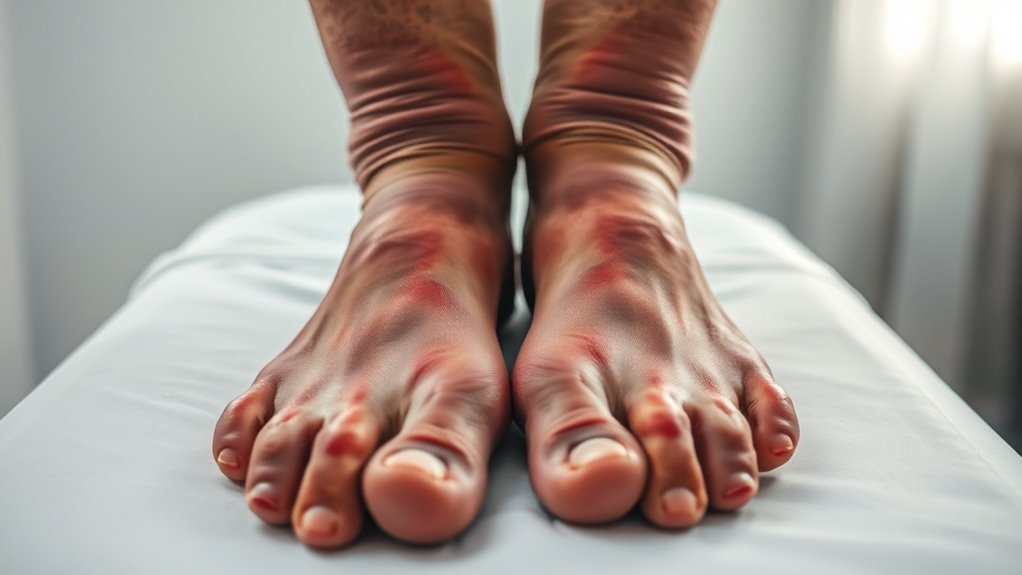
While most foot swelling resolves with conservative treatment, certain clinical presentations demand immediate evaluation to rule out life-threatening conditions.
You’ll need emergency medical attention if you experience sudden unilateral leg swelling, which may indicate deep vein thrombosis, or develop chest pain and dyspnea alongside pedal edema, suggesting acute cardiac decompensation.
Additionally, localized erythema, warmth, and fever accompanying swollen feet signal possible cellulitis or sepsis requiring urgent antimicrobial intervention. If you develop a fever above 103°F along with swollen feet, this warrants immediate medical evaluation as it may indicate a serious systemic infection.
If you’re coughing up blood along with experiencing swollen feet and breathing difficulties, call 999 immediately as this could indicate a pulmonary embolism.
Sudden Unilateral Swelling Signs
Sudden unilateral leg swelling demands immediate medical evaluation, particularly when accompanied by pain, warmth, and tenderness—a clinical triad suggesting deep vein thrombosis (DVT). Acute onset within 72 hours qualifies as a medical emergency requiring expedited assessment.
You’ll need urgent evaluation if you experience respiratory distress, chest pain, or tachycardia alongside leg swelling, as these indicate potential pulmonary embolism. Call 911 if you’re coughing blood or experiencing severe dyspnea.
Inflammatory skin changes—erythema, increased warmth extending from thigh to ankle, and fever—suggest cellulitis (3% prevalence). Contact your GP immediately for red, hot-to-touch swollen areas. Swelling without obvious trauma or injury warrants urgent attention, especially in diabetic patients.
Constitutional symptoms like fever, dizziness, or unexplained weight loss require prompt physician evaluation to exclude serious underlying pathology. Painful leg cramps that worsen during activity and resolve with rest may indicate peripheral artery disease, necessitating vascular assessment to prevent tissue damage.
Cardiac Emergency Red Flags
Cardiac-related pedal edema manifests with distinct symptom patterns that differentiate it from benign causes and require emergency intervention. You’ll recognize critical warning signs through chest pressure, squeezing sensations, or fullness lasting beyond several minutes—the predominant indicator in both sexes.
Pain radiating to your arms, neck, jaw, back, or shoulders signals myocardial compromise. Dyspnea occurring at rest or with minimal exertion, particularly without accompanying chest symptoms, indicates cardiac dysfunction. Sudden diaphoresis combined with lightheadedness or syncope represents hemodynamic instability.
Women more frequently present atypical manifestations: unexplained fatigue, nausea, or epigastric discomfort mimicking gastric pathology. Bilateral lower extremity edema accompanied by these symptoms necessitates immediate emergency department evaluation, as delayed intervention compromises outcomes in acute coronary syndromes and decompensated heart failure. If you experience any combination of these warning signs, call 911 immediately rather than attempting to drive yourself to the hospital, as emergency medical services can begin life-saving treatment en route.
Infection and Fever Symptoms
When pedal edema coexists with fever, you’re observing a constellation that demands systematic evaluation for infectious etiology requiring urgent intervention. Localized erythema, warmth, purulent drainage, or crepitus suggests cellulitis, abscess, or necrotizing fasciitis. Systemic manifestations—tachycardia, hypotension, altered mentation, or temperature ≥39.4°C—indicate sepsis warranting immediate resuscitation. Meningeal signs (nuchal rigidity, photophobia) or seizures necessitate CSF analysis. Oliguria, jaundice, or metabolic decompensation signals organ dysfunction requiring intensive monitoring.
| Category | Clinical Sign | Implication |
|---|---|---|
| Local Infection | Crepitus, foul odor | Necrotizing infection |
| Systemic Sepsis | Hypotension, confusion | Septic shock |
| Neurologic | Stiff neck, photophobia | Meningitis |
| Dermatologic | Purpuric rash | Meningococcemia/DIC |
| Renal | Oliguria, dark urine | Acute kidney injury |
Elevation Therapy: The Fastest Way to Reduce Swelling at Home
Elevation therapy exploits gravitational forces to reduce venous and lymphatic stagnation, making it one of the most rapid non-pharmacologic interventions for lower-extremity edema. To achieve maximal effect, you must position your feet above heart level—ideally with legs supported and knees extended—rather than simply propping them on a footstool at chair height.
The therapeutic benefit depends critically on both the elevation angle and the frequency of sessions throughout the day. For optimal results, maintain this elevated position for 20 minutes to promote gravitational drainage and effectively reduce fluid accumulation in the foot and ankle tissues.
Proper Elevation Technique Explained
Understanding the biomechanics of venous return forms the foundation for effective elevation therapy. Position your feet higher than your knees, and knees higher than your hips to create optimal gravitational drainage. Maintain a 40-degree thigh angle, 25-degree knee flexion, and 15-degree calf tilt—this configuration maximizes venous flow while preventing vascular compression.
Use pillows, cushions, or blankets under your legs from lower back to feet. Alternatively, position legs vertically against a wall for rapid blood return. Guarantee your support surface accommodates your full height when supine.
Enhance therapeutic efficacy by combining elevation with compression stockings and ice application (20 minutes maximum). Integrate periodic elevation intervals with ambulatory movement post-surgically to mitigate thrombotic risk. Wear loose clothing to prevent circulatory constriction during treatment sessions.
Optimal Duration and Frequency
Strategic timing transforms elevation therapy from a passive intervention into an evidence-based treatment protocol. You’ll need 15-20 minutes per session for fluid drainage, though 30-minute intervals maximize venous return and symptom resolution. Implement 3-4 daily sessions for active edema management, or 2-3 times daily for maintenance protocols.
Mild swelling typically resolves within 2-4 hours using repeated 15-20 minute elevations. If time constraints limit compliance, single daily sessions—morning or evening—provide baseline therapeutic benefit.
Complete decongestive therapy requires intensive scheduling: one-hour sessions 4-5 days weekly during phase I, combined with 23-hour compression between treatments.
Set timers to establish consistent 20-minute sessions during sedentary activities. Post-work 30-minute elevation prevents progressive fluid accumulation. Combine elevation with compression garments for sustained edema prevention between treatment intervals.
Compression Techniques and Proper Stocking Use for Lasting Relief
When ankle and lower-leg edema persists despite elevation and activity modification, graduated compression therapy becomes a cornerstone intervention to counteract venous hypertension and promote sustained fluid resorption. Select compression class based on severity: 15–20 mmHg for mild prophylaxis, 20–30 mmHg for moderate chronic venous insufficiency, and 30–40 mmHg for advanced post-thrombotic syndrome.
Measure ankle and calf circumference while seated to guarantee proper graduated pressure distribution from distal to proximal. Don stockings immediately upon rising before dependent edema accumulates, and remove at bedtime unless continuous wear is prescribed. Use donning aids—rubber gloves or stocking frames—to minimize skin shear during application.
Reassess fit every few weeks as limb volume decreases; stretched garments lose therapeutic efficacy. Avoid high compression if you’ve documented peripheral arterial disease; consult vascular assessment before escalating pressure grades. Complement compression therapy with ankle pump exercises performed regularly throughout the day to enhance venous return and maximize therapeutic benefits.
Epsom Salt Soaks, Cold Therapy, and Massage Methods That Work
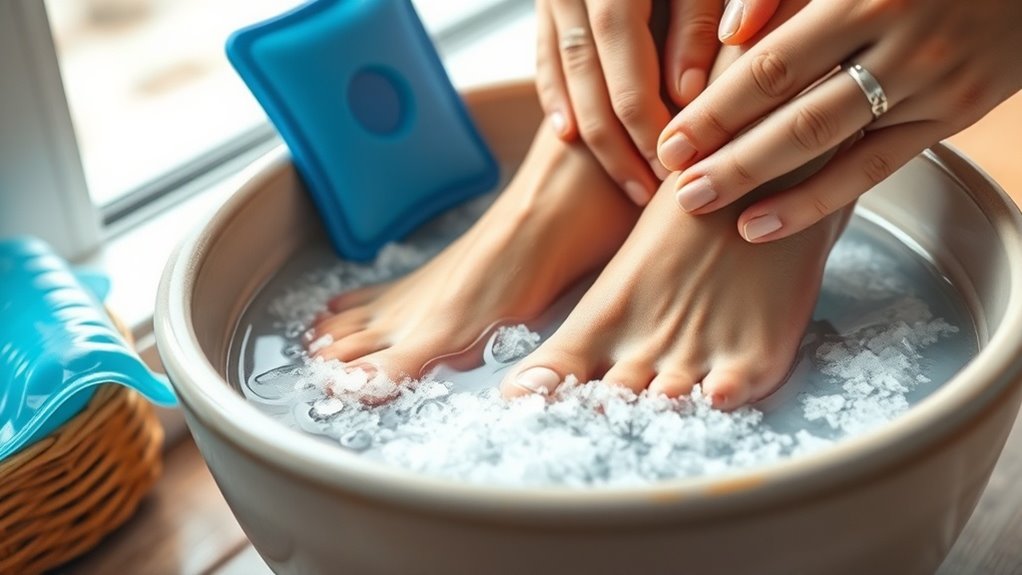
Beyond external compression devices, adjunctive home therapies—Epsom salt soaks, targeted cold application, and manual lymphatic techniques—address swelling through distinct physiologic pathways and warrant selection based on presentation acuity and underlying pathology.
Cold therapy constricts vessels and limits inflammatory mediator release; apply ice packs for 15–20 minutes every 1–2 hours during the first 24–72 hours post-injury, using a cloth barrier to prevent frostbite.
Epsom salt soaks may facilitate transdermal magnesium absorption and soft-tissue relaxation in chronic presentations:
- Dissolve ½–1 cup magnesium sulfate in warm water
- Soak feet for 10–20 minutes once daily or several times weekly
- Contraindicated in open wounds, vascular compromise, or diabetic neuropathy without clearance
Combine modalities with elevation and rest for ideal edema reduction.
Dietary Changes and Movement Strategies to Prevent Future Swelling
Sodium restriction remains the cornerstone dietary intervention for edema prophylaxis, as excess intake drives aquaporin-mediated water retention in interstitial compartments. You’ll need to limit consumption below 2,300mg daily, eliminating processed foods and table salt.
Substitute potassium-rich foods—bananas, sweet potatoes, avocados—which antagonize sodium’s osmotic effects through Na-K-ATPase pump modulation. Magnesium supplementation (310-420mg daily via almonds, spinach, legumes) addresses deficiency-induced fluid dysregulation.
Incorporate omega-3 fatty acids from fatty fish to mitigate inflammatory cytokine cascades contributing to vascular permeability. Natural diuretics including asparagus, celery, and cucumbers facilitate sodium excretion while maintaining hydration status. You’ll require 2-3 liters of water daily to optimize renal clearance.
Males over sixty demonstrate heightened susceptibility to sodium-induced lower extremity edema, warranting stricter dietary adherence.
References
- https://www.nhs.uk/conditions/oedema/
- https://www.advfootandankle.com/blog/diseases-that-can-cause-swollen-feet
- https://www.webmd.com/a-to-z-guides/swollen-ankles-and-feet
- https://texaseva.com/vein/diseases/swelling-and-lymphedema/why-feet-swell/
- https://medlineplus.gov/ency/article/003104.htm
- https://www.mayoclinic.org/diseases-conditions/edema/symptoms-causes/syc-20366493
- https://www.footsurgeon.com/faqs/what-is-causing-your-swollen-feet.cfm
- https://my.clevelandclinic.org/health/diseases/12564-edema
- https://www.mysoleperfection.com/blog/common-causes-of-swollen-feet-and-ankles-in-the-elderly
- https://www.medicalnewstoday.com/articles/323265