 By Sarah Jones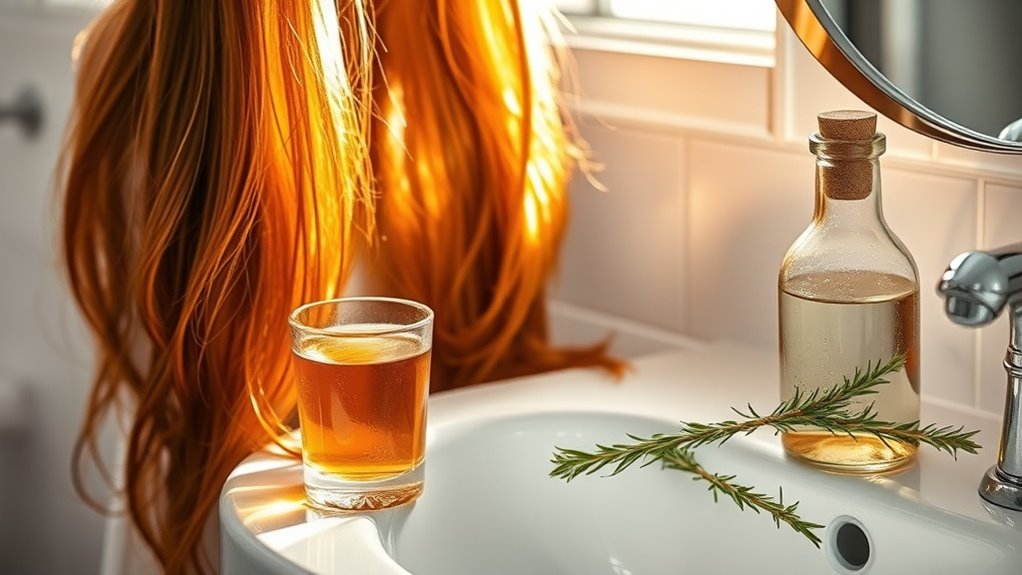
How to Use Apple Cider Vinegar for Shiny Hair in One Wash
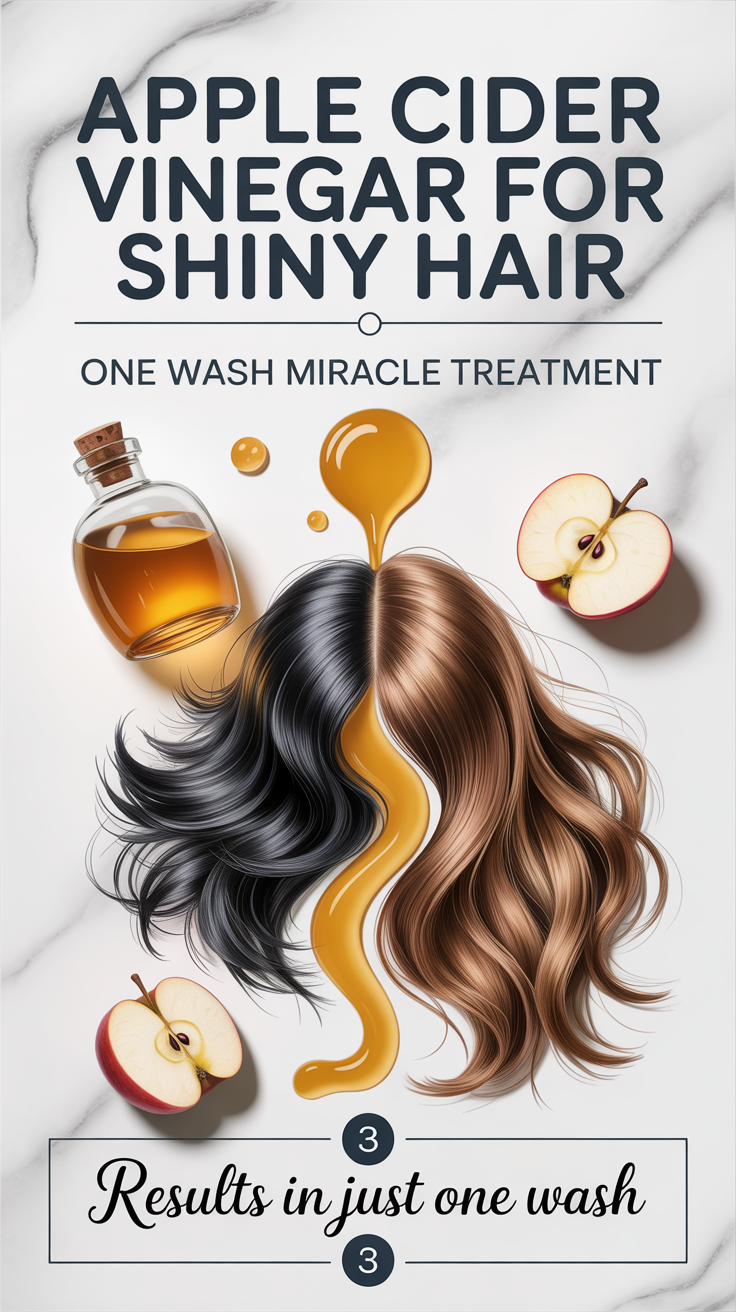
Your hair’s cuticle layer contains overlapping scales that, when raised above pH 4.5-5.5, create a rough surface that scatters light instead of reflecting it. You’ll find that apple cider vinegar‘s acetic acid content (typically 4-7%) effectively lowers your hair’s pH after alkaline shampoo exposure, smoothing these cuticles within minutes. However, improper dilution ratios or application techniques can damage your hair’s protein structure, so understanding the precise methodology becomes essential before you attempt this treatment.
What Makes Apple Cider Vinegar Effective for Hair Shine
Apple cider vinegar’s effectiveness for hair shine stems from its acidic pH level of 2.5-3.5, which closely aligns with hair’s natural pH range of 4.5-5.5. When you apply an apple cider vinegar hair rinse, the acetic acid smooths your hair cuticles by neutralizing alkaline residues from shampoos and styling products. This cuticle-smoothing action reduces surface friction and enhances light reflection, producing visible shine.
The vinegar’s alpha-hydroxy acids also dissolve mineral buildup and sebum accumulation without stripping essential moisture. You’ll achieve ideal results when you dilute the solution properly—undiluted application can cause cuticle damage and scalp irritation. The antimicrobial properties of ACV also combat scalp conditions like dandruff and bacterial growth that can interfere with optimal hair shine.
The Basic Apple Cider Vinegar Rinse Recipe and Application Method
To prepare an effective hair rinse, combine one to two tablespoons of raw, unfiltered apple cider vinegar with eight ounces of distilled or filtered water in a non-reactive container.
| Step | Action |
|---|---|
| 1 | Shampoo hair thoroughly, then rinse completely |
| 2 | Apply ACV mixture from roots to ends |
| 3 | Allow solution to penetrate for 2-3 minutes |
| 4 | Rinse with cool water until residue clears |
You’ll need a plastic or glass container—never metal, as vinegar’s acidity causes corrosion. Pour the diluted solution slowly over wet hair post-shampooing. Guarantee uniform distribution through all sections. Cool water seals cuticles ideally. The alpha-hydroxy acids in apple cider vinegar work to exfoliate dead skin cells from the scalp while stimulating healthy blood circulation to the hair follicles.
Honey-Infused Apple Cider Vinegar Treatment for Extra Moisture
Adding one teaspoon of raw honey to your standard apple cider vinegar rinse creates a humectant-rich treatment that binds moisture to the hair shaft while maintaining vinegar’s cuticle-smoothing properties.
Mix the honey thoroughly until completely dissolved before application to prevent uneven distribution. You’ll need to extend your contact time to three minutes, allowing the honey’s emollient compounds to penetrate effectively. Rinse with cool water until the mixture runs clear—incomplete removal causes residue buildup.
This modification particularly benefits chemically processed or heat-damaged hair requiring intensive hydration. Apply this treatment bi-weekly maximum to prevent protein-moisture imbalance. Raw honey contributes antimicrobial properties that help maintain scalp health while delivering deep conditioning benefits to damaged hair cuticles.
Herbal Apple Cider Vinegar Rinse With Rosemary and Lavender
When infused with dried rosemary and lavender, apple cider vinegar creates a botanically enhanced rinse that addresses scalp circulation and sebum regulation while delivering shine-enhancing properties. Steep one tablespoon each of dried rosemary and lavender in two cups of boiling water for 30 minutes. Strain thoroughly, then combine with two tablespoons of apple cider vinegar.
After shampooing, distribute the cooled rinse through your hair, focusing on mid-lengths to ends. Allow three minutes of contact time before rinsing with cool water. This formulation shouldn’t exceed 48-hour refrigerated storage to maintain botanical efficacy and prevent microbial contamination. Apple cider vinegar helps balance pH levels on both scalp and hair strands, creating optimal conditions for natural shine and manageability.
Ph-Balancing Apple Cider Vinegar Formula for All Hair Types
Your hair’s ideal pH range of 4.5-5.5 requires precise apple cider vinegar dilution to prevent cuticle damage and protein degradation. The standard formulation calls for 1-2 tablespoons of ACV per 8 ounces of distilled water, though you’ll adjust this ratio based on your hair’s porosity and current pH level.
Proper application technique—distributing the solution evenly from mid-shaft to ends while avoiding prolonged scalp contact—ensures balanced acid exposure without compromising your hair’s protective lipid layer. The antimicrobial properties of apple cider vinegar also help eliminate scalp microorganisms that contribute to dandruff and inflammation.
Understanding Ph Balance Basics
Because hair’s natural pH range falls between 4.5 and 5.5, maintaining this slightly acidic environment proves essential for preserving the cuticle’s structural integrity and preventing moisture loss. When you use alkaline products (pH 7+), you’ll cause cuticle layers to swell and lift, resulting in increased porosity and dullness.
Apple cider vinegar’s pH of 2.5-3.5 requires proper dilution to achieve ideal hair-safe levels. You’ll need to dilute one part vinegar with three to four parts water, creating a solution between pH 4-5 that effectively closes cuticles without causing acidic damage to your scalp or strands.
ACV Dilution Ratios
Although individual hair characteristics determine ideal concentration levels, standardized dilution protocols provide reliable starting formulations for achieving cuticle closure without scalp irritation. You’ll need precise measurements to maintain the perfect 3.0-4.0 pH range that promotes shine while preventing damage.
| Hair Type | ACV Amount | Water Amount |
|---|---|---|
| Fine/Thin | 1 tablespoon | 2 cups |
| Normal | 2 tablespoons | 2 cups |
| Thick/Coarse | 3 tablespoons | 2 cups |
| Color-Treated | 1 tablespoon | 3 cups |
Start with lower concentrations, gradually increasing if you don’t observe cuticle smoothing. Never apply undiluted ACV directly—it’ll cause chemical burns and irreversible cuticle damage.
Application Techniques Matter
Proper application methodology determines whether diluted ACV successfully closes hair cuticles or creates uneven porosity patterns that diminish reflective capacity. You’ll achieve ideal cuticle sealing through systematic distribution.
Strategic Application Protocol:
- Section hair into quadrants using non-metal clips to guarantee comprehensive coverage across all zones
- Pour solution from scalp to ends in continuous downward motion, maintaining gravitational flow direction
- Allow three-minute contact time for pH adjustment without over-acidification risks
- Rinse with cool water to lock cuticle closure and prevent thermal reopening
This methodical approach guarantees consistent porosity reduction and maximum light reflection.
Deep-Cleansing Apple Cider Vinegar Rinse for Product Buildup
When styling products accumulate on your hair shaft and scalp, they create a hydrophobic barrier that prevents moisture absorption and diminishes your hair’s natural luster.
To address this buildup, prepare a 1:2 ratio of raw, unfiltered apple cider vinegar to distilled water. After shampooing, section your hair and apply the solution directly to your scalp using a applicator bottle.
Massage thoroughly for two minutes to emulsify residues, then distribute through mid-lengths and ends. Allow three to five minutes of contact time before rinsing completely with cool water.
This process restores your hair’s ideal pH level of 4.5-5.5.
Proper Application Timing and Technique for Maximum Results
To achieve ideal penetration and cuticle smoothing, you’ll need to apply your ACV rinse within 60 seconds of completing your shampoo cycle—before the hair cuticle begins its natural closure process.
Follow this precise protocol:
- Section hair into quadrants using non-metal clips to guarantee comprehensive distribution
- Apply solution from scalp to ends using downward motions that align cuticle scales
- Maintain contact time of 2-3 minutes for preferable pH adjustment without over-acidification
- Rinse thoroughly with cool water to seal cuticles and prevent residual acetic acid irritation
This systematic approach maximizes shine enhancement while minimizing scalp sensitivity.
Post-Rinse Care and What to Expect After Your First Wash
Immediately after rinsing out the ACV solution, you’ll notice your hair feels different—typically smoother with reduced friction between strands due to cuticle realignment. Don’t apply heat styling tools immediately; allow hair to air-dry partially first, as the cuticle remains temporarily vulnerable.
Within 24 hours, you’ll observe enhanced light reflection and improved manageability. Initial results include reduced static and tangles. However, if you experience scalp irritation or excessive dryness, discontinue use and consult a dermatologist.
For ideal outcomes, maintain proper hair hydration with leave-in conditioners. Monitor your hair’s response to determine appropriate treatment frequency—typically weekly for most hair types.