
 By Sarah Jones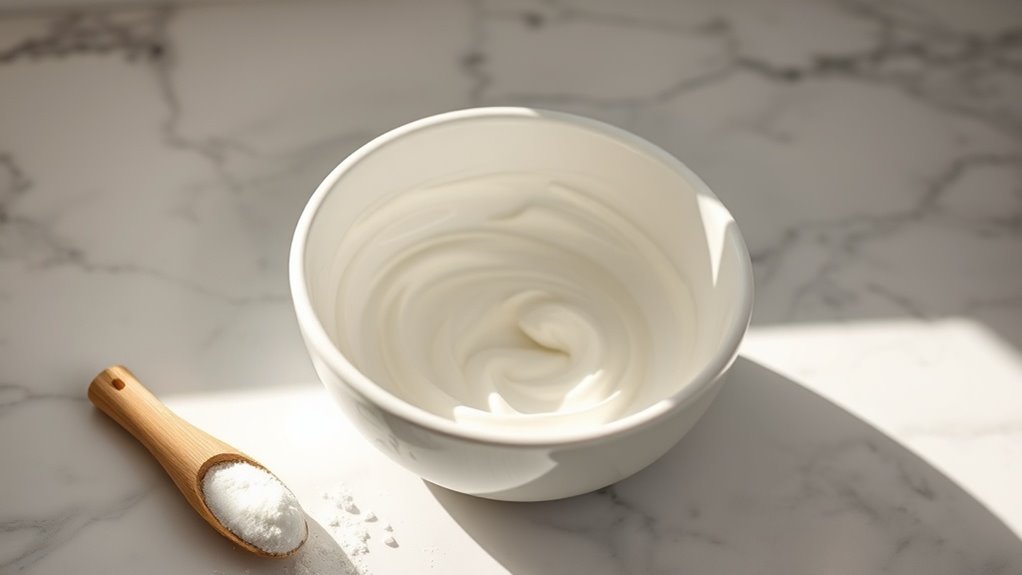
You can create an effective baking soda face mask by mixing 2 tablespoons of pure baking soda with filtered water to form a smooth paste. After cleansing your face, apply the mixture evenly using gentle circular motions, avoiding the eye area. Leave on for 5-10 minutes, then rinse with cool water and apply moisturizer. This natural treatment exfoliates dead skin cells and balances pH levels for clearer, glowing skin. Proper preparation and safety measures ensure optimal results.
Benefits of Baking Soda for Skin Care
Baking soda offers three primary skincare benefits: it acts as a gentle exfoliant, helps balance the skin’s pH levels, and possesses mild antimicrobial properties.
When you apply a baking soda face mask, the fine particles gently remove dead skin cells, revealing fresher skin underneath.
The alkaline nature of baking soda can help neutralize excess oils and restore your skin’s natural pH balance.
Research suggests that baking soda’s antimicrobial properties may help combat acne-causing bacteria.
Moreover, its ability to maintain balanced pH levels is crucial for effective skincare and may contribute to a smoother, more even complexion when used correctly.
These properties make baking soda an effective ingredient for addressing common skin concerns like blackheads, oily skin, and uneven texture when used in appropriate concentrations.
Essential Ingredients and Supplies
Creating an effective baking soda face mask requires specific ingredients and tools to ensure optimal results and safe application. You’ll need pure baking soda (sodium bicarbonate), filtered water, a non-metallic mixing bowl, and a measuring spoon. Additional beneficial ingredients include raw honey, lemon juice, or coconut oil based on your skin type.
Conducting patch tests prior to full application is essential to prevent irritation and ensure skin compatibility.
Essential supplies include a clean facial towel, headband to protect hair, facial moisturizer for post-treatment care, and pH testing strips to monitor the mixture’s alkalinity. Keep a timer nearby to prevent over-application, and prepare a clean workspace with all materials within reach.
Step-by-Step Mask Preparation
Three key steps form the foundation of proper mask preparation.
First, combine 2 tablespoons of baking soda with enough purified water to create a smooth paste, targeting a toothpaste-like consistency.
Second, cleanse your face thoroughly with warm water to open pores and remove surface oils, then pat dry with a clean towel.
Third, using clean fingertips or a facial brush, apply the mixture in gentle circular motions, avoiding the eye area. The mask should form an even layer across your face, approximately 1-2 millimeters thick. Additionally, using baking soda as a natural exfoliator can help enhance the mask’s effectiveness by removing dead skin cells.
Application and Treatment Tips
Five essential tips ensure optimal results when applying your baking soda mask.
First, cleanse your face thoroughly with lukewarm water to remove oils and debris.
Second, apply the mask evenly using circular motions, avoiding the delicate eye area.
Third, don’t leave the mask on longer than 5-10 minutes, as extended exposure can irritate skin.
Fourth, rinse completely with cool water and pat dry with a clean towel.
Fifth, follow immediately with a pH-balancing moisturizer to counteract the mask’s alkalinity. Baking soda’s pH levels can disrupt the skin’s natural balance if not properly managed.
Don’t use this treatment more than twice weekly, and discontinue if redness or irritation occurs.
Safety Precautions and Side Effects
While following proper application methods helps maximize benefits, understanding potential risks is equally important.
Baking soda’s alkaline nature can disrupt your skin’s natural pH balance and protective barrier if used incorrectly or too frequently.
- Don’t use baking soda masks if you have sensitive skin, rosacea, or active acne, as it may cause inflammation and irritation.
- Stop using immediately if you experience redness, burning, or excessive dryness.
- Limit applications to once per week maximum, as overuse can lead to moisture barrier damage and increased sensitivity.
Always perform a patch test 24 hours before full facial application. Additionally, monitor your skin response during and after application to prevent adverse effects.
Recommended Frequency and Alternatives
Based on dermatological guidelines, you shouldn’t use a baking soda face mask more than once every 7-10 days, even if your skin shows good tolerance.
For gentler alternatives, consider using kaolin clay masks, which offer similar cleansing benefits without disrupting your skin’s pH balance.
You can also try enzyme-based masks with papaya or pineapple extracts for natural exfoliation.
If you’re seeking brightening effects, vitamin C masks or yogurt-based treatments provide safer options.
Between baking soda mask treatments, maintain your skin with a gentle cleanser, alcohol-free toner, and moisturizer suited to your skin type. Additionally, ensure you monitor your skin’s pH balance after each treatment to prevent any adverse effects.