
You’ve probably heard countless claims that natural remedies can erase wrinkles overnight, but the reality requires a more measured approach. Research-backed botanical ingredients and evidence-based skincare practices can genuinely improve your skin’s appearance when applied consistently over time. Before you invest in expensive treatments or invasive procedures, you’ll want to understand which natural compounds have clinical support—and how dermatological studies demonstrate their effectiveness in reducing visible signs of photoaging and supporting your skin’s structural integrity.
Natural Oils and Moisturizers That Combat Facial Wrinkles
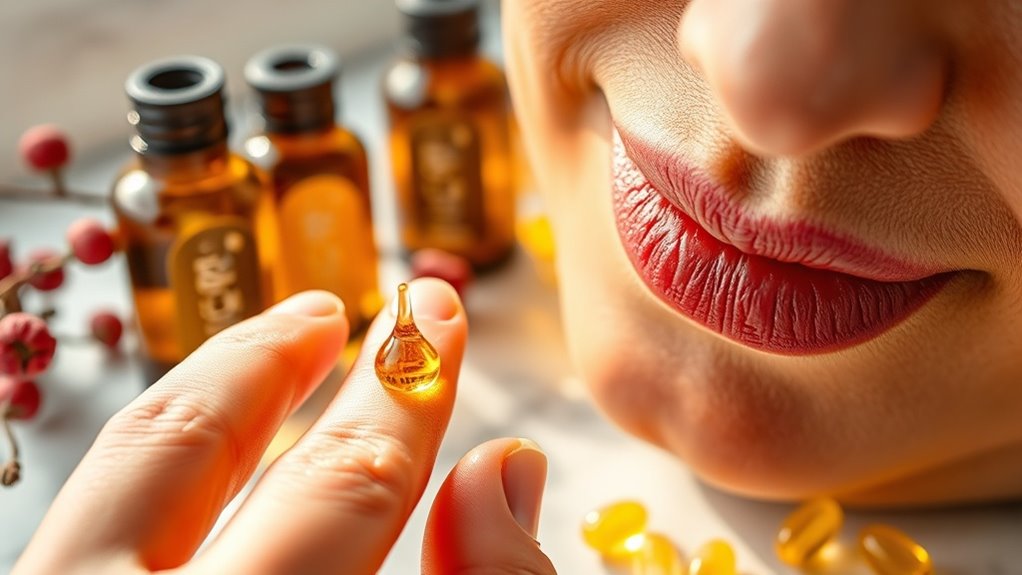
Botanical oils function as effective wrinkle-management agents through three primary mechanisms: they reinforce the lipid barrier to reduce transepidermal water loss, deliver fatty acids that support collagen synthesis and cellular repair, and create an occlusive layer that temporarily plumps the skin surface to minimize fine-line visibility.
When selecting wrinkle remedies face application, prioritize carrier oils with documented barrier-supporting properties. Jojoba oil mimics sebum composition without comedogenicity, while plant-derived squalane reduces moisture loss through lightweight emollient action. For collagen support, you’ll find rosehip seed oil delivers vitamin A precursors and linoleic acid that improve elasticity and fade hyperpigmentation. Pomegranate seed oil’s punicic acid directly promotes collagen production. Marula oil boosts collagen production and restores elasticity, making it particularly effective for mature skin seeking to combat visible signs of aging. Shea butter and mango butter provide occlusive hydration that fills surface depressions, temporarily reducing wrinkle depth. Clinical studies demonstrate that proper application of these natural moisturizers can reduce transepidermal water loss by up to 27%, significantly improving skin barrier function. Always patch-test new formulations before full-face application.
Antioxidant-Rich Ingredients for Age-Defying Skin
Oxidative stress from UV exposure, pollution, and metabolic processes generates reactive oxygen species that degrade collagen fibers, impair cellular repair mechanisms, and accelerate photoaging—making topical antioxidants essential components of thorough, extensive, all-encompassing wrinkle prevention protocols.
Vitamin C promotes collagen synthesis, reduces photoaging, and enhances photoprotection when applied in morning formulations. Vitamin E intercepts reactive molecules within lipid layers and synergizes with vitamin C through antioxidant recycling mechanisms. Niacinamide demonstrates anti-inflammatory and depigmenting properties while supporting barrier lipids and improving skin elasticity. Resveratrol provides UVB protection, stimulates collagen production, and modulates inflammatory pathways. Ferulic acid stabilizes vitamins C and E, amplifying their potency while neutralizing collagen-degrading free radicals. Lycopene, a powerful carotenoid found in red fruits and vegetables, promotes collagen production and reduces DNA damage that leads to wrinkles. Green tea polyphenols provide exceptional antioxidant protection against environmental stressors while supporting overall skin health and barrier function. These ingredients address multiple aging pathways simultaneously, offering comprehensive, detailed, and broad-ranging protection against wrinkle formation when incorporated into daily skincare regimens.
Vitamins and Supplements That Support Youthful Skin

While topical antioxidants address external aging factors, oral vitamins and supplements work from within to support collagen integrity, cellular defense mechanisms, and dermal architecture.
Vitamin A facilitates collagen production and cell turnover while exhibiting antibacterial properties for acne-prone skin. You’ll find it in leafy greens, orange vegetables, and liver.
Vitamin C remains essential for collagen synthesis and photoprotection, available in citrus fruits and peppers. This vitamin also brightens complexion and helps even out skin tone, making it particularly valuable for addressing age-related pigmentation issues.
Vitamin E at 400 mg daily reduces photodamage and strengthens your skin barrier through vegetable oils and nuts. This powerful antioxidant works particularly well for the delicate eye area, where skin is thinner and more susceptible to environmental damage.
Vitamin D manages inflammatory conditions like psoriasis and eczema, sourced from fortified dairy and fatty fish.
Collagen peptides, comprising 90% of skin’s total weight, directly counter age-related collagen depletion. Clinical evidence supports their efficacy in reducing wrinkles and preserving dermal elasticity when supplemented consistently.
Daily Habits and Lifestyle Changes to Prevent Wrinkles
Because wrinkle prevention depends more on consistent daily protection than occasional interventions, establishing evidence-based habits yields measurable long-term benefits for skin aging. Apply broad-spectrum SPF 30+ sunscreen daily to your face, neck, ears, and hands, reapplying every two hours during prolonged exposure.
Limit sun exposure between 10:00–16:00 and wear protective clothing and wide-brim hats. If you smoke, quit—smoking accelerates collagen breakdown and causes perioral lines.
Minimize air pollution exposure and consider topical antioxidants like vitamin C to neutralize free radicals. Maintain adequate hydration and limit refined sugars, which glycate collagen.
Sleep on your back using silk or satin pillowcases to reduce mechanical compression and friction. Consume antioxidant-rich foods, omega-3 fatty acids, and maintain regular exercise to support dermal circulation and collagen integrity. Incorporate stress management techniques like daily meditation or deep breathing exercises, as chronic stress increases cortisol production which can accelerate skin aging. Aim for eight glasses per day to keep your skin properly hydrated and resilient against premature aging.
Application Techniques and Massage Methods for Wrinkle Reduction

Although topical products deliver active ingredients to target skin aging at the cellular level, manual massage techniques and structured application methods offer complementary mechanical benefits that temporarily enhance facial contour, promote lymphatic drainage, and may support long-term dermal health through improved microcirculation.
Evidence-Based Massage Sequences:
-
Lymphatic drainage protocol: Begin with downward neck strokes toward clavicles, then perform center-to-periphery strokes from nasolabial folds and forehead toward hairline using lightweight facial oil to reduce friction.
-
Gua sha technique: Use smooth jade or rose quartz tools swept along defined planes with light-to-moderate pressure to boost microcirculation and temporarily lift facial tissues. This traditional Chinese technique uses a smooth stone to enhance skin appearance through systematic strokes.
-
Acupressure targeting: Apply gentle pressure to inner eye socket, nasion, jaw hinges, and temples to release muscle tension and soften dynamic wrinkles. Focus particularly on areas prone to expression lines as these respond well to tension-release techniques that complement neurotoxin treatments.
Sanitize tools after each use.
References
- https://www.facorangecounty.com/home-remedies-for-wrinkles/
- https://pmc.ncbi.nlm.nih.gov/articles/PMC3569896/
- https://newsnetwork.mayoclinic.org/discussion/home-remedies-weathering-those-wrinkles/
- https://onlinelibrary.wiley.com/doi/full/10.1111/srt.13267
- https://pmc.ncbi.nlm.nih.gov/articles/PMC9610014/
- https://my.clevelandclinic.org/health/treatments/8411-treatments-to-reduce-wrinkles
- https://www.aad.org/public/everyday-care/skin-care-secrets/anti-aging/reduce-premature-aging-skin
- https://www.sacredrituel.com/pages/skin-condition/best-oils-for-face
- https://www.healthline.com/health/beauty-skin-care/essential-oils-for-wrinkles
- https://ubeauty.com/blogs/the-u-beauty-blog/moisturizing-oils-for-skin