 By Sarah Jones
How to Make the Best Coconut Oil Hair Mask for Damaged Hair
You’ve likely applied coconut oil to your hair before, but timing matters more than you think—the molecular structure of lauric acid in coconut oil actually penetrates the hair shaft best when applied to damp, not soaking wet, hair. Most people miss this critical step and wonder why their masks don’t deliver professional-level results. There’s a specific sequence to combining ingredients and applying your treatment that determines whether you’ll repair damage or simply coat the surface.
Understanding Why Coconut Oil Works for Damaged Hair
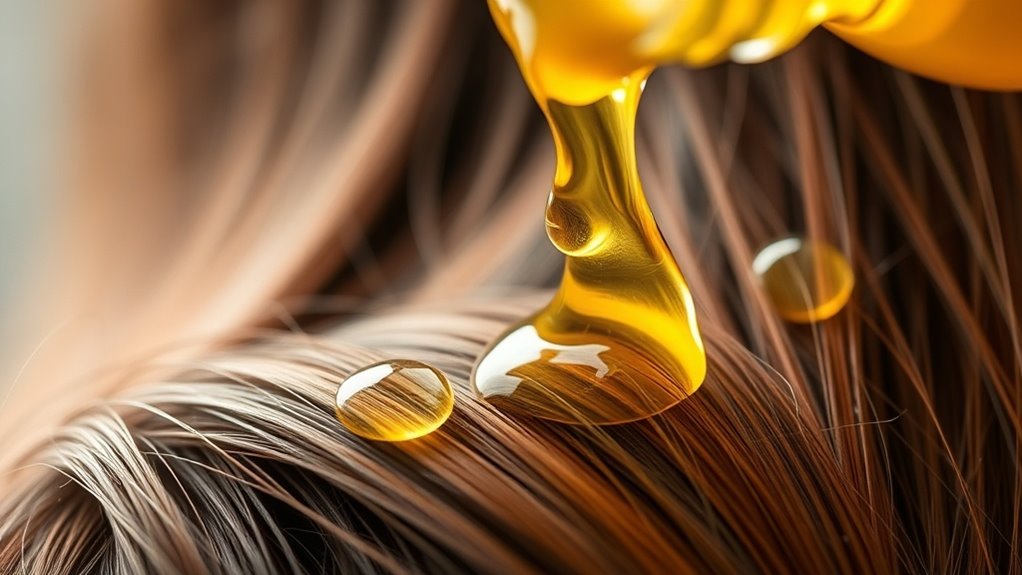
Because coconut oil’s molecular structure allows it to penetrate the hair shaft rather than simply coating its surface, it delivers targeted repair where your damaged strands need it most. The lauric acid content enables deep moisture retention, while reducing protein loss that occurs during washing and styling.
When you apply a coconut oil hair mask, you’re restoring lipid barriers damaged by heat tools, chemical treatments, and environmental stressors. This penetrative action strengthens your hair from within, improving elasticity and reducing breakage. You’ll notice enhanced manageability and restored shine as the oil rebuilds compromised cuticle layers.
The medium-chain fatty acids in coconut oil also work to reduce scalp inflammation, creating an optimal environment for healthy hair growth while forming a protective barrier against future environmental damage.
Essential Ingredients and Tools You’ll Need
To create an effective coconut oil hair mask, you’ll need to select the right grade of coconut oil and gather complementary ingredients that enhance its restorative properties. Your success depends on sourcing high-quality materials and understanding which additional components address your specific hair damage concerns.
Proper application tools will guarantee even distribution and maximum absorption throughout your hair shaft. Start with virgin coconut oil as your base ingredient, then gather a glass or ceramic mixing bowl, shower cap or plastic wrap, and clean hair towels for the complete treatment process.
Choosing Quality Coconut Oil
Quality matters considerably when selecting coconut oil for hair treatments, as not all products deliver the same restorative benefits. You’ll want virgin or extra-virgin coconut oil, which retains maximum nutrients through minimal processing. Avoid refined varieties—they’ve undergone bleaching and deodorizing that strips beneficial fatty acids and antioxidants your damaged hair needs.
Look for cold-pressed extraction methods on labels, ensuring heat hasn’t degraded the oil’s therapeutic properties. Organic certification indicates pesticide-free coconuts, reducing chemical exposure to your scalp. Choose products in dark glass containers rather than clear plastic, as UV light degrades oil quality. Fresh coconut oil appears white when solid, clear when liquid.
Additional Nourishing Ingredients
While coconut oil forms your mask’s foundation, strategic additions amplify its reparative capacity for severely compromised strands.
| Ingredient | Benefit | Recommended Ratio |
|---|---|---|
| Raw honey | Humectant properties retain moisture | 1 tbsp per 2 tbsp oil |
| Avocado | Penetrates cuticle with vitamins A, E | ¼ mashed fruit per application |
| Argan oil | Reinforces lipid barrier, adds shine | 1 tsp per treatment |
You’ll customize formulations based on damage severity. Protein-deficient hair benefits from egg additions, while dehydrated strands require honey-based modifications. Always perform strand tests before full application to prevent adverse protein-moisture imbalances.
Application Tools Required
Before mixing your custom formulation, gather specialized implements that safeguard uniform distribution and optimize absorption efficiency. You’ll need a non-reactive mixing bowl—glass or ceramic prevents ingredient degradation.
Select a wide-tooth comb for detangling and sectioning pre-application. An applicator brush assures precise root-to-tip coverage while minimizing product waste. Include sectioning clips to maintain organized application patterns.
A shower cap creates thermal insulation, enhancing cuticle penetration. Keep a timer nearby to monitor processing duration accurately. Finally, prepare microfiber towels—they’re gentler than standard terry cloth and reduce friction-induced breakage during post-treatment blotting. These tools transform your treatment from basic to professional-grade.
Six Proven Coconut Oil Hair Mask Recipes
You’ll achieve ideal hair repair by selecting the right mask formulation for your specific damage type. The Deep Conditioning Treatment Recipe focuses on moisture infusion for dry, brittle strands, while the Protein-Enriched Repair Mask targets structural damage from heat styling and chemical processing.
Each recipe addresses distinct hair concerns through carefully balanced ingredient ratios that maximize coconut oil’s restorative properties. The oil’s medium-chain fatty acids penetrate hair shafts more effectively than other oils, making these masks particularly powerful for repairing damaged cuticles and restoring strength to weakened strands.
Deep Conditioning Treatment Recipe
This intensive treatment combines coconut oil’s penetrating properties with complementary ingredients to restore moisture balance and structural integrity to severely damaged hair. You’ll need three tablespoons of virgin coconut oil, two tablespoons of raw honey, and one tablespoon of apple cider vinegar.
Melt the coconut oil using low heat, then blend in honey until fully incorporated. Add vinegar last, mixing thoroughly. Apply this mixture to damp hair, focusing on mid-lengths and ends. Cover with a thermal cap and leave for 45 minutes.
The honey provides humectant benefits while vinegar seals cuticles, enhancing coconut oil’s reparative effects.
Protein-Enriched Repair Mask
When hair exhibits significant breakage, split ends, and elastic weakness, structural protein loss has occurred and requires targeted intervention beyond moisture alone.
You’ll combine 3 tablespoons coconut oil with 1 egg white and 1 tablespoon plain yogurt. The egg white delivers keratin proteins that reconstruct damaged cuticles, while yogurt’s lactic acid facilitates penetration.
Apply this mixture to damp hair, focusing on mid-lengths and ends where damage concentrates. Cover with a processing cap for 30 minutes, allowing proteins to bond with compromised hair shafts.
Rinse thoroughly with cool water first, then shampoo once to remove residue completely.
Step-by-Step Application Process for Maximum Results
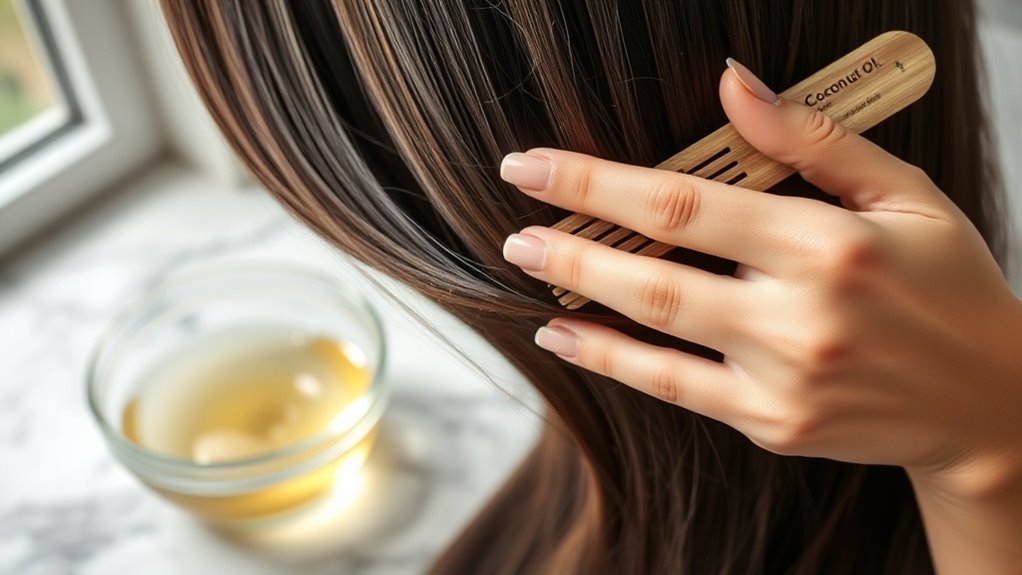
Proper application technique determines whether your coconut oil treatment delivers salon-quality results or creates a greasy, ineffective mess. Start with damp, towel-dried hair to maximize absorption.
Section your hair into four quadrants for thorough coverage. Apply the mask from mid-shaft to ends first, where damage concentrates. Use a wide-tooth comb to distribute product evenly through each section.
Twist hair into a low bun and secure with a clip. Cover with a shower cap, then wrap a warm towel around your head. The heat opens cuticles, allowing deeper penetration.
Process for thirty minutes minimum, or overnight for severely damaged hair. During application, gently massage the scalp in circular motions for 3-5 minutes to stimulate blood flow and enhance the treatment’s effectiveness.
Optimal Timing and Frequency for Different Hair Types
How often should you apply coconut oil treatments to achieve ideal repair without overwhelming your strands? Fine hair requires weekly 30-minute applications to prevent buildup and greasiness. Medium-textured hair tolerates bi-weekly 1-2 hour treatments for balanced moisture restoration.
Thick, coarse hair benefits from twice-weekly overnight masks for deep penetration. Severely damaged hair needs intensive weekly overnight treatments for six weeks, then maintenance bi-weekly sessions.
You’ll maximize results by adjusting frequency based on porosity levels—high-porosity hair absorbs treatments faster, requiring more frequent applications. Monitor your hair’s response and reduce frequency if you notice heaviness, limpness, or excessive oiliness between treatments. Regardless of hair type, limit treatments to no more than twice weekly to prevent protein buildup that can compromise your hair’s natural flexibility and strength.
Tips for Enhancing Absorption and Long-Term Hair Health
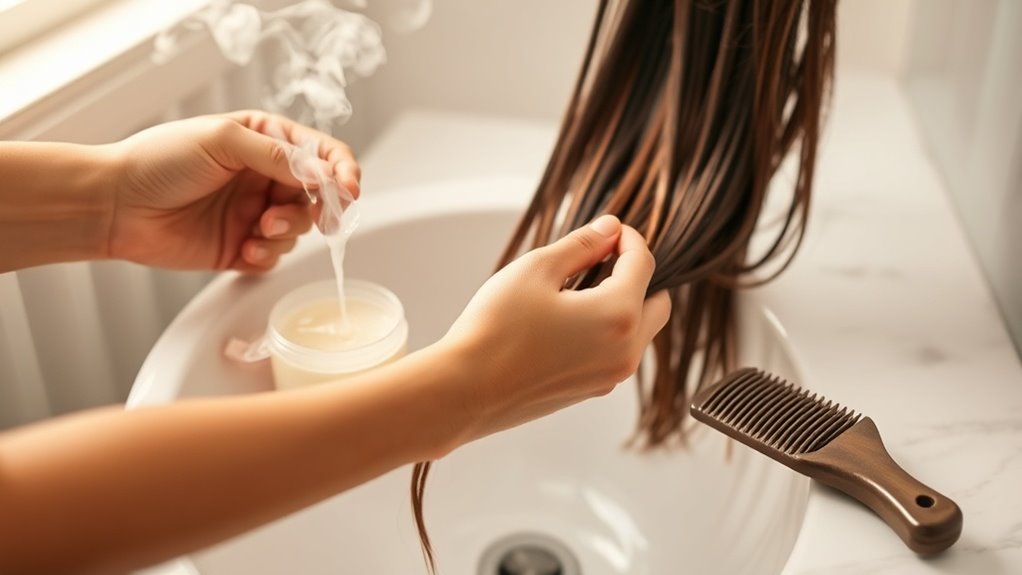
Three strategic preparation methods dramatically increase coconut oil’s penetration into your hair shaft’s cortex:
- Pre-treatment steam application – Expose your hair to warm steam for 5-7 minutes before applying coconut oil, opening cuticles and maximizing absorption depth
- Sectional saturation technique – Divide hair into quadrants, applying oil from mid-shaft to ends first, then working toward roots for thorough coverage
- Thermal enhancement protocol – Wrap treated hair in a warm towel for 15 minutes, activating oil molecules and facilitating deeper cortical penetration
These methods guarantee you’re receiving maximum restorative benefits from each treatment session.