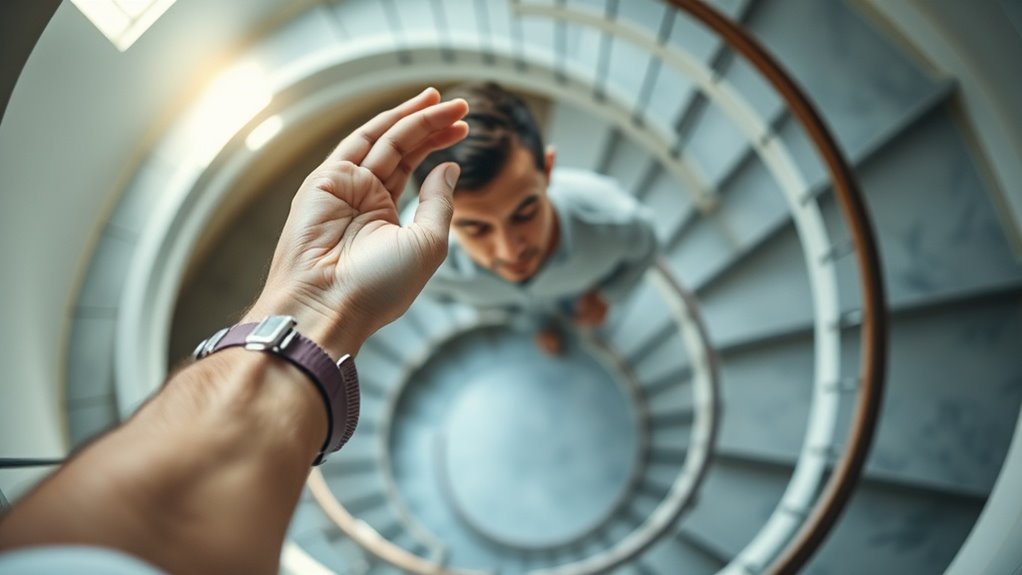

What Are 8 Vertigo Relief Methods to Restore Balance.
Wondering why the room suddenly starts spinning even when you’re standing still? Vertigo occurs when your inner ear’s balance system sends conflicting signals to your brain, creating that unsettling sensation of movement when there isn’t any. It’s more common than you think—millions experience these episodes triggered by everything from ear crystals shifting position to viral infections affecting the vestibular nerve. The good news: once you understand what’s causing your specific symptoms, targeted relief methods can often stop vertigo quickly and help prevent it from returning. You’ll learn exactly why your balance system malfunctions, which techniques work fastest for different types of vertigo, and how to strengthen your body’s equilibrium response. Let’s break down what’s really happening.
Epley Maneuver for Repositioning Inner Ear Crystals
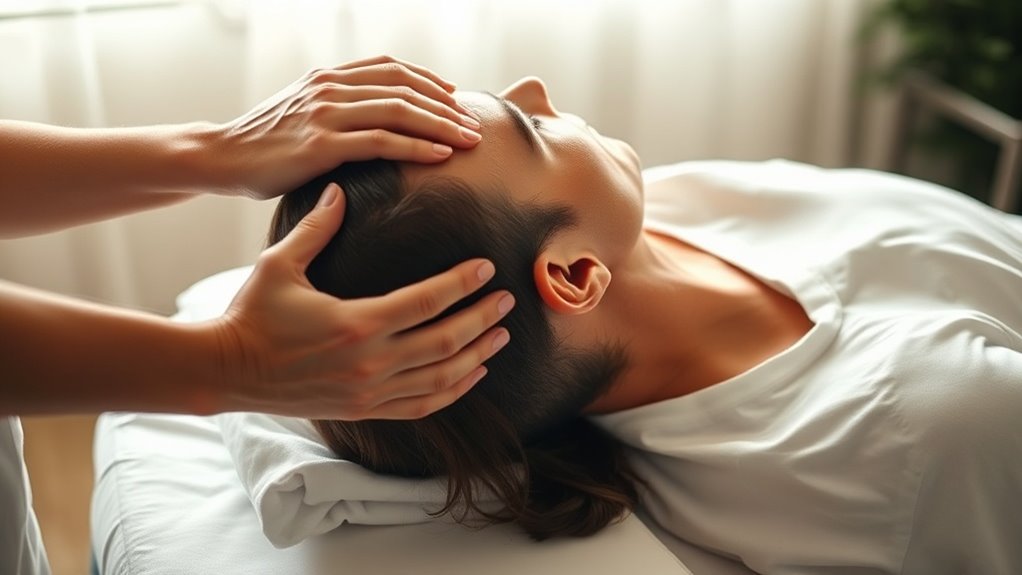
When calcium carbonate crystals called otoconia become dislodged from the utricle and migrate into the posterior semicircular canal, they create abnormal fluid displacement that triggers benign paroxysmal positional vertigo (BPPV). The Epley maneuver represents one of the most effective vertigo relief remedies, achieving an 80% success rate in clinical trials.
You’ll need to sit upright, then turn your head 45 degrees toward the affected ear before lying back quickly with your head extended below horizontal for 30 seconds. Next, you’ll rotate your head 90 degrees to the opposite side, roll onto your shoulder, then sit up slowly. This sequential repositioning uses gravity to guide otoconia back into the utricle, eliminating abnormal vestibular signals and resolving your symptoms. While you can perform the Epley maneuver at home, healthcare professionals can ensure proper technique and diagnose whether BPPV is indeed the underlying cause of your vertigo episodes.
Ginger Root Therapy for Vertigo Symptoms
Although the precise mechanisms remain under investigation, ginger root (Zingiber officinale) demonstrates significant antivertigo properties through multiple pharmacological pathways that target both vestibular and gastrointestinal symptoms. You’ll benefit from ginger’s active compounds—gingerols and shogaols—which modulate serotonin receptors and inhibit inflammatory prostaglandins affecting the vestibular apparatus.
| Administration Method | Dosage | Onset Time |
|---|---|---|
| Fresh root tea | 1-2 grams | 30-45 minutes |
| Standardized extract capsules | 250 mg (twice daily) | 45-60 minutes |
| Crystallized ginger pieces | 500 mg | 20-30 minutes |
You can integrate ginger therapy alongside vestibular rehabilitation exercises. The antiemetic properties directly address nausea, while anti-inflammatory effects reduce labyrinthine inflammation. You’ll experience optimal results through consistent daily supplementation rather than acute dosing during vertigo episodes. Many patients find that combining ginger supplementation with other natural remedies and supplements such as Vitamin D, magnesium, and Ginkgo biloba provides comprehensive support for vestibular health.
Proper Hydration to Support Vestibular Function

Dehydration compromises endolymph fluid volume within your semicircular canals and otolith organs, directly impairing mechanotransduction necessary for spatial orientation.
Your vestibular system requires consistent plasma osmolality to maintain proper ionic gradients across hair cell membranes.
You’ll need to consume 2.7-3.7 liters of water daily, adjusting for body weight, activity level, and environmental conditions to preserve optimal vestibular function.
Adequate hydration works synergistically with sodium intake regulation to stabilize inner ear fluid balance and minimize vertigo episodes.
Dehydration’s Impact on Balance
Your vestibular system requires adequate fluid levels to maintain the precise endolymph volume and ionic composition necessary for optimal balance function. When you’re dehydrated, blood volume decreases, reducing cerebral perfusion and compromising the delicate hydraulic mechanisms within your semicircular canals and otolithic organs. This fluid deficit alters the specific gravity of endolymph, disrupting the movement of cupulae and otoconia crystals that detect angular and linear acceleration.
Dehydration also decreases your blood pressure, limiting oxygen delivery to vestibular nuclei in your brainstem. You’ll experience orthostatic intolerance, where position changes trigger dizziness or vertigo. Additionally, electrolyte imbalances from insufficient hydration affect neuronal signaling between your vestibular receptors and central processing centers. Even mild dehydration—losing just 2% of body water—can impair vestibular compensation mechanisms, prolonging recovery from balance disturbances.
Daily Water Intake Guidelines
To maintain optimal vestibular function, you’ll need to consume 3.7 liters (125 ounces) of total water daily if you’re male, or 2.7 liters (91 ounces) if you’re female, according to the National Academy of Medicine’s established guidelines. These values include water from all beverages and food sources.
| Time Period | Target Volume | Physiological Rationale |
|---|---|---|
| Morning (6am-12pm) | 30-35% of daily intake | Rehydrates inner ear endolymph after nocturnal fluid loss |
| Afternoon (12pm-6pm) | 40-45% of daily intake | Maintains peak vestibular performance during active hours |
| Evening (6pm-10pm) | 20-25% of daily intake | Prevents nocturia while supporting overnight homeostasis |
Distribute intake evenly throughout waking hours to optimize endolymphatic fluid regulation and semicircular canal function. Monitor urine color—pale yellow indicates adequate hydration supporting vestibular stability.
Vestibular Rehabilitation Exercises for Balance
Vestibular rehabilitation therapy (VRT) consists of specialized exercises that systematically retrain your brain’s ability to process balance signals from the inner ear, eyes, and proprioceptive system. These exercises target specific vestibular deficits through gaze stabilization techniques, habituation protocols, and balance training progressions.
Gaze stabilization exercises involve head movements while maintaining visual focus on stationary targets, strengthening the vestibulo-ocular reflex. You’ll perform horizontal and vertical head rotations at varying speeds to reduce visual blurring during movement.
Habituation exercises expose you to positions or movements that provoke symptoms, gradually decreasing your brain’s sensitivity to these triggers through repeated exposure.
Balance training incorporates stance modifications, weight shifts, and dynamic movements on varying surfaces. You’ll progress from static positions to challenging surfaces like foam pads, enhancing proprioceptive integration and postural control mechanisms. Complementing VRT with balance-focused exercises like tai chi or yoga can further enhance your long-term stability and coordination.
Acupressure Points to Reduce Dizziness
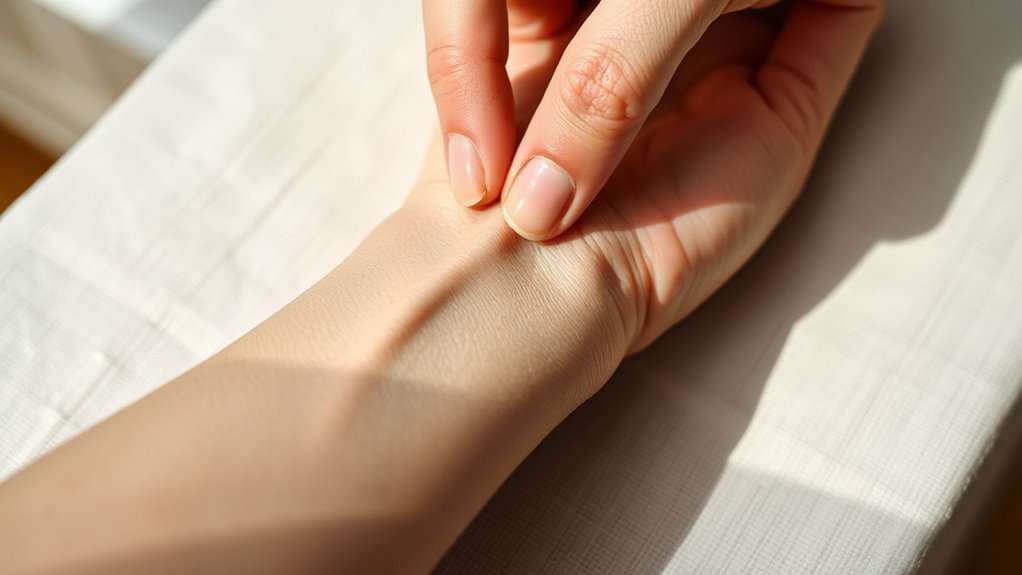
Acupressure targets specific anatomical sites where manual pressure can modulate vestibular function and reduce vertigo symptoms. You’ll focus on three primary points: Pericardium 6 (P6/Neiguan), located three finger-widths below your wrist crease between the palmaris longus and flexor carpi radialis tendons; Gallbladder 20 (GB20/Fengchi), positioned in the occipital region’s bilateral depressions lateral to the trapezius muscle; and Governor Vessel 20 (GV20/Baihui), situated at your skull’s apex where the midline intersects a line connecting both ear apices.
Proper technique requires firm, sustained pressure applied perpendicular to the skin surface for 30-60 seconds while maintaining steady respiratory rhythm. Combining acupressure with mindful breathing exercises can enhance the effectiveness of vertigo relief by calming the nervous system and supporting the body’s natural balance mechanisms.
Key Pressure Points Location
Since ancient healing traditions identified specific anatomical landmarks where manual pressure can modulate vestibular symptoms, modern practitioners have mapped these locations with greater precision using anatomical terminology and neurophysiological understanding.
You’ll find the Pericardium 6 (P6) point three finger-widths below your wrist crease, between the flexor carpi radialis and palmaris longus tendons. The Triple Energizer 17 (TE17) sits in the depression posterior to your earlobe, directly below the mastoid process.
Gallbladder 20 (GB20) lies in the suboccipital hollow, lateral to the trapezius muscle’s superior attachment. Governor Vessel 20 (GV20) occupies your cranial vertex, where a line connecting your ear apices intersects the midline.
These points correspond to neurovascular bundles and fascial planes that influence autonomic nervous system regulation.
Proper Application Techniques
Optimal stimulation requires firm, perpendicular pressure applied with your thumb or index finger pad for 30-60 seconds per point, using a force of approximately 4-6 pounds—enough to create mild discomfort without pain. Maintain consistent pressure throughout the duration, breathing deeply to enhance parasympathetic nervous system activation.
Locate each point precisely using anatomical landmarks before applying pressure. You’ll know you’ve found the correct location when you feel a slight depression or tenderness. Perform acupressure bilaterally when points exist on both body sides, though stimulating one side suffices for midline points.
Apply techniques during acute vertigo episodes or preventatively twice daily. Avoid pressing directly over bruised tissue, open wounds, or varicose veins. If symptoms worsen or persist beyond 72 hours, discontinue self-treatment and consult your healthcare provider immediately.
Vitamin D Supplementation for Inner Ear Health
Vitamin D deficiency disrupts calcium carbonate metabolism within the otoconia crystals of your vestibular system, directly compromising the structural integrity of these calcium-rich particles that enable balance detection. This biochemical dysfunction increases your susceptibility to benign paroxysmal positional vertigo (BPPV) and recurrent vestibular episodes.
Optimal supplementation protocols include:
- Dosage: 2000-4000 IU daily for deficiency correction (serum levels below 30 ng/mL)
- Testing: Baseline 25-hydroxyvitamin D measurement before supplementation
- Cofactors: Magnesium and vitamin K2 enhance calcium regulation
- Monitoring: Retest serum levels after 8-12 weeks of supplementation
Research demonstrates that maintaining vitamin D levels above 30 ng/mL reduces BPPV recurrence by 40%. You’ll need consistent supplementation paired with adequate calcium intake to support otoconia regeneration and vestibular stability. Additionally, vitamin D supplementation may improve vestibular function by supporting the inner ear’s semicircular canals that regulate your body’s balance mechanisms.
Stress Reduction Techniques to Minimize Episodes
When your autonomic nervous system enters a heightened stress response, it triggers vasoconstriction in the vestibular arteries, reducing blood flow to your inner ear structures by up to 30% and precipitating vertigo episodes through ischemic disruption of vestibular function. You’ll need systematic stress management to prevent these episodes.
Implement diaphragmatic breathing at 6 breaths per minute to activate your parasympathetic nervous system, dilating vestibular vasculature. Progressive muscle relaxation reduces cortisol levels by 25%, stabilizing endolymphatic pressure. Practice vestibular habituation exercises during low-stress periods to desensitize your system.
Maintain consistent sleep schedules—circadian disruption elevates inflammatory cytokines that compromise vestibular compensation. Cognitive behavioral therapy demonstrates 40% reduction in stress-induced vertigo frequency. You’ll achieve optimal results combining these evidence-based interventions rather than relying on single-modality approaches.
Dietary Modifications to Prevent Vertigo Triggers
Sodium intake directly affects endolymphatic fluid volume in your cochlear and vestibular systems, with consumption exceeding 2,300mg daily increasing hydrops formation by 60% through osmotic retention mechanisms.
You’ll need to implement these evidence-based dietary modifications:
- Eliminate caffeine sources (coffee, tea, chocolate) as they constrict vestibular blood vessels and alter neurotransmitter balance
- Reduce tyramine-rich foods (aged cheeses, fermented products, cured meats) that trigger vasoactive responses
- Limit alcohol consumption to prevent dehydration and calcium channel disruption in hair cells
- Avoid monosodium glutamate which overstimulates vestibular neurons through excitotoxic pathways
Maintain consistent meal timing to stabilize blood glucose levels, as hypoglycemia exacerbates vestibular dysfunction. Track symptoms following dietary changes to identify your specific triggers through systematic elimination protocols.
Frequently Asked Questions
Can Vertigo Be a Sign of a More Serious Underlying Medical Condition?
Yes, you’ll need immediate evaluation if vertigo accompanies stroke symptoms, brainstem dysfunction, or cardiovascular disease. It can signal Ménière’s disease, vestibular neuritis, acoustic neuromas, or central nervous system pathology requiring prompt neurological assessment and diagnostic imaging.
How Long Does a Typical Vertigo Episode Last Without Treatment?
A typical vertigo episode lasts seconds to minutes for benign paroxysmal positional vertigo, but you’ll experience hours to days with vestibular neuritis or Ménière’s disease. Your semicircular canals’ dysfunction determines duration, requiring proper diagnosis for treatment.
Is Vertigo More Common in Certain Age Groups or Demographics?
You’ll find vertigo most prevalent in adults over 60, affecting women more frequently than men. Your risk increases with age due to vestibular system degeneration, though specific conditions like Meniere’s disease can affect younger demographics differently.
When Should I Seek Emergency Medical Care for Vertigo Symptoms?
Seek emergency care if you’re experiencing sudden, severe vertigo with double vision, slurred speech, facial drooping, limb weakness, loss of consciousness, chest pain, severe headache, high fever, or difficulty walking—these indicate potential stroke or neurological emergency.
Can Flying or High Altitudes Trigger or Worsen Vertigo Episodes?
Yes, you’ll likely experience worsened vertigo at high altitudes. Barometric pressure changes affect your inner ear’s vestibular system, disrupting endolymph fluid balance and semicircular canal function, triggering vertigo episodes, especially if you’ve pre-existing vestibular disorders.