

How to Use Apple Cider Vinegar for Hair Rinse Benefits.
Struggling with dull, product-heavy hair that’s lost its natural shine? This simple apple cider vinegar hair rinse uses just 2 ingredients and takes under 2 minutes to mix up. You’ll spend less than a dollar per treatment, and it works in just 3-5 minutes to restore your hair’s pH balance and add gorgeous shine. No fancy salon products needed—just pantry staples that deliver professional results at home. Ready to transform your hair care routine? Here’s exactly how to make it.
What Makes Apple Cider Vinegar Effective for Hair Care
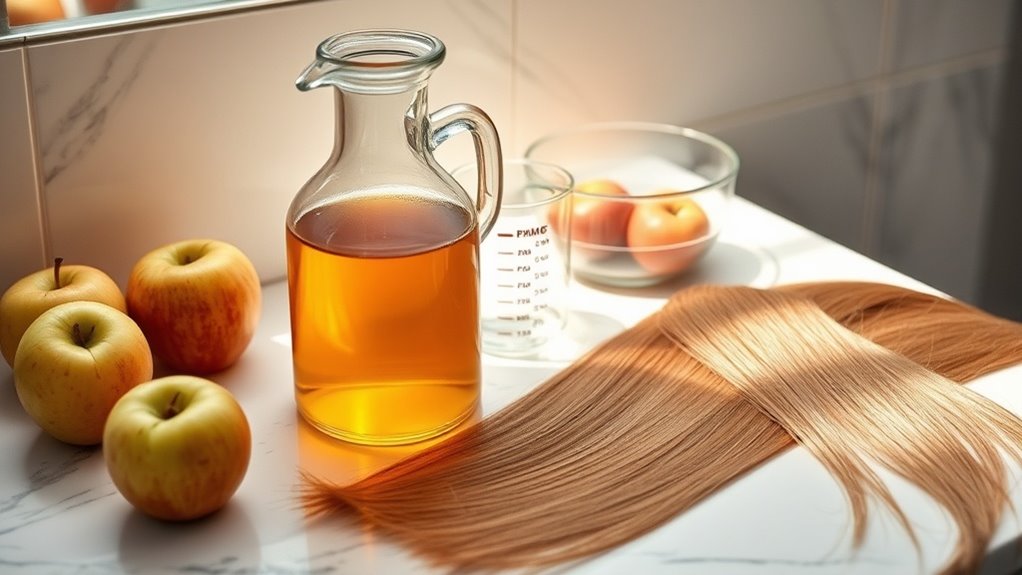
Apple cider vinegar’s effectiveness stems from its acidic pH level of 2-3, which closely mirrors the natural acidity of healthy hair at 4.5-5.5. When you apply an apple cider vinegar hair rinse, it helps restore your hair’s protective acid mantle that alkaline shampoos disrupt.
The acetic acid content seals your hair cuticles, reducing porosity and enhancing shine while preventing moisture loss. The vinegar’s natural alpha-hydroxy acids effectively dissolve product buildup, mineral deposits, and excess sebum without stripping essential oils.
You’ll benefit from its antimicrobial properties, which combat scalp conditions like dandruff and folliculitis. Studies show that 82% of users experience reduced dandruff within 2-3 months of consistent monthly treatments. However, always dilute the solution properly—undiluted apple cider vinegar can damage your hair shaft and irritate your scalp. A 1:4 vinegar-to-water ratio provides ideal results while maintaining safety.
The Basic Apple Cider Vinegar Hair Rinse Recipe and Application
Now that you understand why apple cider vinegar works for hair care, you’ll need to prepare and apply the solution correctly to achieve ideal results.
Mix one to two tablespoons of raw, unfiltered apple cider vinegar with one cup of water. You’ll adjust this ratio based on your hair’s porosity and sensitivity—start diluted if you’re uncertain.
After shampooing, pour the solution through your hair, focusing on mid-lengths to ends. Massage it into your scalp for thirty seconds to remove buildup. Let it sit for two to three minutes before rinsing thoroughly with cool water.
The rinse’s acidic pH works to flatten raised cuticles along the hair shaft, which reduces frizz and creates smoother, shinier strands.
Apply this treatment once weekly for normal hair, or bi-weekly for dry or chemically treated hair. Never use undiluted vinegar, as the acidity can damage your hair cuticle and irritate your scalp.
Enhanced ACV Formulas With Honey, Herbs, and Essential Oils

Why settle for basic formulations when strategic additions can amplify your hair rinse’s therapeutic effects? Incorporate raw honey (1 tablespoon per cup) to enhance moisture retention and add antimicrobial properties.
Steep dried rosemary or nettle in your diluted ACV for 20 minutes, then strain—these herbs strengthen follicles and promote scalp circulation.
Essential oils require precise dosing: add only 3-5 drops per cup of diluted rinse. Lavender soothes irritation, tea tree combats dandruff, and peppermint stimulates growth. Always perform a patch test 24 hours before full application.
Mix additions immediately before use to preserve potency. Don’t combine all ingredients simultaneously—select one or two based on your specific hair concerns. Store herb-infused rinses refrigerated for maximum three days to prevent bacterial growth. The acetic acid properties in apple cider vinegar work synergistically with these additions to maintain your scalp’s optimal pH balance.
Step-by-Step Guide to Applying an Apple Cider Vinegar Rinse
Proper application technique determines whether your ACV rinse delivers promised benefits or causes scalp irritation and hair damage.
Begin by shampooing hair thoroughly, then rinse completely. Mix one part ACV with three to four parts water in a squeeze bottle or applicator. For first-time users, start with a weaker 1:4 ratio to assess tolerance.
Apply the mixture directly to your scalp, working through sections systematically. Massage gently for 30-60 seconds to distribute evenly through mid-lengths and ends. Avoid contact with eyes and facial skin.
Let the solution sit for two to three minutes—never exceed five minutes. Rinse thoroughly with cool water to seal cuticles and remove all residue. Pat hair dry gently; harsh rubbing damages the temporarily softened cuticle layer.
Store any leftover mixture in a dark glass bottle in a cool, dry place, where it will remain effective for up to two weeks.
How Often Should You Use an ACV Hair Rinse for Best Results
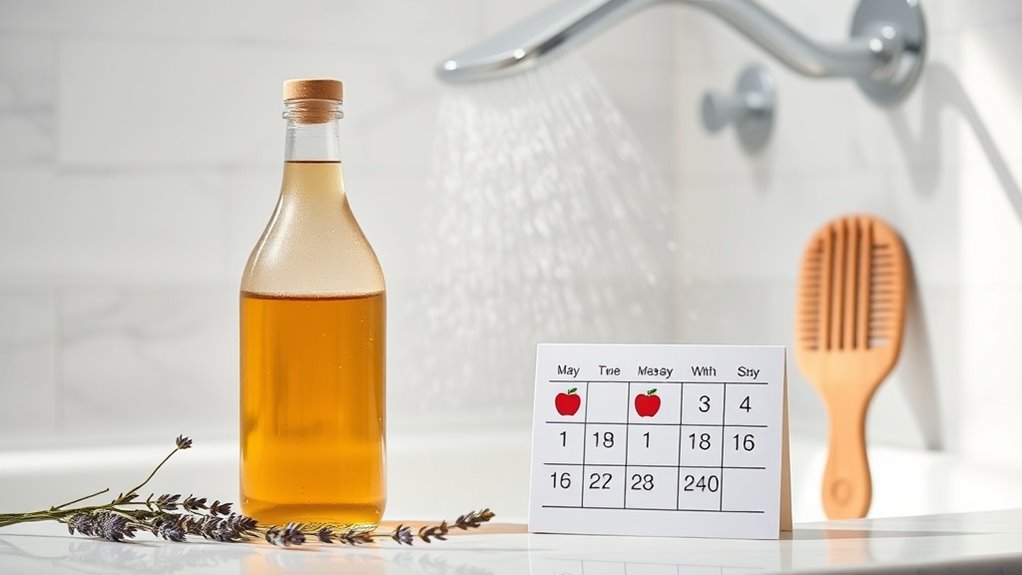
Application frequency directly impacts whether ACV rinses strengthen your hair or strip its natural protective barriers. You’ll achieve ideal results by limiting treatments to once or twice weekly for normal hair types.
If you have oily hair, you can increase frequency to three times weekly, while dry or chemically-treated hair requires reduced application—once every two weeks maximum.
Monitor your scalp’s pH response during the first month. Signs you’re overusing include increased dryness, brittleness, or scalp irritation. Conversely, if you notice minimal improvement after four weeks at twice-weekly application, you may need to adjust your dilution ratio rather than frequency.
Always allow 72 hours between treatments initially. This interval prevents cumulative acidity damage while letting you assess your hair’s tolerance level and adjust accordingly. The acetic acid in apple cider vinegar provides the primary benefits for hair care, but requires proper dilution and frequency control to avoid damaging your hair’s natural structure.
Common Mistakes to Avoid When Using Apple Cider Vinegar on Hair
Most ACV hair rinse failures stem from three critical errors: applying undiluted vinegar directly to hair, leaving the solution on too long, or using it on color-treated hair without proper precautions.
You’ll damage your hair cuticles if you exceed the recommended 1:4 vinegar-to-water ratio. Undiluted ACV’s pH of 2-3 strips protective oils and causes breakage. Never leave the rinse on longer than five minutes—extended exposure weakens hair shafts.
If you’ve chemically treated your hair, reduce ACV concentration to 1:8 and perform a strand test first. Avoid applying the solution to your scalp if you have open cuts or irritation. Don’t substitute ACV rinses for your regular conditioner, as they serve different purposes. Always rinse thoroughly with cool water to prevent residual acidity from causing dryness. The acetic acid in ACV can also irritate the esophagus if accidentally ingested while rinsing, so keep your mouth closed during application.