How to Treat Eczema Naturally With 6 Soothing Methods.
Wondering if you can actually treat eczema naturally without relying solely on prescriptions? Yes—several natural methods can significantly reduce flare-ups by calming inflammation and repairing your skin’s protective barrier. Eczema affects over 31 million Americans, and many find that combining evidence-based natural approaches with traditional care gives them better control over their symptoms. The key is understanding which methods target specific triggers—whether that’s moisture loss, immune overreaction, or environmental irritants. In this guide, you’ll discover six clinically-supported techniques that work through different mechanisms to address eczema’s root causes, not just mask the symptoms. Let’s break down what’s really happening and how each approach can help your skin heal.
Colloidal Oatmeal Baths for Skin Barrier Protection
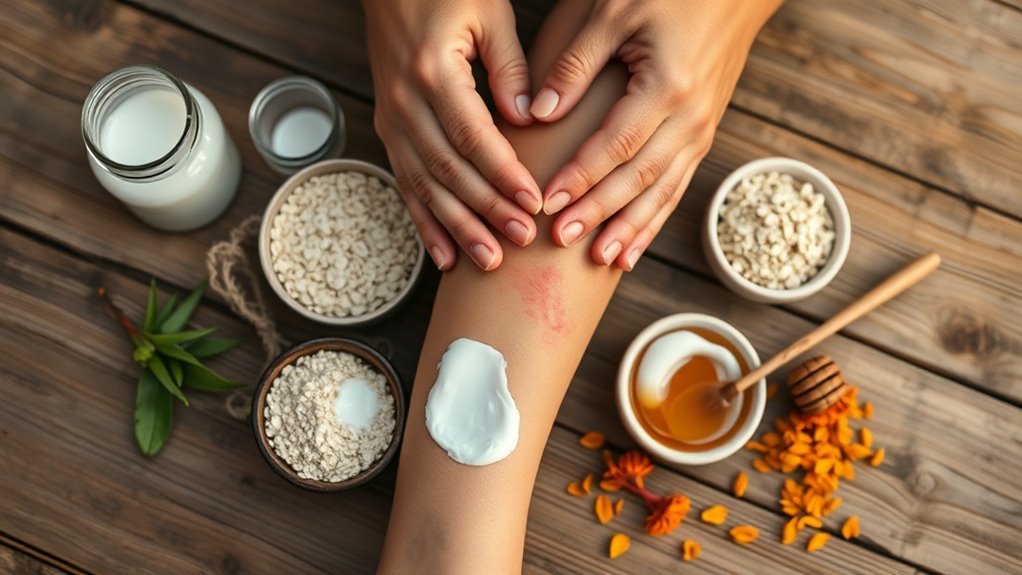
Colloidal oatmeal baths may help calm inflamed skin and reinforce the compromised barrier function characteristic of atopic dermatitis. You’ll find that finely ground oat particles contain avenanthramides and beta-glucans, compounds with potential anti-inflammatory and moisturizing properties. Research suggests these components might reduce pruritus and erythema in some individuals.
To prepare a bath, you should disperse colloidal oatmeal powder in lukewarm water and soak for 10-15 minutes. Pat your skin dry gently afterward, avoiding vigorous rubbing that could trigger further irritation. For optimal results, apply your moisturizer within three minutes after bathing while your skin is damp to lock in hydration and enhance the protective barrier.
While colloidal oatmeal shows promise for eczema relief, responses vary considerably between individuals. You may experience minimal improvement, particularly in moderate-to-severe cases requiring prescription interventions. Consider consulting your dermatologist before relying solely on this approach.
Coconut Oil Applications to Lock in Moisture
Coconut oil’s medium-chain fatty acids may help restore the skin’s lipid barrier, though clinical evidence remains mixed regarding its efficacy for eczema management. You’ll achieve optimal results by applying virgin or unrefined coconut oil to slightly damp skin within three minutes of bathing, when your pores are most receptive to moisture retention.
The timing, quality, and method of application can significantly influence whether coconut oil provides therapeutic benefit or potentially exacerbates symptoms in sensitive individuals. The oil’s natural antimicrobial properties may also help reduce inflammation and combat bacteria that can worsen eczema flare-ups.
Proper Application Techniques
Timing your application immediately after bathing maximizes coconut oil’s moisturizing benefits, as damp skin absorbs topical emollients more effectively than completely dry skin. You’ll want to gently pat your skin semi-dry within three minutes of bathing, leaving it slightly moist.
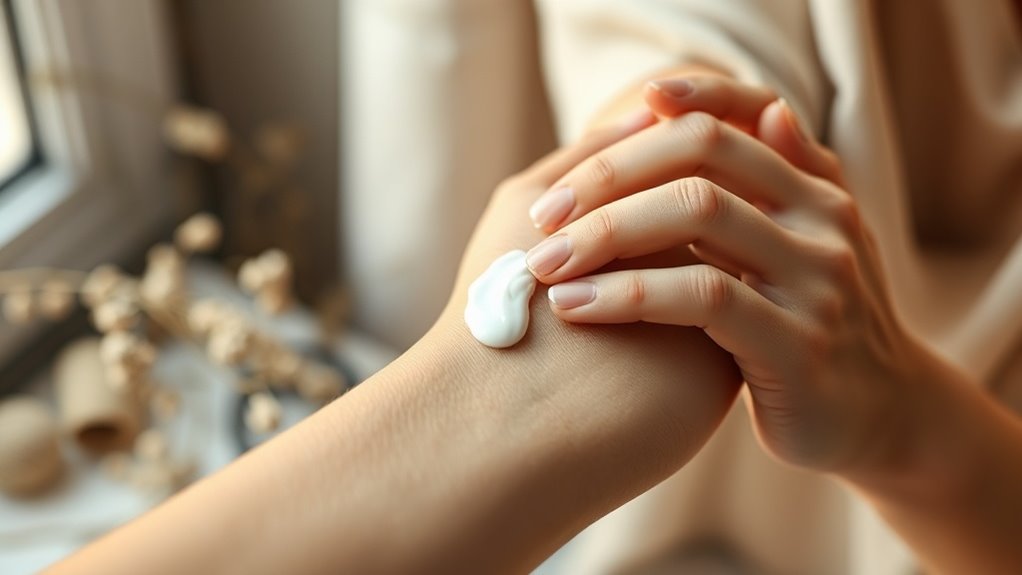
Apply virgin coconut oil using clean hands in a thin, even layer across affected areas. Gentle circular motions may help absorption, though evidence remains limited. You shouldn’t rub vigorously, as this can irritate compromised skin barriers.
For optimal results, consider applying twice daily—morning and evening. Start with small amounts; you can always add more if needed. If you’re using prescription medications, consult your dermatologist about proper layering sequences, as coconut oil might affect medication absorption rates and overall treatment efficacy.
Best Times to Apply
While individual response patterns vary, research suggests strategic timing of coconut oil application can enhance its occlusive properties for eczema management. You’ll optimize moisture retention by applying when your skin’s barrier is most receptive.
| Timing | Rationale | Application Method |
|---|---|---|
| Post-bathing (within 3 minutes) | Traps residual hydration; maximizes occlusion | Pat skin damp, apply liberally |
| Before bedtime | Allows extended contact time; supports barrier repair | Apply to affected areas under breathable fabric |
| After hand washing | Prevents moisture loss from repeated water exposure | Reapply to hands immediately |
| Pre-outdoor exposure | Creates protective barrier against environmental triggers | Apply 15-20 minutes before |
You’ll need to monitor your skin’s response, as optimal frequency ranges from twice-daily to as-needed application based on symptom severity.
Choosing Quality Coconut Oil
Quality markers determine whether coconut oil will effectively support eczema management or potentially exacerbate symptoms. You’ll need to evaluate specific characteristics before purchasing.
Select products meeting these criteria:
-
Virgin or extra-virgin designation – Unrefined processing preserves lauric acid and antimicrobial compounds that may reduce Staphylococcus aureus colonization on eczematous skin.
-
Cold-pressed extraction method – Heat processing can denature beneficial fatty acids and reduce anti-inflammatory properties essential for barrier repair.
-
Organic certification – This ensures absence of pesticide residues that might trigger allergic contact dermatitis in sensitized individuals.
Avoid products containing added fragrances, preservatives, or carrier oils. Glass containers preserve oil integrity better than plastic. While refined coconut oil remains stable, it lacks the polyphenols present in virgin varieties that contribute to therapeutic effects.
Aloe Vera Gel Treatments for Inflammation Relief
Aloe vera gel demonstrates moderate anti-inflammatory properties that may help reduce eczema-related skin inflammation, though clinical evidence remains limited. You’ll find compounds like acemannan and polysaccharides within aloe that potentially suppress inflammatory cytokines.
When selecting products, you should verify they contain at least 95% pure aloe vera gel without added fragrances or alcohol, which can irritate compromised skin. Apply a thin layer to affected areas twice daily after cleansing.
Some individuals experience mild stinging or allergic reactions. You must perform a patch test on unaffected skin before broader application. If irritation develops, discontinue use immediately.
For enhanced soothing effects, store your aloe vera gel in the refrigerator, as cool compresses have been shown to reduce inflammation and ease burning sensations in irritated skin.
While aloe vera may provide temporary symptomatic relief, it shouldn’t replace prescribed medical treatments. You’ll achieve better outcomes by consulting your dermatologist about incorporating aloe into your comprehensive eczema management plan.
Chamomile Compresses to Calm Irritated Skin
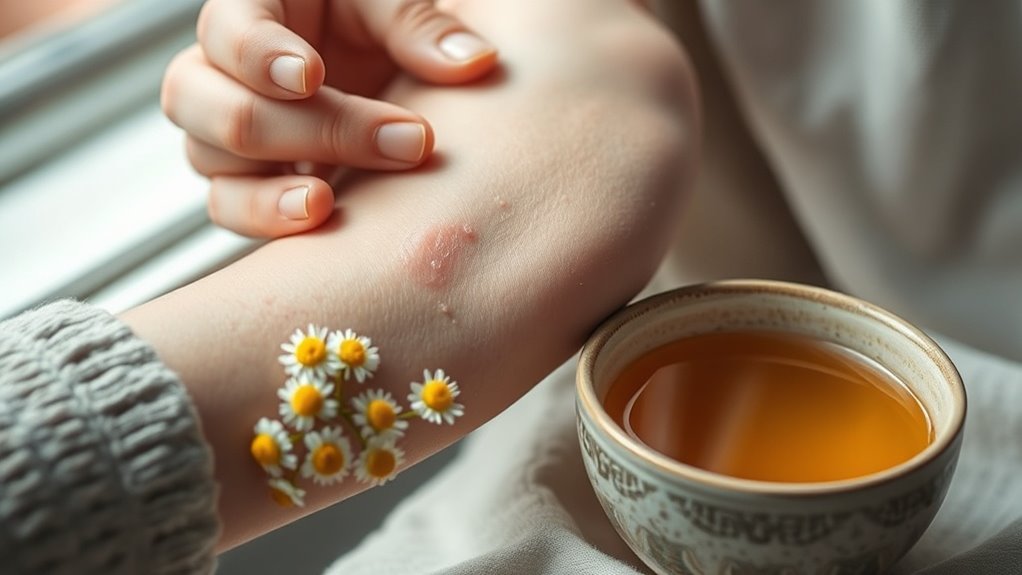
Chamomile compresses may help reduce eczema-related inflammation, though clinical evidence remains limited and individual responses vary considerably.
The effectiveness depends on proper preparation methods, including appropriate dilution ratios and steeping duration. You’ll need to understand correct application techniques and timing intervals to potentially maximize therapeutic benefits while minimizing adverse reactions. Similar to how polyphenolic constituents in botanical extracts work to neutralize free radicals, chamomile’s active compounds may help downregulate inflammatory responses in compromised skin.
Anti-Inflammatory Properties Explained
When inflammation triggers eczema flare-ups, the body’s immune response releases cytokines that damage the skin barrier and intensify itching. Chamomile’s anti-inflammatory compounds may help counteract this process through specific mechanisms.
Research suggests chamomile contains bioactive constituents that potentially modulate inflammatory pathways:
- Bisabolol – This terpenoid may inhibit prostaglandin synthesis, though clinical evidence remains limited
- Apigenin – A flavonoid that appears to suppress inflammatory cytokine production in preliminary studies
- Chamazulene – Shows potential anti-inflammatory activity, but requires further human trials for confirmation
You’ll find these compounds work synergistically when applied topically. However, it’s important to note that individual responses vary considerably. While some studies indicate promising results, you should consult your dermatologist before incorporating chamomile compresses into your treatment regimen, particularly if you’re allergic to related plants.
Preparing Your Compress
Before you can apply a chamomile compress effectively, you’ll need to prepare it using proper steeping techniques that maximize the extraction of beneficial compounds while maintaining safety standards. Steep two to three chamomile tea bags in eight ounces of boiled water for ten to fifteen minutes, then remove the bags and allow the liquid to cool to lukewarm temperature—approximately 98-100°F.
You’ll want to test the temperature on your inner wrist before application to prevent thermal injury to already compromised skin. Use clean, soft cotton cloth or gauze to absorb the cooled infusion, ensuring the material is thoroughly saturated but not dripping excessively. Prepare fresh compresses for each application session, as bacterial contamination may occur in stored preparations within twenty-four hours, potentially worsening inflammation.
Application Techniques and Frequency
Once your compress reaches the appropriate temperature, gently place it against the affected area for five to ten minutes, applying light pressure without rubbing or abrading the skin. Research suggests optimal results may occur with consistent application patterns.
Recommended frequency guidelines:
-
Acute flare-ups: Apply compresses two to three times daily until symptoms show improvement, typically within three to five days.
-
Maintenance therapy: Consider once-daily application during stable periods to potentially reduce recurrence rates.
-
Duration limits: Avoid exceeding ten minutes per session, as prolonged moisture exposure can compromise the skin barrier.
Monitor your skin’s response carefully. If irritation worsens or persists beyond one week despite consistent application, discontinue use and consult a dermatologist. Individual responses vary considerably.
Honey-Based Remedies for Natural Healing
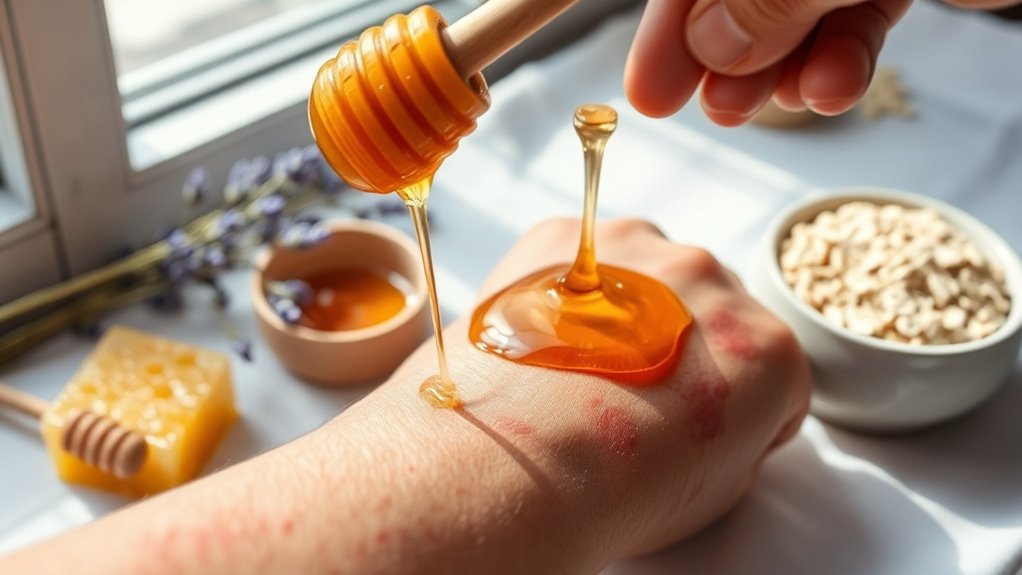
Honey offers antimicrobial and anti-inflammatory properties that may benefit eczema-prone skin, though clinical evidence remains limited. You can apply medical-grade or Manuka honey directly to affected areas, ensuring you’ve tested for sensitivity first.
Raw honey contains hydrogen peroxide and polyphenols that might reduce bacterial colonization, particularly Staphylococcus aureus, which commonly colonizes eczematous lesions.
Apply a thin layer to clean, dry skin and cover with a breathable bandage. Leave it on for 20-30 minutes before rinsing with lukewarm water. You’ll want to use this treatment once daily, preferably at night.
Consider mixing honey with coconut oil in equal parts for enhanced moisturization. Like honey, coconut oil’s medium-chain fatty acids provide antimicrobial properties that can help support skin barrier function. However, discontinue use if you experience increased irritation, burning, or allergic reactions. Consult your dermatologist before incorporating honey-based treatments into your regimen.
Anti-Inflammatory Dietary Adjustments for Long-Term Support
While topical treatments address surface symptoms, dietary modifications may influence systemic inflammation that underlies eczema flare-ups. Evidence suggests certain nutritional interventions may support skin barrier function, though individual responses vary considerably.
Consider these evidence-informed adjustments:
-
Omega-3 fatty acids: Found in fatty fish, flaxseeds, and walnuts, these compounds may modulate inflammatory pathways. Some studies indicate potential symptom reduction, though results aren’t universally consistent.
-
Probiotic-rich foods: Fermented foods like yogurt, kefir, and kimchi might support gut microbiome diversity, which research tentatively links to immune regulation.
-
Elimination of common triggers: Dairy, gluten, and processed foods may exacerbate symptoms in susceptible individuals. Consider supervised elimination trials to identify personal sensitivities.
-
Anti-inflammatory herbs: Chamomile tea offers natural anti-inflammatory benefits that may complement dietary adjustments when consumed regularly.
You’ll need patience—dietary changes typically require 4-6 weeks before noticeable effects emerge. Consult healthcare providers before implementing significant dietary modifications.
Frequently Asked Questions
Can Stress Triggers Make Eczema Flare-Ups Worse Even With Natural Treatments?
Yes, stress can worsen your eczema flare-ups despite natural treatments. Research shows stress triggers inflammatory responses and compromises your skin barrier function. You’ll likely need to combine stress management techniques with topical treatments for optimal eczema control.
How Long Does It Take to See Improvement Using Natural Remedies?
You’ll typically notice initial improvement within 2-4 weeks of consistent natural treatment, though complete results often take 6-8 weeks. However, response times vary significantly based on your eczema’s severity and individual skin characteristics.
Are Natural Treatments Safe to Use Alongside Prescription Eczema Medications?
You’ll generally find natural treatments compatible with prescription medications, but you should consult your dermatologist first. Some ingredients can interact with topicals or affect absorption rates, so it’s essential to verify safety for your specific treatment regimen.
Should I Avoid Certain Fabrics or Clothing Materials When Treating Eczema Naturally?
Yes, you’ll want to avoid wool and synthetic fabrics, as they can irritate sensitive skin. Instead, choose soft, breathable cotton or silk materials. However, individual reactions vary, so you should monitor your skin’s specific response carefully.
Can Children and Babies Safely Use These Natural Eczema Treatment Methods?
You’ll need to exercise extra caution with infants and children. While some natural methods like moisturizing and oatmeal baths are generally safe, you should consult your pediatrician first, as children’s skin is more sensitive and reactive.