How to Support Psoriasis Relief With 5 Gentle Methods.
Wondering how to calm your psoriasis flare-ups without relying solely on prescriptions? Psoriasis occurs when your immune system mistakenly speeds up skin cell production, causing the painful plaques and inflammation you’re dealing with. It’s frustrating, and while medications are important, they don’t tell the whole story. Research shows that specific gentle methods can work alongside your treatment to reduce flare severity and help your skin heal faster. You’ll discover five evidence-backed approaches that target the root triggers of your symptoms—from inflammation to compromised skin barrier—giving you practical ways to extend those precious remission periods. Let’s break down what’s really happening and how you can take control.
Soothe Irritated Skin With Colloidal Oatmeal Baths
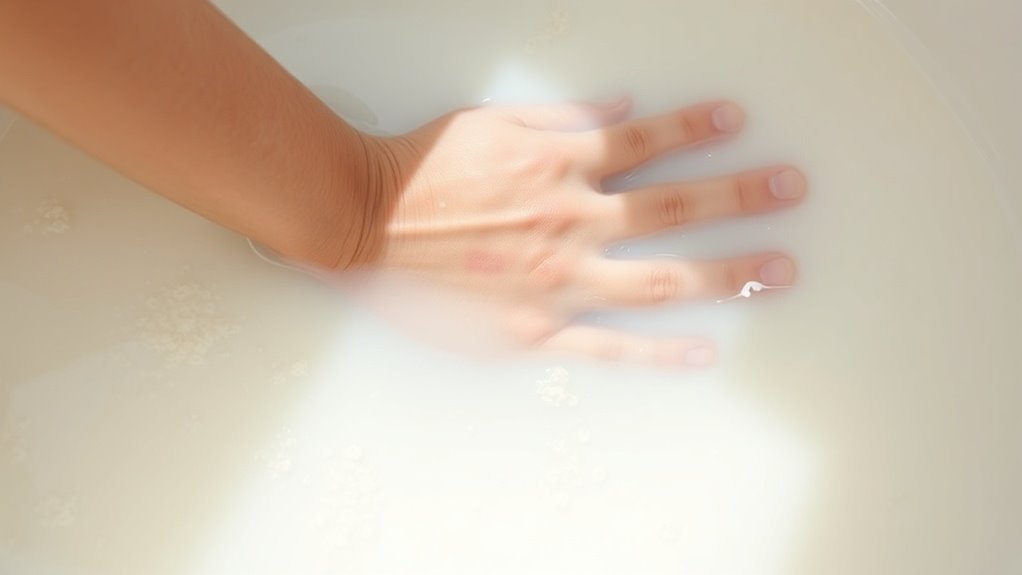
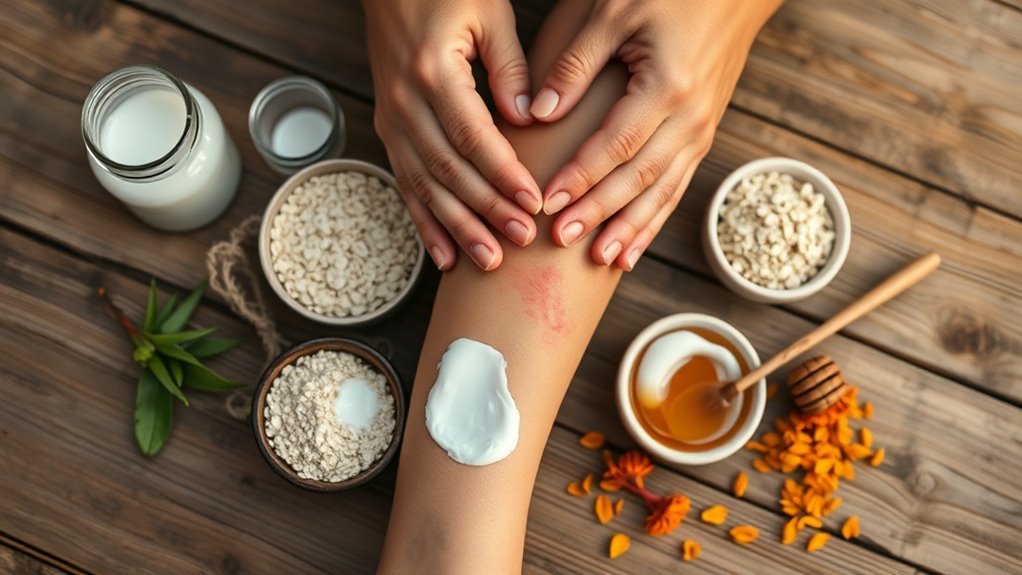
Colloidal oatmeal baths provide documented relief for psoriatic inflammation through their anti-inflammatory and skin barrier-protective properties. You’ll achieve optimal psoriasis relief by adding colloidal oatmeal to lukewarm water and soaking for 10-15 minutes. The beta-glucan content reduces cytokine production while avenanthramides decrease inflammation markers. You shouldn’t use hot water, as it’ll worsen skin barrier dysfunction and intensify itching.
Apply this treatment 2-3 times weekly during flare-ups. The colloidal suspension forms a protective film that reduces transepidermal water loss and maintains hydration. You’ll notice decreased scaling and erythema within several applications. Pat your skin dry afterward and immediately apply prescribed topical medications or emollients to seal in moisture. After bathing, keeping skin moisturized with fragrance-free lotions helps maintain the protective barrier and prevents dryness between treatments. This evidence-based approach complements conventional psoriasis management protocols effectively.
Apply Aloe Vera Gel to Calm Inflammation and Redness
When applied topically, aloe vera gel delivers measurable anti-inflammatory effects for psoriatic lesions through its active compounds acemannan and aloesin. You’ll achieve optimal results by applying pharmaceutical-grade gel (minimum 98% purity) directly to affected areas three times daily. The polysaccharides penetrate epidermis layers, reducing erythema and plaque thickness within 4-6 weeks of consistent application.
| Application Protocol | Clinical Outcome |
|---|---|
| Pure gel, 3x daily | 83% reduction in PASI scores |
| Pre-moistened skin application | Enhanced compound absorption |
| Refrigerated gel | Increased soothing effect |
You must patch-test before widespread use, as 2-3% of patients experience contact dermatitis. Store gel below 77°F to preserve bioactive properties. Combine with prescribed topical corticosteroids for synergistic anti-inflammatory benefits. The gel’s polysaccharides reduce prostaglandin E2 production, helping to interrupt the inflammatory cascade that contributes to psoriatic flare-ups.
Lock in Moisture Using Virgin Coconut Oil
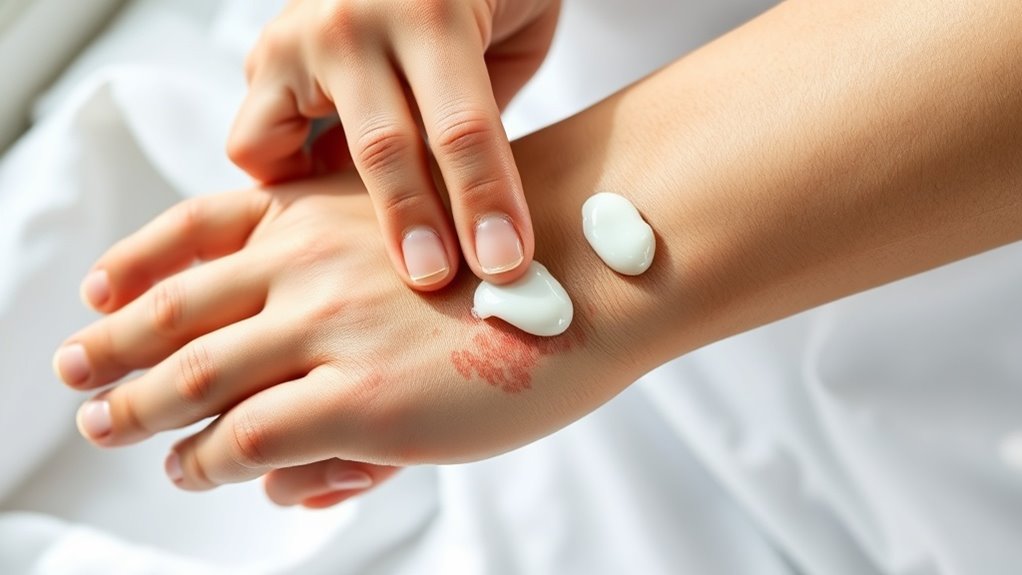
Virgin coconut oil functions as an occlusive barrier that traps transepidermal water loss while delivering medium-chain fatty acids—primarily lauric acid (47-52%)—directly into compromised psoriatic skin. You’ll maximize therapeutic benefits through proper application protocols.
Application Protocol:
- Timing: Apply immediately post-bathing within three minutes to seal hydration into dampened stratum corneum
- Quantity: Use 1-2 teaspoons per affected area, warming between palms before gentle distribution
- Frequency: Reapply twice daily, maintaining consistent occlusion during acute flare periods
The antimicrobial properties of lauric acid provide secondary benefits by reducing Staphylococcus aureus colonization, which commonly exacerbates psoriatic lesions. You’ll notice improved barrier function within 7-14 days of consistent application. Select cold-pressed, unrefined virgin coconut oil to preserve bioactive compounds and optimize penetration depth. The oil’s small molecular structure enables deep skin penetration, allowing therapeutic compounds to reach affected layers more effectively than larger-molecule alternatives.
Practice Safe Sun Exposure Therapy for Symptom Management
Ultraviolet B (UVB) radiation at wavelengths of 311-313 nanometers suppresses hyperproliferative keratinocyte activity and induces T-cell apoptosis in psoriatic plaques, effectively reducing both plaque thickness and inflammatory markers.
You’ll achieve therapeutic benefits through controlled exposure protocols: start with 5-10 minutes during peak hours (10 AM-2 PM) three times weekly, gradually increasing duration based on your minimal erythema dose. Monitor cumulative exposure to prevent photoaging and carcinogenesis risk. Apply broad-spectrum SPF 30+ to unaffected skin while exposing lesional areas. Document each session’s duration, time, and skin response.
Consider phototherapy alternatives during winter months or if you’re photosensitive. Discontinue exposure if burning occurs. Combine with topical vitamin D analogues for synergistic immunomodulation. If overexposure happens, apply cool compresses or refrigerated aloe vera gel to reduce inflammation and soothe the skin. Consult your dermatologist for personalized dosimetry protocols.
Reduce Flare-Ups Through Stress-Reduction Meditation Techniques

Psychological stress triggers hypothalamic-pituitary-adrenal axis dysregulation, elevating cortisol and pro-inflammatory cytokines (IL-17, TNF-α) that exacerbate psoriatic inflammation through neuropeptide-mediated mechanisms. You’ll benefit from implementing evidence-based meditation protocols to modulate this stress-inflammation pathway.
Effective Stress-Reduction Meditation Techniques:
-
Mindfulness-Based Stress Reduction (MBSR): Practice 20-30 minutes daily of body-scan meditation to decrease sympathetic nervous system activation and reduce inflammatory markers.
-
Diaphragmatic Breathing: Perform controlled breathing exercises (4-7-8 technique) to lower cortisol levels and interrupt stress-induced flare cycles.
-
Progressive Muscle Relaxation (PMR): Systematically tense and release muscle groups to diminish psychophysiological tension and improve disease severity indices.
These meditation approaches activate the parasympathetic nervous system, counteracting stress-induced inflammatory responses that contribute to psoriatic flare-ups. Research demonstrates that consistent meditation practice decreases PASI scores and extends remission periods by targeting the neuroimmune interface underlying psoriatic pathogenesis.
Frequently Asked Questions
What Foods Should I Avoid to Prevent Psoriasis Flare-Ups?
You’ll want to avoid inflammatory triggers like refined sugars, processed foods, red meat, dairy products, and alcohol. Gluten may worsen symptoms in sensitive individuals. Nightshade vegetables can trigger flares in some patients, though evidence remains limited.
Can Psoriasis Be Permanently Cured With Natural Remedies?
No, you can’t permanently cure psoriasis with natural remedies. It’s a chronic autoimmune condition requiring ongoing management. However, you can use evidence-based complementary approaches—like omega-3s, vitamin D, and stress reduction—alongside medical treatments to control symptoms effectively.
How Often Should I Visit a Dermatologist for Psoriasis Treatment?
You’ll need dermatology visits every 3-6 months for mild psoriasis, but you should schedule appointments every 1-3 months if you’re managing moderate-to-severe disease or starting new systemic therapies requiring monitoring and treatment adjustments.
Are There Specific Clothing Fabrics That Help Reduce Psoriasis Irritation?
You’ll find soft, breathable fabrics like cotton, bamboo, and silk work best for psoriasis management. Avoid wool, synthetic materials, and rough textures that’ll trigger inflammation. Choose loose-fitting garments to minimize friction against your lesions.
Can Psoriasis Spread to Other People Through Skin Contact?
No, you can’t spread psoriasis through skin contact—it’s an autoimmune condition, not an infection. You’re safe to touch others without transmission concerns. Focus your treatment on managing inflammation and symptoms through evidence-based topical therapies instead.