
How to Fall Asleep Naturally in 15 Minutes Without Pills.
You’ve been lying awake, watching the clock tick past midnight, knowing you have to be up in five hours. Yes, you can fall asleep naturally in 15 minutes or less using specific body-based techniques that may help trigger your natural sleep response—no pills required. The key is working with your nervous system, not against it, using methods that take just minutes to learn. Here’s what actually delivers results.
The 4-7-8 Breathing Method for Rapid Sleep Onset

When your mind races at bedtime, the 4-7-8 breathing technique can activate your body’s natural relaxation response in minutes. This method involves inhaling through your nose for four counts, holding your breath for seven counts, and exhaling completely through your mouth for eight counts. You’ll repeat this cycle four times initially, gradually increasing as you become comfortable.
The extended exhale triggers your parasympathetic nervous system, slowing your heart rate and reducing anxiety. Among natural sleep remedies, this technique stands out because it requires no equipment or special environment. Like other relaxation techniques such as progressive muscle relaxation, deep breathing exercises help prepare your body and mind for sleep by reducing tension and calming the nervous system. Practice it consistently for best results.
Progressive Muscle Relaxation: Target Specific Muscle Groups
Progressive muscle relaxation works by systematically tensing and releasing different muscle groups, which signals your body it’s time to sleep.
You’ll start with your toes and work upward through your entire body, releasing accumulated tension as you move toward your head. The technique requires you to tense each muscle group for 5-7 seconds while breathing in, then exhale and release the tension completely.
This practice activates the parasympathetic nervous system, which naturally prepares your body for restful sleep by lowering heart rate and promoting a state of calm.
Start With Toe Muscles
Your toes are the ideal starting point because they’re far from your racing mind and easy to isolate. Curl them tightly for five seconds, creating noticeable tension. Then release completely, letting them go limp. Notice the contrast between tension and relaxation—this awareness is key.
Move through each foot systematically: arch, heel, and ankle. Squeeze each area deliberately, hold briefly, then let go. You’ll feel warmth spreading as blood flow increases.
This bottom-up approach works because it redirects your attention from mental chatter to physical sensations. Your brain can’t worry about tomorrow’s meeting while focusing on your left big toe.
Release Tension Head-Down
After working through your feet, shift your attention to your calves. You’ll progressively release tension from each muscle group moving upward through your body.
-
Calves and thighs: Tense for five seconds, then release completely. Notice the difference between tension and relaxation.
-
Buttocks and abdomen: Squeeze tight, hold briefly, and let go. Feel the warmth spreading.
-
Chest and shoulders: Lift shoulders toward ears, hold, then drop them down.
-
Arms and hands: Make fists, tense your forearms, hold, and release. Finish with your jaw, face, and forehead muscles.
Hold and Breathe Technique
Once you’ve worked through each major muscle group, enhance the relaxation effect by synchronizing your breathing with each tension-release cycle. Inhale deeply through your nose as you tense a specific muscle group, holding both the breath and tension for five seconds. Then exhale slowly through your mouth while releasing the muscle tension completely.
This breathing pattern amplifies the contrast between tension and relaxation, deepening your body’s response. Focus on your shoulders, jaw, and hands—common stress-holding areas. Repeat this hold-and-breathe sequence three times per muscle group. You’ll notice increased drowsiness as your nervous system shifts into rest mode.
Optimal Magnesium Glycinate Dosage and Timing
The right dose of magnesium glycinate makes all the difference between tossing all night and drifting off peacefully. You’ll need 200-400mg taken 30-60 minutes before bed for optimal results.
Timing and dosage guidelines:
- Start low: Begin with 200mg nightly to assess your body’s response and adjust upward if needed.
- Take with food: Consume with a light snack to enhance absorption and prevent stomach discomfort.
- Stay consistent: Take it at the same time each evening to regulate your sleep-wake cycle.
- Avoid exceeding 400mg: Higher doses won’t improve sleep quality and may cause digestive issues.
Maintaining optimal levels of magnesium through supplementation can help reduce nighttime restlessness and support your body’s natural sleep processes.
Creating the Perfect Sleep Environment in Under 5 Minutes
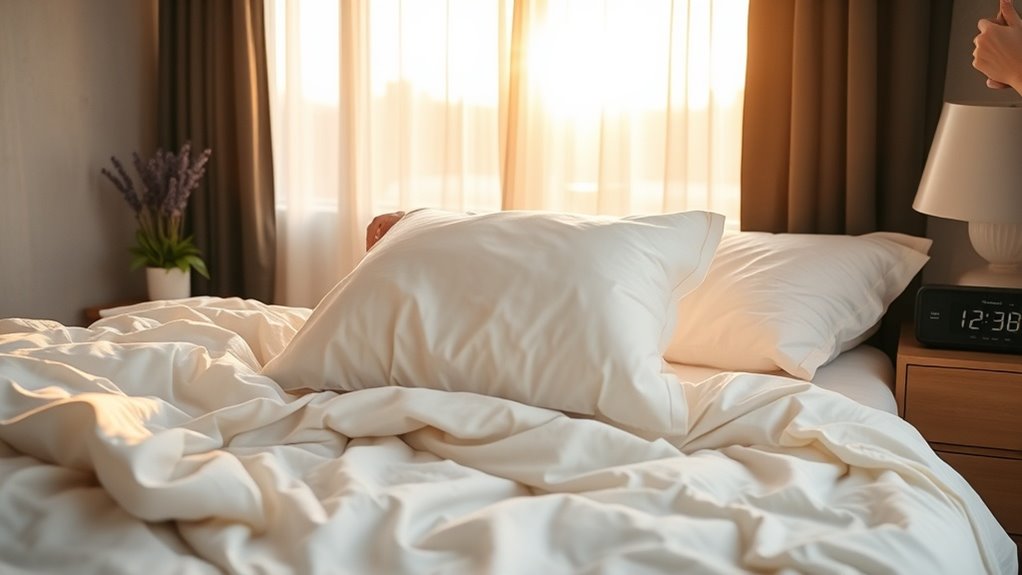
Your bedroom’s conditions directly impact how quickly you’ll fall asleep, and you can optimize them in just minutes. The three critical factors you need to address are temperature, light, and noise—each requiring simple adjustments that make an immediate difference.
Let’s examine how to quickly control these elements so your body recognizes it’s time to sleep.
Set your thermostat between 60-67°F (15-19°C) to create the optimal temperature range that supports your body’s natural sleep mechanisms.
Optimal Room Temperature Control
Everyone knows temperature matters for sleep, but most people set it wrong. Your body needs to drop its core temperature to trigger sleep, which is why you’ll struggle in a warm room.
Set your thermostat between 60-67°F (15-19°C) – this range supports your natural temperature decline.
Cool your room 30 minutes before bed – don’t wait until you’re already trying to sleep.
Use a fan for air circulation – still air feels warmer than moving air.
Keep hands and feet outside covers – they release excess heat efficiently.
Block Light Sources Completely
Light exposure sabotages your sleep hormones faster than almost any other environmental factor. Even small amounts of light penetrate your eyelids and signal your brain to stay alert, suppressing melatonin production.
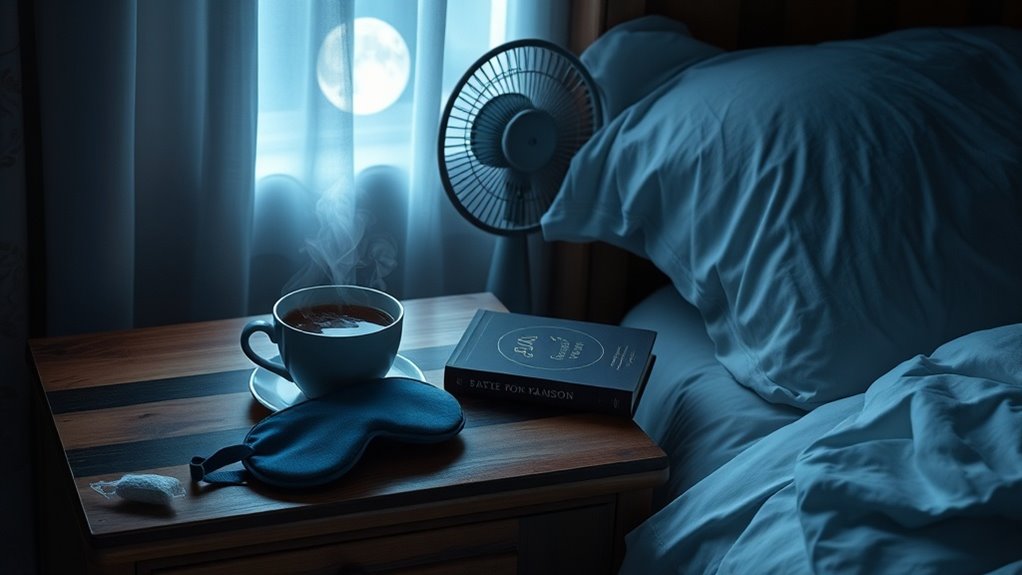
Cover your windows with blackout curtains or use a sleep mask that blocks 100% of light. Turn your alarm clock away from you or switch to one without illuminated displays. Place black electrical tape over LED indicators on electronics, or remove devices from your bedroom entirely.
Check for light leaks under doors by stuffing a towel along the gap. Your room should be dark enough that you can’t see your hand in front of your face.
Reduce Noise and Distractions
While darkness handles the visual disruption to sleep, sound creates an equally powerful barrier between you and rest. Your brain processes noise even during sleep, triggering micro-awakenings that prevent deep rest cycles.
Silence your environment quickly:
- Set devices to airplane mode – Eliminates notification buzzes and electromagnetic interference
- Use white noise machines – Masks irregular sounds with consistent background frequencies
- Install door draft stoppers – Blocks hallway noise and light simultaneously
- Position a fan strategically – Creates sound barrier while improving air circulation
These adjustments take under five minutes but dramatically reduce auditory disruptions throughout the night.
Chamomile Tea Preparation and Consumption Guidelines

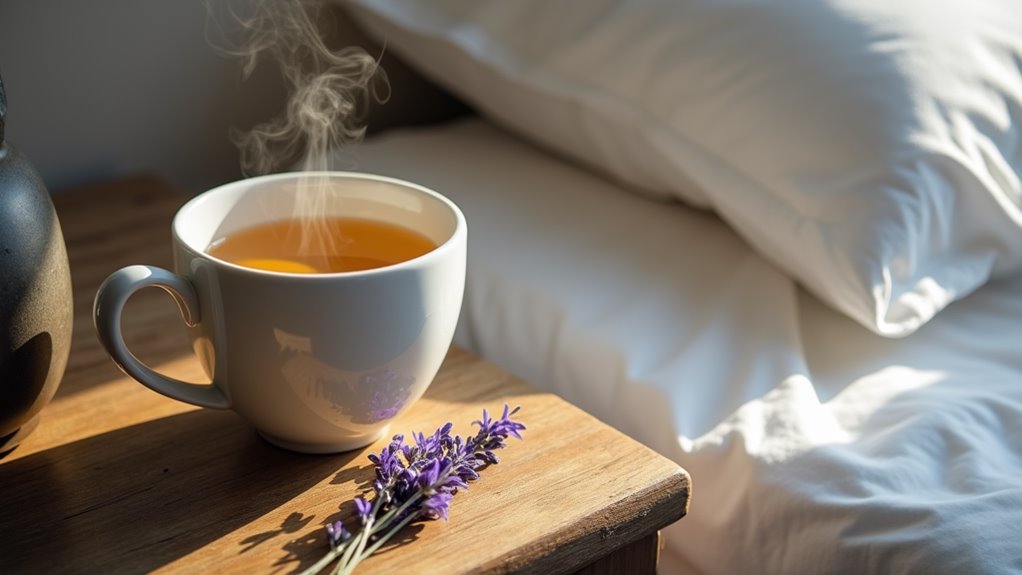
Brewing chamomile tea properly makes all the difference in its sleep-promoting effectiveness. Use one tablespoon of dried chamomile flowers or one tea bag per cup of boiling water. Steep for five minutes to extract maximum apigenin, the compound that promotes drowsiness.
Cover your cup while steeping to prevent essential oils from escaping. Drink your tea 30-45 minutes before bedtime, allowing enough time for the sedative effects to activate. Don’t add sugar, as it’ll spike your blood sugar and counteract the calming benefits. If you need sweetness, use a small amount of honey instead.
For enhanced results, you can create a custom blend by combining chamomile with lavender and passionflower in a 2:1:1 ratio for additional relaxation benefits.
Essential Oil Aromatherapy Combinations That Work
Essential oils offer a scientifically-backed approach to trigger your body’s natural sleep response within minutes. Lavender-based blends work best when you combine them strategically and apply them at the right time before bed.
You’ll achieve faster results by understanding which specific combinations target your nervous system most effectively. For even deeper relaxation, pair your aromatherapy routine with evening rituals like dimming lights 90 minutes before bedtime or practicing gentle stretching to prepare your body for restorative rest.
Best Lavender-Based Blends
Lavender becomes even more effective when you pair it with complementary essential oils that enhance its sleep-inducing properties.
Top lavender blends for better sleep:
-
Lavender + Chamomile – Combines two powerful relaxants that calm your nervous system and reduce nighttime anxiety.
-
Lavender + Cedarwood – The grounding woodsy scent deepens lavender’s sedative effects while promoting emotional balance.
-
Lavender + Bergamot – This citrus-floral combination relieves stress and regulates your sleep-wake cycle naturally.
-
Lavender + Ylang Ylang – Creates a sweet, calming atmosphere that slows your heart rate and eases tension.
Mix 3-4 drops of each oil in your diffuser thirty minutes before bedtime.
Application Methods and Timing
When should you apply essential oils to maximize their sleep-inducing effects? Apply them 30-45 minutes before bedtime to allow the aromatic compounds to influence your nervous system. Use a diffuser in your bedroom, starting it when you begin your wind-down routine.
Alternatively, apply diluted oils directly to pulse points—wrists, temples, and behind ears—for sustained release throughout the night. You can also add 5-7 drops to a warm bath taken one hour before sleep. For topical application, always dilute with a carrier oil using a 2-3% concentration. Reapply if you wake during the night for continued benefits.
The Military Sleep Technique Used by Armed Forces
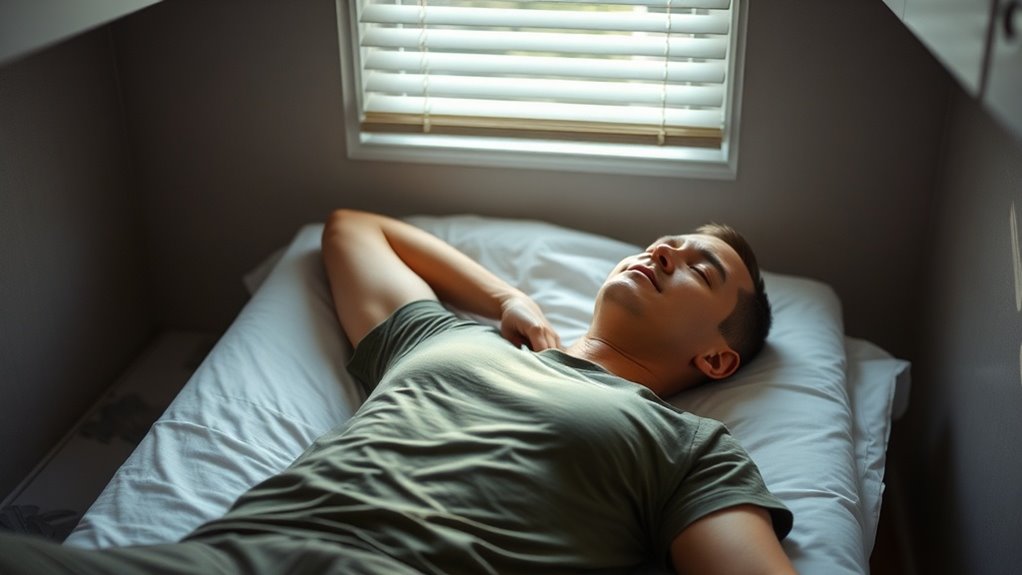
During World War II, the U.S. Navy developed a technique to help pilots fall asleep in two minutes. You’ll systematically relax your entire body through this proven method:
-
Relax your face – Release tension in your jaw, tongue, and muscles around your eyes. Let your forehead go completely slack.
-
Drop your shoulders – Lower them as far down as possible, then relax your upper and lower arms sequentially.
-
Breathe and release – Exhale slowly while relaxing your chest and legs from thighs to feet.
-
Clear your mind – Visualize a calming scene for ten seconds.
Body Temperature Manipulation for Faster Sleep
Your body’s core temperature naturally drops when it’s time to sleep, and you can trigger this response to fall asleep faster. Take a warm bath 60-90 minutes before bed—as your body cools down afterward, it’ll signal your brain that it’s time to rest.
Meanwhile, keep your bedroom temperature between 60-67°F to maintain that sleep-inducing coolness throughout the night.
Cool Your Bedroom Down
If you’ve ever noticed how difficult it’s to fall asleep on a hot summer night, you’ve experienced firsthand how body temperature affects sleep quality. Your core temperature naturally drops when you’re ready for sleep, and a cooler room accelerates this process.
Optimal bedroom cooling strategies:
- Set your thermostat between 60-67°F (15-19°C) for ideal sleep conditions
- Open windows during evening hours to let cooler air circulate naturally
- Use a fan to improve air circulation and create white noise
- Choose breathable bedding materials like cotton or bamboo that don’t trap heat
Warm Bath Before Bed
While keeping your bedroom cool sets the stage for better sleep, a warm bath 60-90 minutes before bed creates an equally powerful effect through strategic body temperature manipulation.
When you soak in warm water (104-109°F), your core temperature rises temporarily. After exiting the bath, your body rapidly cools down, triggering your natural sleep mechanism. This temperature drop signals your brain to release melatonin and initiate drowsiness.
The effect mimics your body’s natural evening rhythm but accelerates the process. You’ll experience deeper relaxation as blood vessels dilate, promoting heat loss and preparing your body for restorative sleep.
Cognitive Shuffling: Redirecting Your Racing Thoughts

Racing thoughts at bedtime often create a frustrating cycle where the harder you try to sleep, the more alert your mind becomes. Cognitive shuffling interrupts this pattern by occupying your conscious mind with random, non-threatening imagery.
Here’s how you’ll practice it:
- Choose a neutral word like “bedtime” and visualize an object starting with each letter (balloon, elephant, drum)
- Spend 5-10 seconds on each mental image before moving to the next
- Keep images emotionally neutral—avoid anything stimulating or stressful
- Let your mind wander between unrelated objects without forcing connections
This technique exhausts your analytical thinking, allowing sleep to arrive naturally.
White Noise and Sound Frequency Optimization
Your bedroom’s acoustic environment directly influences how quickly you fall asleep, yet most people overlook this critical factor. White noise masks disruptive sounds by creating consistent audio frequencies between 20-20,000 Hz. You’ll experience optimal results with frequencies around 50-60 decibels—roughly equivalent to moderate rainfall.
Pink noise offers deeper frequencies than white noise, promoting slower brain waves during sleep. Brown noise provides even lower frequencies, ideal if you’re sensitive to high-pitched sounds.
Position your sound machine 6-8 feet from your bed. Start it 30 minutes before sleeping, allowing your nervous system to acclimate. Avoid music with lyrics or varying tempos—consistency matters most.
The 20-Minute Wind-Down Routine Protocol
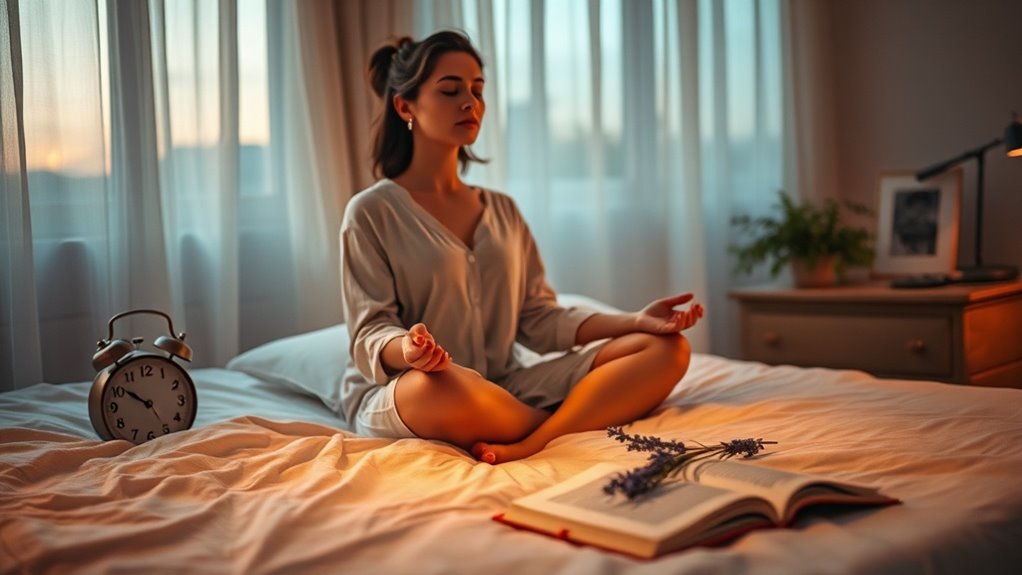
Beyond optimizing your bedroom’s sound environment, you need a structured sequence of activities that systematically prepares your body for sleep.
This 20-minute protocol trains your brain to recognize sleep signals:
- Minutes 0-5: Dim all lights to 50% brightness and set your phone to airplane mode
- Minutes 5-10: Perform gentle stretches focusing on your neck, shoulders, and lower back
- Minutes 10-15: Practice slow breathing—inhale for 4 counts, hold for 4, exhale for 6
- Minutes 15-20: Journal three things from your day, then read physical pages (not screens)
Follow this sequence nightly at the same time.
Pressure Point Acupressure for Sleep Induction
Ancient Chinese medicine practitioners stumbled upon specific body points that trigger measurable physiological relaxation responses—and you can activate them in under five minutes.
Press the Spirit Gate point: locate the crease on your wrist’s pinky side, then apply firm circular pressure for two minutes. Next, target the Inner Frontier Gate—three finger-widths below your wrist, between two tendons. Press firmly for 30 seconds.
Finally, massage the Anmian points behind your earlobes, where your skull meets your neck. Apply gentle pressure in small circles for three minutes. These acupressure techniques stimulate parasympathetic nervous system activation, directly counteracting cortisol-driven wakefulness.
Visualization Techniques That Trigger Drowsiness

While your mind naturally resists sleep when racing with thoughts, deliberately guiding it through specific visual sequences creates cognitive patterns that mirror pre-sleep brain activity.
Effective visualization methods include:
-
Staircase descent – Picture yourself walking down 20 steps, counting backward while imagining increased heaviness with each step downward.
-
Beach wave pattern – Visualize waves rolling onto shore rhythmically, synchronizing your breath with their gentle, repetitive motion.
-
Color fade technique – Watch a bright color gradually dim to black across 10 slow breaths.
-
Memory replay – Reconstruct mundane activities like your morning routine in reverse chronological order.
Blue Light Blocking Strategies Before Bedtime
Your evening screen time sets off a biological alarm that suppresses melatonin production for hours after you’ve powered down. Start wearing blue light blocking glasses two hours before bed—they filter the specific wavelengths that disrupt your sleep hormone.
Enable night mode on all devices, shifting screens to warmer amber tones. Better yet, establish a digital sunset by turning off electronics ninety minutes before sleep. Replace scrolling with reading physical books under dim, warm lighting. If you must use devices, reduce brightness to minimum levels and maintain arm’s length distance to minimize exposure intensity.
Herbal Supplement Stack for Natural Sleep Support

Beyond managing light exposure, specific plant-based compounds can directly influence your brain’s sleep chemistry without the dependency risks of pharmaceutical options.
Consider this evidence-based stack:
-
Magnesium glycinate (200-400mg) – Calms your nervous system by regulating GABA receptors, reducing nighttime anxiety and muscle tension.
-
L-theanine (200mg) – Promotes alpha brain waves associated with relaxed alertness, helping you transition into sleep naturally.
-
Apigenin (50mg) – This chamomile extract binds to benzodiazepine receptors, producing gentle sedative effects.
-
Glycine (3g) – Lowers your core body temperature and improves sleep quality by affecting serotonin pathways.
Take these 30-60 minutes before bed.