
How to Balance Oily Skin Naturally With 6 Simple Steps.
Your face feels like an oil slick by noon, and you’re tired of blotting papers that only work for an hour. The good news? You can balance oily skin naturally in as little as 2-3 weeks using ingredients already sitting in your kitchen—no harsh chemicals required. These six simple methods work with your skin’s natural sebum production instead of stripping it away, which is exactly why they may help create lasting results. Most take under 5 minutes to apply, and you can start seeing changes within days. Here’s what actually delivers that matte, healthy glow you’ve been after.
Cleanse With Honey and Oatmeal to Remove Excess Oil Without Stripping Skin
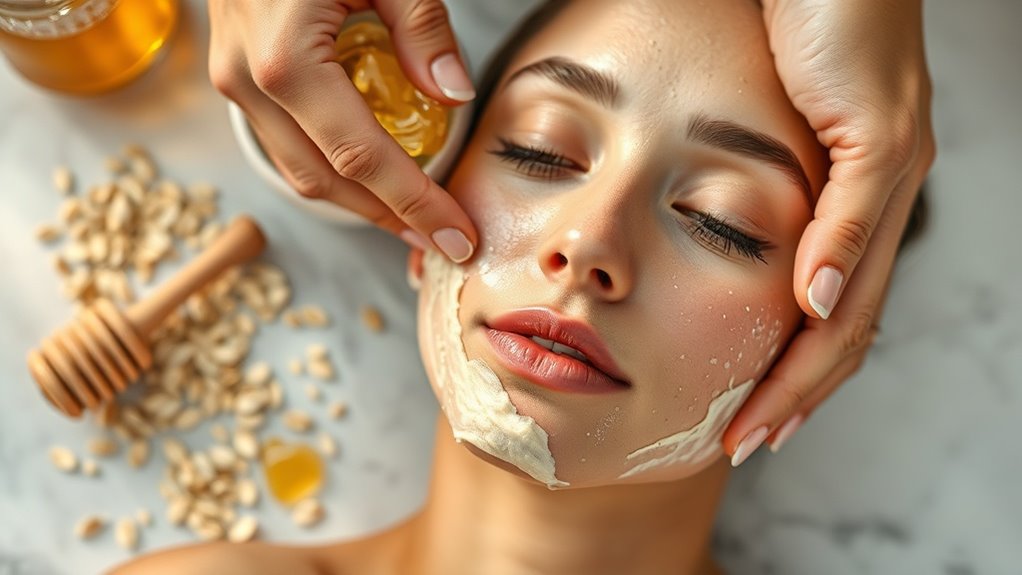
While commercial cleansers often contain harsh sulfates that strip your skin and trigger excess oil production, a simple honey and oatmeal mixture offers a gentler alternative.
Mix one tablespoon of raw honey with ground oatmeal to create a paste. Gently massage it onto damp skin using circular motions, then rinse with lukewarm water. Honey’s antibacterial properties combat acne-causing bacteria while maintaining moisture, and oatmeal absorbs excess sebum without irritation.
This natural oily skin care method balances your complexion’s oil levels effectively. The beta-glucans in oatmeal not only absorb oil but also soothe inflammation, making this remedy ideal for sensitive, oily skin types. Use this cleanser twice daily for optimal results, and you’ll notice reduced shine within weeks.
Apply Bentonite Clay Masks Twice Weekly to Absorb Impurities and Control Shine
Because bentonite clay carries a negative electrical charge, it draws out positively charged toxins, excess oils, and impurities from your pores like a magnet. Mix one tablespoon of clay with water until you’ve created a smooth paste.
Apply an even layer across your face, avoiding your eye area. Let it dry for 10-15 minutes until it feels tight. Rince thoroughly with lukewarm water and pat dry. Use this mask twice weekly for optimal results. You’ll notice reduced shine and smaller-looking pores.
Always moisturize afterward since clay can temporarily dry your skin. For best results, follow up with a lightweight moisturizer containing hyaluronic acid to restore hydration without adding greasiness to your complexion.
Tone With Witch Hazel to Minimize Pores and Reduce Oil Production
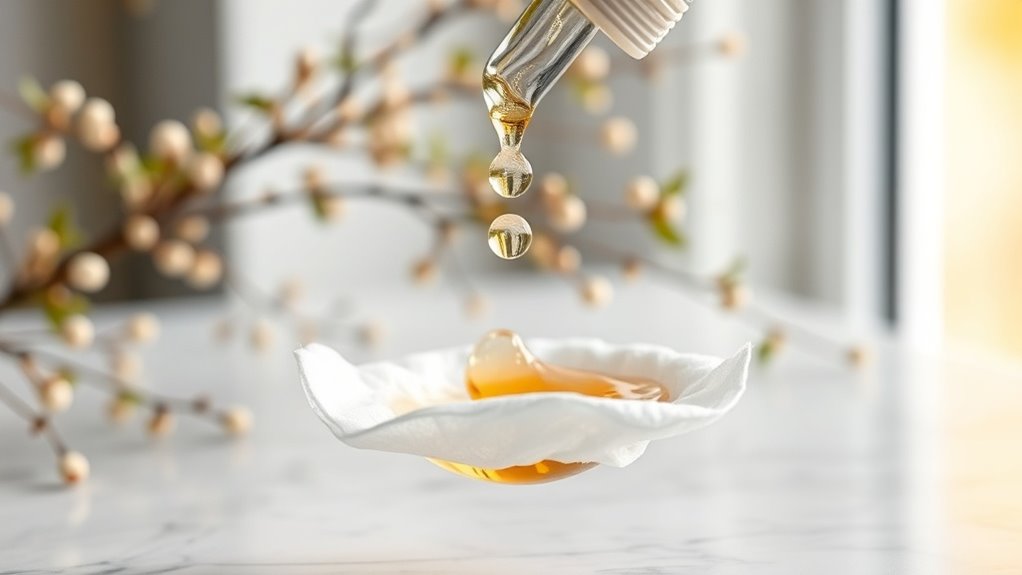
Witch hazel acts as a natural astringent that tightens your pores and controls excess sebum without stripping your skin’s protective barrier. Apply alcohol-free witch hazel to a cotton pad and sweep it across your clean face twice daily.
The tannins in witch hazel reduce inflammation while balancing oil production throughout the day. You’ll notice smaller-looking pores and a mattified complexion within two weeks of consistent use.
For enhanced benefits, store your witch hazel in the refrigerator—the cooling effect further minimizes pores and soothes irritated skin. Always choose formulas without added alcohol to prevent over-drying.
After toning, follow with a lightweight moisturizer containing hyaluronic acid or niacinamide to maintain your skin’s hydration without adding extra shine.
Use Green Tea as a Natural Astringent and Antioxidant Treatment
Green tea isn’t just for drinking—it’s a powerful ally for controlling excess oil on your skin. This natural astringent contains polyphenols that reduce sebum production while fighting inflammation and bacteria.
You’ll need to brew it strong, let it cool completely, and apply it with a cotton pad as you’d any toner. For an enhanced treatment, combine green tea with white clay to create a mask that offers both antioxidant benefits and oil-absorbing properties.
Green Tea’s Oil-Fighting Properties
For centuries, Asian cultures have recognized tea leaves’ remarkable ability to calm inflammation and regulate excess sebum production. Green tea contains polyphenols called catechins that actively reduce your skin’s oil output while fighting acne-causing bacteria.
The epigallocatechin gallate (EGCG) in green tea works as a powerful anti-inflammatory agent, shrinking your pores and minimizing shine.
You’ll get best results by brewing cooled green tea and applying it directly to your face with cotton pads. Alternatively, you can incorporate green tea extract serums into your routine. These polyphenols also protect against environmental damage while balancing your skin’s natural moisture levels.
How to Apply Correctly
Understanding green tea’s benefits means nothing if you don’t apply it properly to maximize its oil-controlling effects.
Brew a strong cup of green tea and let it cool completely. Use a cotton pad to apply the tea directly onto your cleansed face, focusing on your T-zone and other oily areas. Pat gently rather than rubbing harshly. Leave it on for 10-15 minutes before rinsing with lukewarm water.
You can also transfer cooled green tea into a spray bottle for convenient application throughout the day. Apply twice daily for best results, and refrigerate unused portions for up to three days.
Balance Your Skin’s Ph With Diluted Apple Cider Vinegar
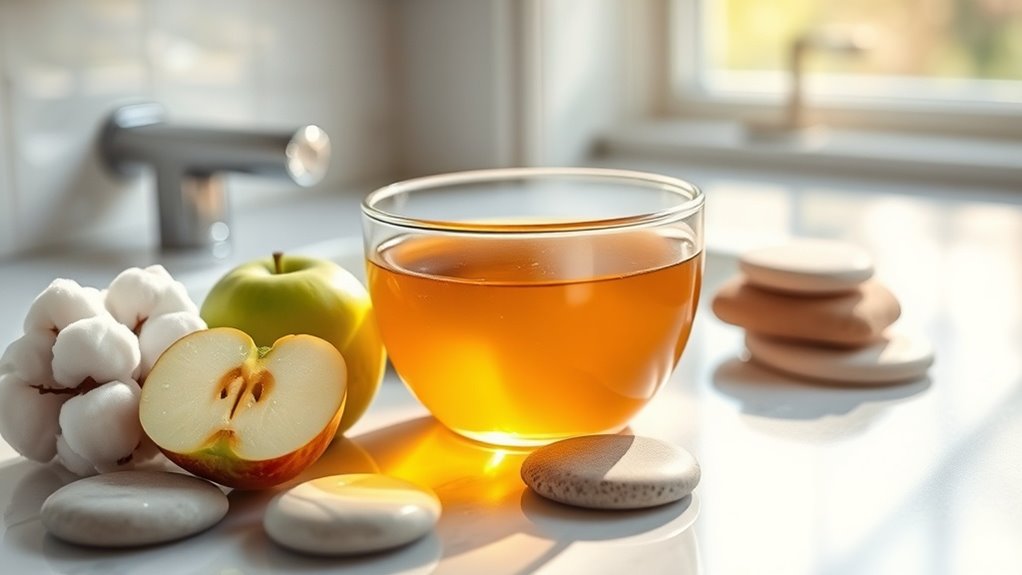
Your skin’s pH level directly affects oil production—when it’s too alkaline, your sebaceous glands overcompensate by creating excess oil. Apple cider vinegar contains acetic acid that restores your skin’s natural acidic pH of 4.5 to 5.5, helping regulate sebum production.
You’ll need to dilute it properly before application: mix one part raw apple cider vinegar with two parts water for sensitive skin, or use a 1:1 ratio for normal to oily skin. The alpha-hydroxy acids in apple cider vinegar also work to exfoliate dead skin cells, which can contribute to clogged pores and excess oil buildup.
Why Ph Balance Matters
Everyone’s skin naturally sits at a slightly acidic pH level between 4.5 and 5.5, but harsh cleansers and environmental stressors can throw this delicate balance off course. When your skin’s pH rises too high, it becomes alkaline, triggering excess oil production as your skin overcompensates to restore its protective barrier.
This imbalance also weakens your skin’s natural defenses, making you more susceptible to acne-causing bacteria and inflammation. You’ll notice increased shine, breakouts, and irritation when your pH is disrupted. Maintaining proper pH levels helps regulate sebum production, keeping your skin balanced rather than perpetually greasy.
How to Apply Safely
Applying apple cider vinegar directly to your face will do more harm than good, so always dilute it first. Mix one part apple cider vinegar with three parts water for sensitive skin, or use a 1:2 ratio for normal skin.
Cleanse your face before application, then use a cotton pad to apply the diluted solution as a toner. Avoid the eye area completely. Start by applying every other day to test your skin’s reaction. If you experience burning or excessive redness, rinse immediately and increase dilution.
Always patch test on your inner arm before facial application.
Moisturize With Lightweight Natural Oils to Regulate Sebum Production
While it may seem counterintuitive, applying oil to oily skin can actually help balance sebum production rather than worsen it. Your skin overproduces oil when it’s dehydrated, so lightweight oils signal that moisture is present, reducing excess sebum.
Choose jojoba oil, which mimics your skin’s natural sebum, or grapeseed oil, which absorbs quickly without clogging pores. Apply 2-3 drops to damp skin after cleansing, gently pressing it in. These oils deliver hydration while regulating your skin’s oil production over time. For enhanced barrier repair benefits, consider adding a drop of argan oil to your blend, as it strengthens the skin’s resilience through essential fatty acids. You’ll notice your complexion becoming more balanced, less shiny, and properly nourished without heaviness.