Can These 5 Hyperpigmentation Remedies Even Out Skin Tone.
Wondering if those dark spots on your skin will ever fade? Hyperpigmentation occurs when your skin produces excess melanin in certain areas, creating patches that are darker than your natural tone—and yes, targeted ingredients can effectively even them out. These stubborn spots are incredibly common, affecting people of all skin types, often triggered by sun exposure, acne scars, hormonal changes, or inflammation. The good news: five clinically-proven remedies work through different pathways to lighten existing pigmentation and prevent new spots from forming. You’ll discover exactly how each ingredient targets dark spots, which one suits your skin type best, and how to use them safely for visible results. Let’s break down what’s really happening beneath your skin’s surface and which solutions actually deliver.
Vitamin C Serums: Brightening Power for Dark Spots and Uneven Tone
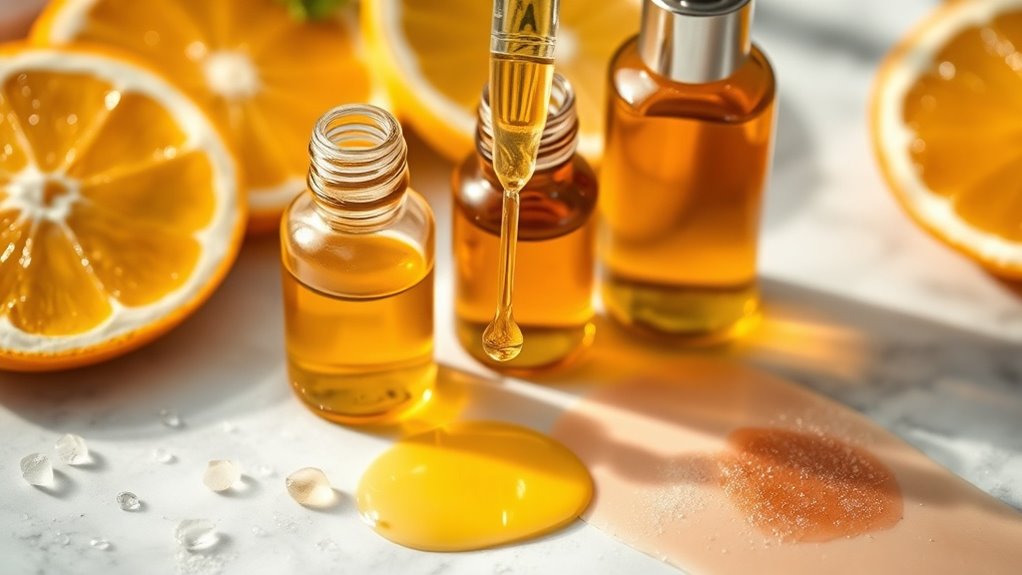
When melanin production becomes dysregulated, vitamin C serums offer a scientifically validated approach to address the resulting hyperpigmentation. L-ascorbic acid, the active form, inhibits tyrosinase—the enzyme responsible for melanin synthesis—potentially reducing dark spot intensity over time.
You’ll find concentrations between 10-20% demonstrate optimal efficacy in clinical studies. The antioxidant properties neutralize free radicals that trigger irregular pigmentation, while promoting collagen synthesis for improved skin texture.
However, you should understand that vitamin C’s instability presents challenges. It oxidizes rapidly when exposed to light and air, diminishing therapeutic benefits. Select formulations with stabilized derivatives like sodium ascorbyl phosphate or packaging that minimizes oxidation.
Consistent application for 8-12 weeks typically yields visible improvements in hyperpigmentation, though individual responses vary based on skin type and pigmentation severity. For maximum protection against UV damage, apply vitamin C serum in the morning before your broad-spectrum SPF 30+ sunscreen to enhance your skin’s defense against the primary environmental trigger of dark spots.
Kojic Acid Treatments: Targeted Approach to Melanin Reduction
Derived from various fungi species, kojic acid functions as a copper-chelating agent that directly inhibits tyrosinase activity at the melanocyte level. You’ll find concentrations ranging from 1-4% in most formulations, though clinical efficacy appears optimal at 2%.
| Concentration | Application Frequency | Expected Timeline | Side Effect Risk | Compatibility |
|---|---|---|---|---|
| 1% | Twice daily | 8-12 weeks | Low | High |
| 2% | Once-twice daily | 6-8 weeks | Moderate | Moderate |
| 4% | Once daily | 4-6 weeks | Higher | Limited |
Studies demonstrate 30-40% melanin reduction within two months. However, you may experience contact dermatitis or paradoxical hyperpigmentation with excessive use. Combining kojic acid with hydroquinone or azelaic acid can enhance outcomes, though this requires careful monitoring for cumulative irritation potential. Originally sourced from fermented rice, kojic acid effectively lightens existing dark spots while preventing new hyperpigmented patches from forming.
Licorice Root Extract: Natural Alternative for Gentle Skin Lightening

Glabridin and liquiritin, the primary bioactive compounds in Glycyrrhiza glabra, offer a gentler mechanism for melanogenesis suppression compared to synthetic alternatives. You’ll find that glabridin inhibits tyrosinase activity without cytotoxicity, while liquiritin disperses existing melanin deposits through accelerated epidermal turnover.
Clinical studies demonstrate 20-40% reduction in hyperpigmented lesions over 4-8 weeks at concentrations between 0.5-2%. You’re less likely to experience irritation or post-inflammatory hyperpigmentation compared to hydroquinone protocols.
However, you should note that photooxidation degrades these compounds rapidly. Products require stabilized formulations with antioxidants. You’ll achieve optimal results when combined with broad-spectrum photoprotection and consistent application twice daily. Response rates vary significantly based on melasma depth and constitutional skin phototypes. For enhanced efficacy, consider pairing licorice root extract with vitamin C serums, which provide complementary antioxidant protection while further inhibiting melanin production.
Niacinamide Applications: Multi-Benefit Solution for Hyperpigmentation
Unlike traditional depigmenting agents that target a single pathway, niacinamide (vitamin B3) modulates melanin transfer through multiple mechanisms while simultaneously addressing barrier dysfunction and inflammation. You’ll find concentrations between 2-5% effectively inhibit melanosome transfer from melanocytes to keratinocytes while reducing NADH oxidase activity. Clinical trials demonstrate 4% niacinamide produces comparable results to 4% hydroquinone after 8 weeks, though improvements may be more gradual.
You can expect additional benefits: enhanced ceramide synthesis strengthens your stratum corneum, reducing transepidermal water loss by 24%. The molecule’s anti-inflammatory properties also minimize post-inflammatory hyperpigmentation risk. Niacinamide tolerability is exceptional—irritation rates remain below 5% even in sensitive skin populations. You’re safe combining it with retinoids, acids, or vitamin C, making it remarkably versatile for comprehensive regimens. For enhanced results, niacinamide works synergistically with alpha arbutin to provide dual-action tyrosinase inhibition alongside improved melanin transfer regulation.
Alpha Hydroxy Acid Peels: Exfoliation Strategy for Skin Renewal
When you’re addressing melanin deposits in the epidermis, alpha hydroxy acids (AHAs) accelerate cellular turnover by disrupting the calcium bonds between corneocytes, effectively expediting the removal of pigmented keratinocytes.
The most researched AHAs for hyperpigmentation include:
- Glycolic acid (30-70% concentration): Penetrates deepest due to smallest molecular size, demonstrating measurable improvement in melasma severity scores within 8-12 weeks
- Lactic acid (5-12% concentration): Provides gentler exfoliation while maintaining hydration through humectant properties, particularly suitable for sensitive skin phenotypes
- Mandelic acid (10-20% concentration): Offers slower penetration with reduced irritation potential, showing efficacy in post-inflammatory hyperpigmentation studies
You’ll need consistent application and rigorous photoprotection, as compromised stratum corneum increases photosensitivity. Chemical peels with glycolic or trichloroacetic acid can be performed professionally at higher concentrations to stimulate collagen production and address more stubborn pigmentation. Clinical outcomes typically emerge after 4-6 weeks of sustained use.
Frequently Asked Questions
How Long Does It Take to See Results From Hyperpigmentation Treatments?
You’ll typically notice initial improvements in 4-8 weeks with consistent treatment, though complete results may require 3-6 months. Deeper pigmentation often takes longer. Your skin’s response depends on hyperpigmentation severity, treatment type, and adherence to sun protection.
Can Hyperpigmentation Return After Successful Treatment?
Yes, you’ll find hyperpigmentation can recur even after successful treatment. Without consistent sun protection and maintenance skincare, melanocytes may reactivate, triggering new discoloration. You’re most vulnerable to recurrence from UV exposure and hormonal fluctuations.
Are These Remedies Safe to Use During Pregnancy or Breastfeeding?
Most hyperpigmentation treatments aren’t recommended during pregnancy or breastfeeding. You’ll need to avoid retinoids, hydroquinone, and certain chemical peels. However, you can safely use azelaic acid, vitamin C, and mineral sunscreens with your healthcare provider’s approval.
Should I Wear Sunscreen While Treating Hyperpigmentation?
Yes, you’ll absolutely need daily broad-spectrum SPF 30+ sunscreen while treating hyperpigmentation. UV exposure can worsen discoloration and reverse treatment progress. Consistent sun protection is essential for achieving optimal results and preventing new pigmentation from forming.
Can I Combine Multiple Hyperpigmentation Remedies at Once?
You can combine certain hyperpigmentation treatments, but you’ll need to introduce them gradually to minimize irritation. Pairing ingredients like vitamin C with niacinamide or retinoids with hydroquinone often enhances efficacy, though you should consult a dermatologist first.