
Why Does Oily Skin Get Worse and 7 Ways to Balance It.
Why does oily skin seem to get worse over time instead of staying the same? Oily skin worsens when your sebaceous glands respond to triggers like hormonal changes, stress, climate shifts, and improper skincare—essentially creating a feedback loop that increases oil production. This progression is incredibly common because most people unknowingly aggravate their skin by over-cleansing or using the wrong products, which signals glands to produce even more sebum as a protective response. You’ll discover the specific mechanisms behind escalating oiliness and seven targeted strategies to rebalance your skin’s natural oil production without the generic advice that rarely works. Here’s what you need to know to break the cycle and achieve lasting results. Let’s break down what’s really happening.
Understanding Why Your Sebaceous Glands Go Into Overdrive
Your sebaceous glands produce sebum—a lipid-rich substance that maintains skin barrier function and prevents transepidermal water loss. However, various factors trigger excessive sebum production, exacerbating oily skin conditions.
Hormonal fluctuations, particularly androgens, stimulate sebaceous gland activity and increase lipid synthesis. Genetic predisposition determines gland size and sebum output capacity.
Environmental stressors, including humidity and elevated temperatures, amplify secretion rates.
Paradoxically, over-cleansing strips natural oils, prompting compensatory hypersecretion—a rebound effect that worsens oiliness. Certain topical formulations containing comedogenic ingredients or occlusive agents can obstruct follicular channels and intensify sebum accumulation.
Dietary factors, specifically high-glycemic foods and dairy products, may influence sebaceous activity through insulin-like growth factor pathways. Stress also plays a significant role in exacerbating sebum production, as elevated cortisol levels can trigger increased oil secretion from the sebaceous glands. Understanding these mechanisms enables targeted oily skin care interventions that regulate sebum production rather than simply removing surface oils.
Salicylic Acid Cleansers: The Pore-Penetrating Powerhouse
Salicylic acid’s lipophilic structure enables it to penetrate sebum-filled pores and dissolve the keratin plugs that contribute to comedone formation. This beta-hydroxy acid exfoliates within the pore lining at concentrations ranging from 0.5% to 2%, with higher percentages providing more aggressive exfoliation but increased irritation risk.
You’ll need to match the concentration to your skin’s tolerance level and oiliness severity—starting at 0.5-1% for sensitive or moderately oily skin, while persistently oily or acne-prone skin typically responds better to 2% formulations. After cleansing with salicylic acid, follow with an alcohol-free toner to remove residual impurities and balance the skin’s pH.
How Salicylic Acid Works
Because of its lipophilic (oil-loving) nature, this beta hydroxy acid penetrates through sebum and into pore linings where dead skin cells and debris accumulate. Once inside, it dissolves the intercellular bonds holding corneocytes together, facilitating desquamation and preventing microcomedone formation. You’ll benefit from its ability to reduce comedogenic plugs through keratolytic action while simultaneously decreasing inflammatory mediators.
Salicylic acid’s antimicrobial properties target Cutibacterium acnes proliferation, reducing bacterial colonization within follicles. At concentrations between 0.5-2%, it provides adequate efficacy without causing excessive irritation. The acid’s pH-dependent activity works optimally between 3.0-4.0, explaining why formulation matters significantly.
Regular application normalizes follicular keratinization patterns, reducing sebum oxidation and subsequent inflammatory responses. This mechanism addresses both comedonal and inflammatory acne lesions while improving overall skin texture through controlled exfoliation.
Choosing the Right Concentration
Understanding these mechanisms helps inform product selection, particularly regarding concentration levels that maximize therapeutic benefit while minimizing adverse effects. You’ll find salicylic acid cleansers ranging from 0.5% to 2%, with efficacy correlating to concentration and contact time.
For mild comedonal acne and sebum regulation, 0.5-1% formulations provide adequate exfoliation without significant irritation. Moderate acne and persistent hyperkeratinization respond better to 2% concentrations, which demonstrate superior keratolytic action. However, you must consider your skin’s tolerance threshold. Higher concentrations aren’t universally superior; they increase transepidermal water loss and potential for barrier disruption.
Start with lower percentages, particularly if you’re using concurrent actives like retinoids or benzoyl peroxide. Leave-on formulations require lower concentrations than rinse-off cleansers due to extended epidermal contact. Clinical evidence supports 2% as optimal for most applications.
Niacinamide Serums for Sebum Regulation
Niacinamide serums function as effective sebum regulators by modulating lipid synthesis in sebaceous glands and reducing sebum excretion rates by up to 35%. You’ll achieve optimal results with concentrations between 2-5%, applied twice daily to clean skin before moisturizer.
This ingredient demonstrates excellent compatibility with salicylic acid, hyaluronic acid, and zinc, though you should avoid combining it with vitamin C in the same routine due to potential pH conflicts. Beyond topical application, you can enhance niacinamide’s oil-controlling effects by maintaining a balanced diet low in refined sugars and increasing your intake of zinc-rich foods that naturally support sebum regulation.
How Niacinamide Reduces Oil
When sebaceous glands produce excessive sebum, topical niacinamide directly interferes with this process through multiple biochemical mechanisms. This vitamin B3 derivative modulates lipid synthesis by inhibiting the transfer of glycerol into sebocytes, effectively reducing triglyceride production. You’ll experience decreased sebum secretion rates within two to four weeks of consistent application.
Niacinamide also regulates cellular differentiation in sebaceous glands, preventing hyperkeratinization that contributes to oil buildup. It strengthens the skin barrier by increasing ceramide synthesis, which paradoxically reduces compensatory oil production triggered by barrier dysfunction. Studies demonstrate that 2-5% niacinamide concentrations significantly decrease sebum excretion rates while maintaining skin hydration. The ingredient’s anti-inflammatory properties further control sebaceous gland activity by reducing inflammatory mediators that stimulate excess sebum production.
Optimal Concentration and Application
For sebum regulation, clinical research establishes 4% as the optimal niacinamide concentration, delivering maximum oil-control benefits without increasing irritation risk. Concentrations exceeding 5% don’t enhance efficacy but may compromise skin barrier function.
You’ll achieve optimal results by applying niacinamide serum twice daily to cleansed skin before moisturizer application. The molecule’s water-soluble nature enables rapid absorption within 2-3 minutes. Layer compatibility remains excellent—niacinamide demonstrates chemical stability when combined with hyaluronic acid, peptides, and most active ingredients.
However, you should avoid simultaneous application with pure L-ascorbic acid formulations, as pH differential may reduce effectiveness. Wait 10-15 minutes between products if combining these actives.
Consistent application over 4-6 weeks produces measurable sebum reduction, with peak results manifesting at 12 weeks of continuous use.
Combining With Other Ingredients
Strategic ingredient pairing amplifies niacinamide’s sebum-regulating properties while addressing multiple skin concerns simultaneously. You’ll achieve optimal results by understanding synergistic combinations and contraindications.
| Ingredient Combination | Clinical Benefit |
|---|---|
| Niacinamide + Zinc PCA | Enhanced sebum reduction through dual mechanisms |
| Niacinamide + Hyaluronic Acid | Maintains hydration without stimulating lipid production |
| Niacinamide + Salicylic Acid | Comprehensive pore management and exfoliation |
| Niacinamide + Retinol | Accelerated cell turnover with minimized irritation |
| Niacinamide + Azelaic Acid | Superior antimicrobial and anti-inflammatory effects |
Avoid combining niacinamide with ascorbic acid at high concentrations, as pH incompatibility may reduce efficacy. Layer products from thinnest to thickest consistency, allowing 30-60 seconds between applications for optimal penetration and bioavailability.
Clay Mask Treatments That Actually Absorb Excess Oil
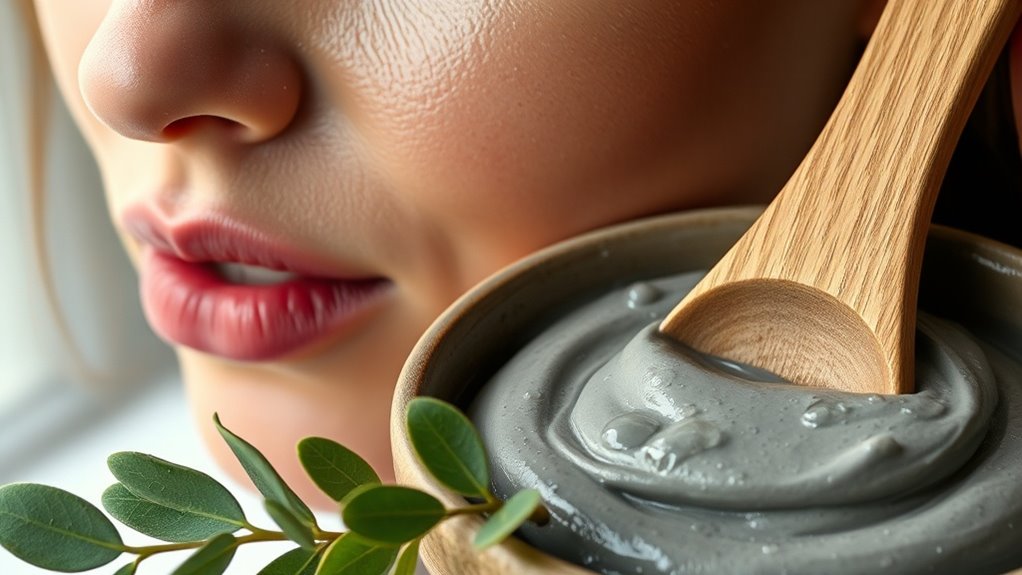
Clay masks function as one of the most effective topical interventions for managing sebum overproduction, with specific mineral compositions demonstrating superior oil-absorption capabilities. Kaolin clay provides gentle absorption suitable for sensitive oily skin, while bentonite clay offers maximum sebum extraction through its high cation-exchange capacity. You’ll achieve optimal results by applying masks to cleansed skin for 10-15 minutes, avoiding complete desiccation which triggers reactive sebum production.
French green clay contains magnesium and calcium that regulate sebaceous activity while drawing out impurities. You should limit application frequency to 1-2 times weekly to prevent barrier disruption. Incorporate hydrating serums immediately post-mask to maintain homeostasis. Select formulations containing salicylic acid or niacinamide for enhanced pore refinement and sebum regulation beyond simple absorption mechanisms. For those seeking a gentler alternative, baking soda’s amphiphilic nature enables it to dissolve both oil-based and water-based impurities, though it should be used cautiously and limited to once weekly applications.
Why Oil-Free Moisturizers Are Non-Negotiable
While counterintuitive, depriving oily skin of moisturization triggers compensatory sebum production that exacerbates the condition you’re attempting to control. Your epidermis interprets moisture deficit as barrier dysfunction, prompting sebaceous glands to increase lipid output.
Oil-free formulations deliver essential hydration without occluding pores or contributing to comedogenesis.
Select products containing these non-comedogenic ingredients:
- Hyaluronic acid – binds 1000x its molecular weight in water for lightweight hydration
- Glycerin – humectant that draws moisture into stratum corneum without surface residue
- Niacinamide – regulates sebum secretion while strengthening barrier function
- Dimethicone – breathable silicone that provides occlusion without pore blockage
You’ll notice reduced compensatory oil production within 2-3 weeks of consistent application, as your skin’s homeostatic mechanisms recalibrate to adequate hydration levels. Interestingly, certain natural oils with antimicrobial properties can also help balance sebaceous gland activity when dehydration triggers overcompensation in oil production.
Retinoids: The Long-Term Solution for Balanced Skin
Retinoids represent the most extensively researched therapeutic class for sebum regulation, with over four decades of clinical data demonstrating their capacity to normalize keratinization, reduce follicular hyperkeratosis, and modulate sebaceous gland activity.
| Retinoid Type | Sebum Reduction | Optimal Concentration |
|---|---|---|
| Tretinoin | 30-40% decrease | 0.025-0.05% |
| Adapalene | 25-35% decrease | 0.1-0.3% |
| Retinol | 15-20% decrease | 0.5-1.0% |
| Tazarotene | 35-45% decrease | 0.05-0.1% |
| Trifarotene | 30-38% decrease | 0.005% |
You’ll experience peak efficacy at 12-16 weeks of consistent application. Initiate therapy with lower concentrations three times weekly, advancing to nightly use as tolerance develops. Prescription-strength formulations deliver superior outcomes compared to over-the-counter alternatives, warranting dermatological consultation for persistent seborrhea. By targeting the mechanisms where excess sebum production combines with dead skin cells, retinoids address the fundamental pathophysiology of oily skin at the follicular level.
Building Your Complete Morning and Evening Routine
Strategic implementation of evidence-based interventions requires a structured application protocol that maximizes therapeutic outcomes while minimizing adverse effects. You’ll need to establish distinct morning and evening regimens that address sebum regulation without compromising barrier function.
Morning Protocol:
- Cleanse with salicylic acid formulation
- Apply niacinamide serum (4-5%)
- Layer broad-spectrum SPF 30+ sunscreen
- Omit occlusive moisturizers if sebum production is adequate
Evening Protocol:
- Double-cleanse to remove sebum and debris
- Apply retinoid (start 0.025% tretinoin)
- Follow with ceramide-containing moisturizer
- Target specific lesions with benzoyl peroxide
You’ll achieve optimal results by introducing active ingredients gradually—one per week—to assess tolerance. Monitor your skin’s response through objective markers: reduced comedone formation, normalized sebum production, and improved barrier integrity.
Frequently Asked Questions
Can Diet and Specific Foods Trigger Increased Oil Production in Skin?
Yes, your diet directly affects sebum production. High-glycemic foods, dairy products, and saturated fats can trigger increased oil secretion by elevating insulin levels and stimulating androgen hormones, which activate your sebaceous glands to produce excess sebum.
Does Drinking More Water Actually Help Reduce Oily Skin?
While adequate hydration supports overall skin health, there’s insufficient scientific evidence that drinking more water directly reduces sebum production. Your oil glands respond primarily to hormones and genetics. Maintaining proper hydration won’t specifically decrease facial oiliness.
How Does Stress Affect Sebum Production and Oily Skin?
When you’re stressed, your body releases cortisol, which stimulates sebaceous glands to produce excess sebum. This hormonal response directly increases oil production, exacerbating acne and shine. Managing stress through proven techniques can help regulate your skin’s oil levels.
Can Weather and Humidity Levels Make Oily Skin Worse?
Yes, weather and humidity significantly impact your oily skin. High humidity prevents sebum evaporation, creating excess surface oil. Conversely, low humidity triggers compensatory sebum production. Hot temperatures increase sebaceous gland activity, while cold weather causes reactive overproduction.
Does Touching Your Face Frequently Increase Oil Production?
Touching your face frequently doesn’t directly increase oil production, but it transfers dirt, bacteria, and irritants to your skin. This triggers inflammation and disrupts your skin’s barrier function, potentially causing reactive sebum overproduction as compensation.