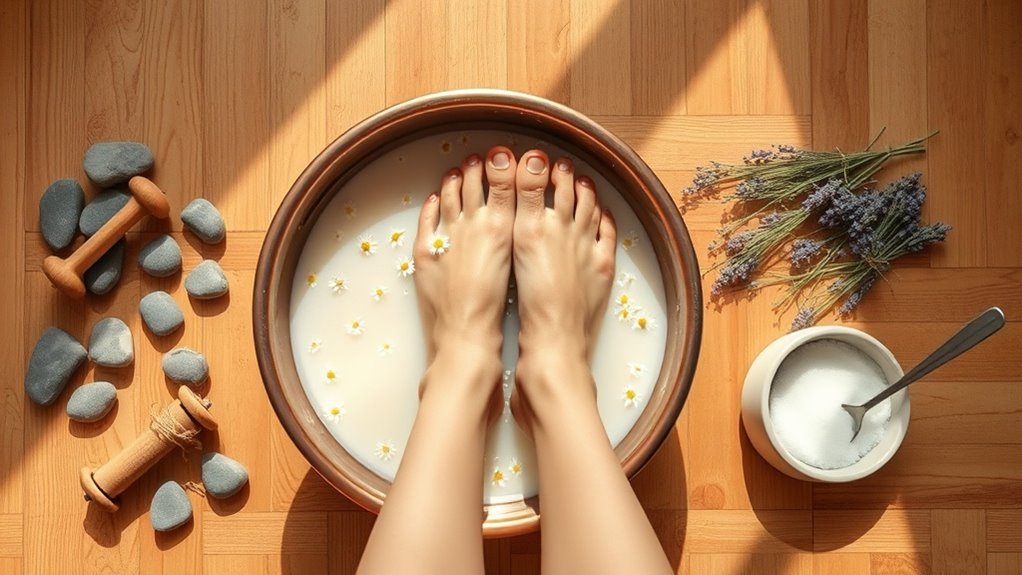

5 Swollen Feet Remedies That May Reduce Discomfort Fast
Your feet are throbbing, your shoes won’t zip, and you’re wondering if you’ll ever see your ankles again. The good news? Simple home remedies may help reduce foot swelling in as little as 15-30 minutes. You don’t need fancy equipment or a spa appointment—just a few research-backed techniques you can start right now. These five fast-acting methods tackle the discomfort and may address what’s causing the puffiness in the first place.
Elevation Therapy: Positioning Your Feet Above Heart Level for Optimal Drainage

One of the simplest yet most effective ways to reduce foot swelling is elevation therapy. You’ll want to position your feet above heart level for at least 15-20 minutes several times daily. This positioning encourages fluid drainage from your lower extremities back toward your heart through gravity’s natural pull.
Lie on your back and prop your feet on pillows or rest them against a wall. Among swollen feet remedies, elevation stands out because it’s free, requires no special equipment, and provides noticeable relief quickly. This technique works by reducing peripheral edema through gravitational drainage, effectively decreasing excess fluid accumulation in foot and ankle tissues. You can combine this technique with other treatments for enhanced results.
Cold Compress Application: Using Temperature to Reduce Inflammation and Swelling
When applied correctly, cold compresses constrict blood vessels and slow fluid accumulation in swollen tissues. You’ll experience reduced inflammation within 15-20 minutes of application. This method works best when you catch swelling early.
Follow these steps for maximum effectiveness:
- Wrap ice packs in a thin towel to prevent skin damage from direct contact
- Apply for 15-minute intervals with 30-minute breaks between sessions
- Repeat 3-4 times daily until swelling decreases noticeably
Don’t apply ice directly to your skin, as this can cause frostbite. You can use frozen vegetables if you don’t have ice packs available. Cold therapy works alongside other remedies like Epsom salt soaks to help draw excess fluid from the tissues and reduce pedal edema.
Epsom Salt Soaks: Mineral-Rich Bath Solutions for Natural Relief
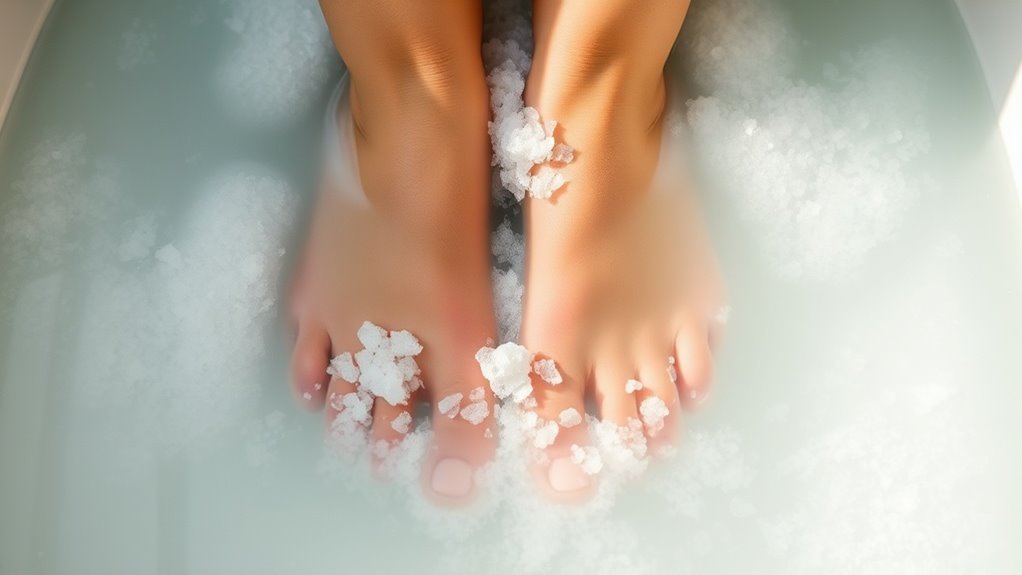
While cold compresses work externally to reduce swelling, Epsom salt soaks address the problem through mineral absorption. You’ll dissolve half a cup of Epsom salt in warm water and soak your feet for 15-20 minutes. The magnesium sulfate penetrates your skin, reducing inflammation and drawing out excess fluid from swollen tissues.
The warm water also improves circulation while relaxing tense muscles. Don’t use Epsom salt soaks if you have open wounds, diabetes, or kidney problems. Always test water temperature first to prevent burns on sensitive, swollen skin.
You can repeat this treatment twice daily for optimal results. This approach works particularly well when combined with elevating your feet above heart level for 20 minutes afterward to maximize fluid drainage.
Gentle Compression Techniques: Supporting Circulation With Proper Wrapping Methods
Compression wraps reduce swelling by applying steady, gentle pressure that pushes excess fluid back into your circulatory system. You’ll want to start wrapping from your toes and work upward toward your knee, using even tension throughout. Don’t wrap too tightly—you should still wiggle your toes comfortably.
Proper compression technique includes:
- Using elastic bandages or compression socks rated 15-20 mmHg for mild swelling
- Removing wraps every 2-3 hours to check skin color and sensation
- Elevating your feet while wearing compression for maximum effectiveness
Consistency matters more than duration when supporting healthy circulation patterns. After removing compression wraps, gently massaging pressure points like the Spleen 4 point inside your arch can further support lymphatic drainage and reduce residual swelling.
Anti-Inflammatory Dietary Adjustments: Foods That May Help Reduce Fluid Retention

Your diet plays a direct role in how much fluid your body retains, and certain foods naturally combat inflammation while helping flush excess water from your tissues.
Focus on potassium-rich options like bananas, sweet potatoes, and spinach to balance sodium levels. Add magnesium sources including almonds, avocados, and dark chocolate. Incorporate omega-3 fatty acids from salmon, walnuts, and flaxseeds to reduce inflammation. Limit processed foods high in sodium, which worsen swelling.
Drink plenty of water—it sounds counterintuitive, but proper hydration signals your body to release stored fluids. Include natural diuretics like cucumber, celery, and parsley in your meals. Consider sipping herbal teas like fennel or ginger, which contain anti-inflammatory compounds that support circulation and may help reduce fluid retention.