

Why Does Restless Leg Syndrome Happen and 6 Relief Tips.
Why do your legs feel like they need to move constantly, especially at night? Restless leg syndrome happens when your brain’s dopamine system misfires and your iron levels drop too low—both interfere with how your nervous system controls leg movement. This neurological condition affects about 10% of adults, making it one of the most common sleep disruptors that people don’t talk about enough. You’re not imagining the discomfort, and you’re definitely not alone in losing sleep over it. In this guide, you’ll discover why RLS targets your legs specifically, what’s happening in your brain when symptoms strike, and six evidence-based relief strategies that address the root causes rather than just covering up the sensations. Let’s break down what’s really happening.
What Causes Restless Leg Syndrome: Understanding the Root Triggers

While the precise etiology of Restless Leg Syndrome (RLS) remains incompletely understood, current research identifies several key pathophysiological mechanisms that contribute to its manifestation.
Dopaminergic dysfunction within your central nervous system plays a critical role, as inadequate dopamine signaling disrupts motor control regulation. Iron deficiency represents another significant trigger, since iron serves as an essential cofactor for dopamine synthesis.
Your genetic predisposition accounts for approximately 50% of cases, with specific chromosomal variants increasing susceptibility. Additionally, you’re at elevated risk if you have peripheral neuropathy, pregnancy-related hormonal changes, or chronic kidney disease.
Understanding these underlying mechanisms helps guide targeted restless leg remedies, enabling clinicians to address root causes rather than merely managing symptoms through conventional approaches. Certain substances can exacerbate symptoms, as caffeine can be a trigger that intensifies the uncomfortable sensations and urge to move your legs.
Magnesium Supplementation: Dosage and Timing for Nighttime Relief
Magnesium deficiency affects approximately 50% of RLS patients, making targeted supplementation a clinically validated intervention for symptom reduction. You’ll achieve optimal results by implementing strategic dosing protocols that align with your circadian rhythm and symptom patterns.
| Magnesium Form | Dosage Range | Timing Protocol |
|---|---|---|
| Magnesium Glycinate | 200-400mg | 60-90 min pre-sleep |
| Magnesium Citrate | 300-500mg | Evening with meal |
| Magnesium Malate | 400-800mg | Split dose: dinner/bedtime |
| Magnesium Threonate | 144-200mg | 2 hours before sleep |
| Topical Magnesium | Apply liberally | 30 min pre-sleep |
You’ll want to initiate supplementation with lower doses, gradually titrating upward while monitoring gastrointestinal tolerance. Glycinate and threonate formulations demonstrate superior bioavailability and neural tissue penetration, making them preferred interventions for nocturnal symptom management. Since maintaining optimal levels of magnesium through diet and supplementation can reduce nighttime symptoms, consider incorporating magnesium-rich foods alongside your supplement protocol.
Gentle Leg Stretching Routines: Effective Sequences for Evening Comfort

Targeted myofascial elongation protocols address RLS symptomatology through distinct biomechanical pathways that complement pharmacological and nutritional interventions. You’ll optimize evening symptom management by implementing hamstring stretches (30-second holds), quadriceps elongation techniques, and calf muscle releases. Execute these sequences 90 minutes pre-bedtime to facilitate neuromuscular recalibration.
Your protocol should incorporate proprioceptive neuromuscular facilitation (PNF) stretching, which demonstrates superior efficacy compared to static methods. Target gastrocnemius-soleus complexes through dorsiflexion maneuvers while maintaining proper postural alignment. You’ll enhance treatment outcomes by combining hip flexor releases with tibialis anterior stretches.
Research indicates that systematic stretching reduces dopaminergic dysfunction markers and decreases nocturnal movement frequency. You’re establishing mechanical desensitization of peripheral sensory receptors while promoting parasympathetic activation. Maintain consistent execution patterns for sustained therapeutic benefits and measurable symptom reduction. Incorporating ankle rotations alongside these stretching exercises can provide additional relief when performed as part of your pre-bedtime routine.
Warm Compression Therapy: Step-by-Step Application Techniques
How does thermal modulation influence sensorimotor pathways in RLS management? Warm compression therapy reduces hyperexcitability in peripheral nerve fibers while enhancing proprioceptive feedback mechanisms. You’ll achieve optimal therapeutic outcomes through systematic application.
Application Protocol:
-
Temperature calibration: Heat compress to 104-113°F (40-45°C) using thermometer verification. Excessive temperatures risk tissue damage and paradoxical symptom exacerbation.
-
Compression parameters: Apply moderate pressure (20-30 mmHg equivalent) to gastrocnemius and tibialis anterior muscle groups. Maintain contact for 15-20 minute intervals.
-
Sequential positioning: Begin distally at ankle level, progress proximally toward knee joint. This directional approach enhances venous return and lymphatic drainage.
Contraindications include peripheral neuropathy, vascular insufficiency, and dermatological compromise. You’ll need to discontinue therapy if paresthesias intensify or erythema develops beyond application site. For individuals with iron deficiency, ensuring ferritin levels above 50 ng/mL may enhance the effectiveness of warm compression therapy in managing RLS symptoms.
Iron-Rich Dietary Adjustments: Foods That Support Leg Comfort
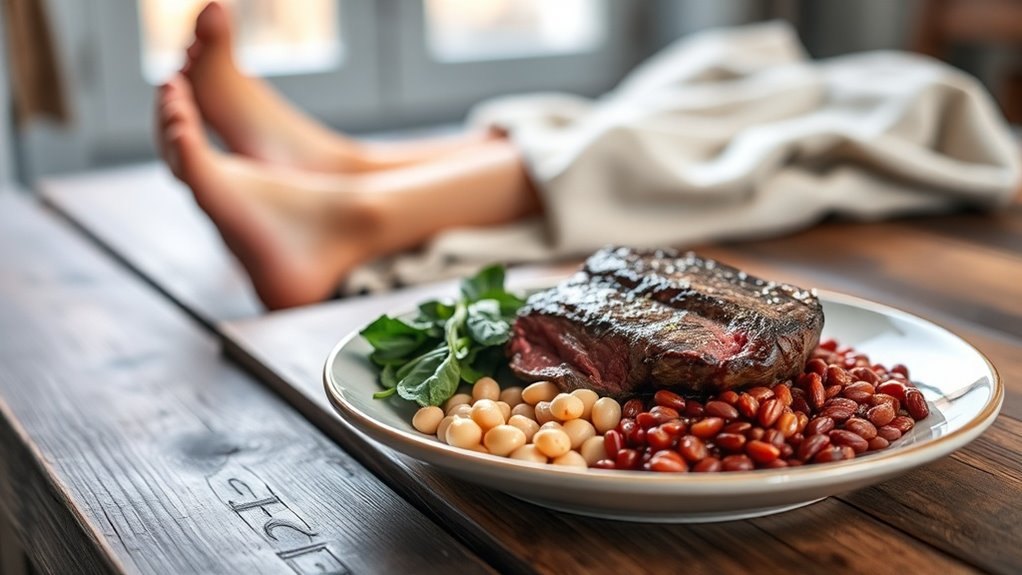
Approximately 25-30% of RLS patients demonstrate serum ferritin levels below 75 μg/L, establishing iron deficiency as a primary pathophysiological contributor to symptom severity. You’ll need to prioritize dietary iron optimization through strategic food selection.
| Heme Iron Sources | Non-Heme Iron Sources |
|---|---|
| Beef liver (5mg/3oz) | Spinach (3.2mg/½ cup) |
| Oysters (8mg/3oz) | Lentils (3.3mg/½ cup) |
| Sardines (2.5mg/3oz) | Fortified cereals (18mg/serving) |
| Chicken thighs (1.3mg/3oz) | White beans (4mg/½ cup) |
You should combine non-heme sources with vitamin C-rich foods to enhance absorption rates by 300%. Avoid consuming calcium supplements, coffee, or tea within two hours of iron-rich meals, as these inhibit absorption through chelation mechanisms. Iron deficiency negatively impacts dopamine production, which can worsen RLS discomfort and increase nighttime symptoms. Monitor your ferritin levels quarterly to assess dietary intervention efficacy.
Targeted Massage and Chamomile Tea: Combined Approaches for Better Sleep
You can implement therapeutic massage techniques targeting the gastrocnemius and soleus muscles to enhance peripheral circulation and reduce nocturnal sensorimotor symptoms.
Chamomile tea contains apigenin, a flavonoid that binds to benzodiazepine receptors in the central nervous system, promoting anxiolytic effects and facilitating sleep onset.
Strategic timing of these interventions—performing lower extremity massage 60-90 minutes before bed while consuming chamomile tea 30-45 minutes prior to sleep—optimizes their synergistic impact on RLS symptom management.
During massage sessions, apply firm pressure with thumbs in circular motions along the calf muscles, and incorporate deep tissue strokes with knuckles to target the plantar fascia and surrounding connective tissue in the feet, which may contribute to lower leg tension.
Massage Techniques for Legs
Several therapeutic modalities demonstrate efficacy in managing restless leg syndrome symptoms, with manual massage techniques serving as a primary non-pharmacological intervention. You’ll achieve optimal results by applying consistent pressure to affected muscle groups, enhancing circulation and reducing neurological discomfort.
Evidence-Based Massage Protocols:
-
Deep tissue manipulation – Apply firm, sustained pressure along the gastrocnemius and soleus muscles, working proximally from ankle to knee for 10-15 minutes.
-
Myofascial release – Target trigger points in the quadriceps and hamstring groups using circular compression movements to alleviate muscular tension.
-
Lymphatic drainage techniques – Employ gentle, rhythmic strokes following venous return pathways to reduce fluid accumulation and promote metabolic waste removal.
You’re encouraged to perform these techniques 30-60 minutes before sleep, maximizing therapeutic benefits and symptom reduction during nocturnal periods.
Chamomile’s Calming Properties
When administered as a complementary intervention alongside manual therapy, chamomile (Matricaria chamomilla) exhibits documented anxiolytic and sedative properties through its primary bioactive compounds, particularly apigenin—a flavonoid that binds to benzodiazepine receptors in the central nervous system. You’ll optimize therapeutic outcomes by consuming 200-270mg standardized extract or steeping 2-3 grams dried flowers in hot water for 10-15 minutes before sleep.
The herb’s mechanism involves GABAergic modulation, reducing cortical excitability and muscle tension that exacerbates RLS symptoms. Clinical trials demonstrate significant improvements in sleep latency and quality when combined with targeted leg massage. You should integrate this phytotherapeutic approach 60-90 minutes pre-bedtime, allowing sufficient absorption time for apigenin’s receptor binding and subsequent parasympathetic activation to enhance your massage therapy’s effectiveness.
Optimal Evening Routine Timing
Strategic timing of your therapeutic protocol directly influences circadian rhythm alignment and symptom management efficacy. You’ll optimize RLS symptom reduction by implementing your combined massage-chamomile regimen 90-120 minutes before your target sleep onset time. This window allows adequate bioavailability of chamomile’s apigenin to bind GABA-A receptors while massage-induced endorphin release reaches peak concentration.
Your evening implementation protocol should include:
- 7:30 PM: Perform targeted lower extremity massage focusing on gastrocnemius and tibialis anterior muscles
- 8:00 PM: Consume 200ml chamomile tea (standardized 1.2% apigenin content)
- 9:30 PM: Initiate sleep preparation in darkened environment
This structured approach synchronizes parasympathetic nervous system activation with natural melatonin secretion, creating synergistic conditions that counteract dopaminergic dysfunction underlying RLS pathophysiology. You’ll maximize therapeutic outcomes through consistent temporal adherence.
Frequently Asked Questions
Can Restless Leg Syndrome Be Completely Cured or Only Managed?
RLS can’t be completely cured, but you’ll find it’s effectively manageable through pharmacological interventions, lifestyle modifications, and treating underlying conditions. You’re able to achieve significant symptom reduction and improved quality of life with proper therapeutic protocols.
Is Restless Leg Syndrome Hereditary or Genetic in Nature?
Yes, you’ll find RLS demonstrates significant genetic susceptibility. Approximately 40-60% of cases show familial clustering, with genome-wide association studies identifying specific risk loci, including MEIS1, BTBD9, and MAP2K5 variants affecting dopaminergic neurotransmission pathways.
What Medications Are Prescribed for Severe Restless Leg Syndrome Cases?
Your physician may prescribe dopamine agonists (pramipexole, ropinirole), alpha-2-delta ligands (gabapentin, pregabalin), or low-dose opioids for refractory cases. You’ll require careful titration and monitoring for augmentation syndrome and adverse effects throughout treatment.
Can Pregnancy Trigger or Worsen Restless Leg Syndrome Symptoms?
Yes, you’re at increased risk during pregnancy, particularly in the third trimester. Elevated estrogen levels, iron deficiency, and folate depletion contribute to symptom onset or exacerbation. Symptoms typically resolve postpartum without requiring pharmacological intervention.
Does Restless Leg Syndrome Affect Children or Only Adults?
RLS affects children, not just adults. You’ll find pediatric prevalence ranges from 2-4%, though it’s often misdiagnosed as “growing pains.” Children typically present with sleep disturbances, hyperactivity, and difficulty describing their sensorimotor symptoms accurately.