Can Baking Soda Face Mask Help With Skin Glow in 10 Minutes.
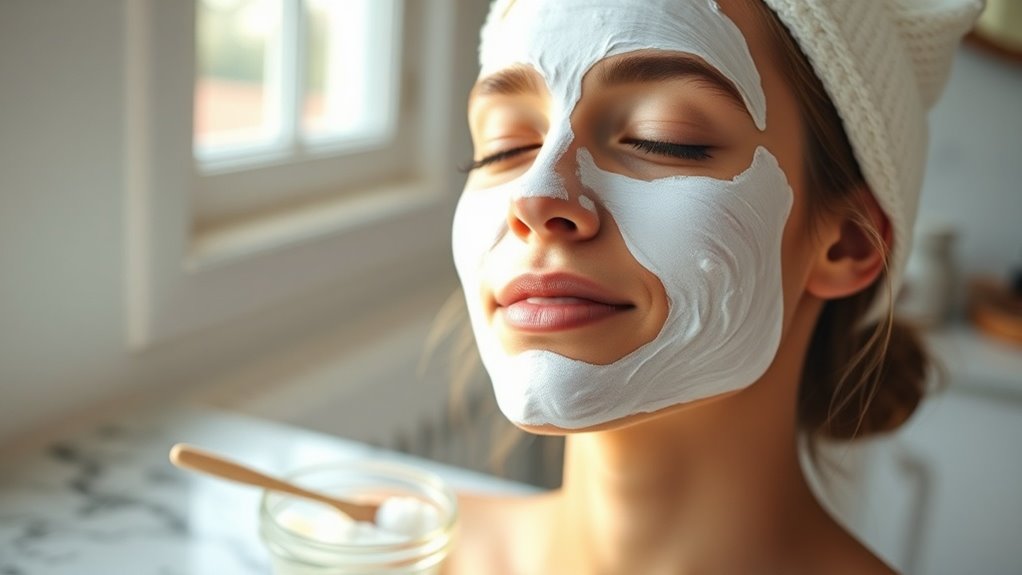
Looking for a quick way to brighten dull skin without spending a fortune on fancy products? This simple 2-ingredient baking soda face mask takes just 2 minutes to mix and claims to deliver a radiant glow in 10 minutes flat. You probably already have everything you need in your kitchen right now, and it costs mere pennies compared to store-bought masks. Ready to see if this viral skincare hack actually works? Let me show you how simple this is.
Understanding How Baking Soda Works on Your Skin
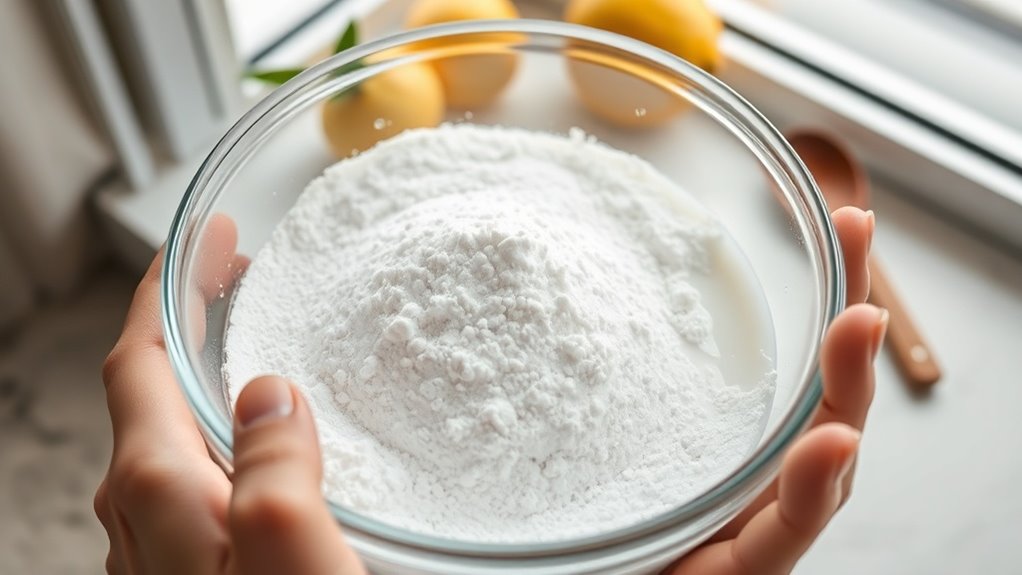
Baking soda, or sodium bicarbonate, functions as an alkaline compound with a pH of approximately 9, considerably higher than your skin’s natural acidic barrier of 4.5 to 5.5. When you apply a baking soda face mask, this pH differential disrupts your skin’s protective mantle, temporarily altering its biochemistry.
The alkaline nature enables mild exfoliation through chemical interaction with dead keratinocytes, potentially creating a smoother surface appearance. However, you’re simultaneously compromising your skin’s antimicrobial defense system and moisture retention capacity. The compound’s abrasive granules provide mechanical exfoliation, but this dual action—chemical and physical—can trigger inflammatory responses, particularly in sensitive skin phenotypes.
While proponents claim rapid brightening effects, dermatological evidence suggests the perceived “glow” may simply reflect acute irritation rather than genuine skin health improvement. Additionally, baking soda possesses mild antiseptic properties that may help reduce acne-causing bacteria on the skin’s surface when applied in controlled, short-duration treatments.
Science-Backed Benefits of Baking Soda Face Masks for Radiance
Baking soda’s alkalinity (pH 9) enables mechanical exfoliation through fine granular particles that physically dislodge dead keratinocytes from the stratum corneum. However, this same alkaline property disrupts your skin’s natural acid mantle (pH 4.5-5.5), potentially compromising barrier function despite temporary brightening effects. The antibacterial properties of baking soda may help combat acne-causing bacteria, though this benefit should be weighed against the risk of pH disruption. The evidence suggests that while physical exfoliation occurs, the pH disruption may outweigh any radiance benefits for most skin types.
Exfoliation and Dead Cell Removal
When sodium bicarbonate contacts skin, its crystalline structure provides mechanical abrasion that physically dislodges corneocytes from the stratum corneum. This process theoretically accelerates cellular turnover, though evidence remains limited regarding efficacy duration. The alkaline pH (8.3) simultaneously disrupts desmosomes—protein structures binding dead cells together.
Physical exfoliation mechanisms include:
- Granular particles creating friction against keratinized tissue layers
- Disruption of intercellular lipid matrices holding aging corneocytes
- Mechanical loosening of hyperkeratotic patches through rotational massage
- Surface-level keratolysis without penetrating viable epidermis
However, you’ll find conflicting research on whether ten-minute applications generate meaningful exfoliation. Clinical dermatology studies suggest longer exposure times or repeated applications yield more consistent results. The particle size and application pressure considerably influence outcome variability.
Ph Balance and Skin Brightening
While proponents claim sodium bicarbonate brightens skin through pH modulation, the dermatological reality presents complications. Your skin’s natural pH ranges from 4.5-5.5 (acidic), maintaining barrier function and microbial defense. Baking soda’s alkaline pH of 9 disrupts this acid mantle, potentially causing transepidermal water loss and inflammation rather than brightening.
The perceived “glow” you’ll notice after application stems from irritation-induced vasodilation, not authentic radiance. Studies demonstrate that alkaline substances compromise stratum corneum integrity, weakening lipid barriers and increasing sensitivity to environmental aggressors.
While temporary brightness may appear from surface cell sloughing, you’re risking long-term damage. Dermatologists emphasize that sustained skin luminosity requires pH-appropriate products containing evidence-based brighteners like niacinamide, vitamin C, or alpha-arbutin—ingredients that enhance radiance without compromising cutaneous homeostasis.
Six Proven Baking Soda Face Mask Recipes for Instant Glow
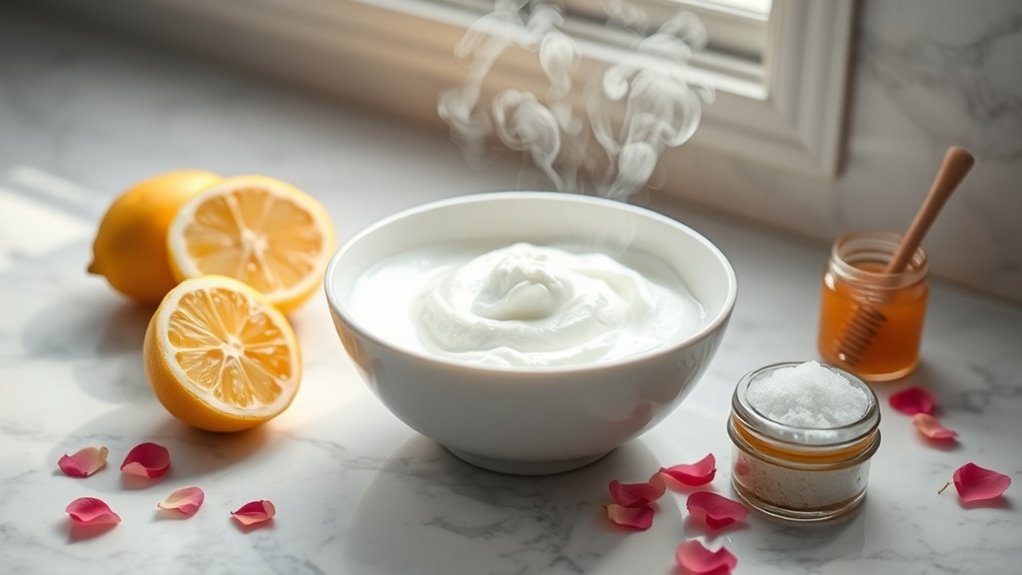
Although anecdotal reports suggest baking soda masks produce immediate skin brightening effects, you’ll find limited peer-reviewed evidence supporting these claims. The alkaline pH (8-9) may temporarily disrupt your skin’s acid mantle, creating a perceived brightening that’s actually irritation-induced erythema rather than genuine luminosity.
If you’re considering these formulations despite dermatological concerns, note the following concentrations:
- Baking soda + honey (2:1 ratio): Honey’s humectant properties may offset alkalinity
- Baking soda + lemon juice: Compounds pH disruption with citric acid irritation
- Baking soda + yogurt: Lactic acid provides minimal pH buffering
- Baking soda + water paste: Creates maximum alkaline exposure without modulation
These recipes lack clinical validation. You’re fundamentally conducting uncontrolled pH experimentation on your stratum corneum. For those who proceed, limit application to no more than 1-2 minutes for sensitive skin and never exceed twice weekly use to minimize pH disruption risks.
Step-by-Step Application Guide for Maximum Results
Before utilizing any baking soda preparation, you must acknowledge that “optimal outcomes” in this scenario likely signifies minimizing dermatological harm rather than attaining cosmetic advantages.
If proceeding despite contraindications, you’ll need to execute proper pH testing first. Mix one part baking soda with three parts water, creating a paste with pH approximately 8-9. Conduct a 48-hour patch test on your inner forearm before facial application.
Apply the mixture to cleansed skin using circular motions for no more than two minutes. Avoid the periorbital region and any compromised epidermal barriers. The amphiphilic nature of baking soda allows it to dissolve both oil-based and water-based impurities simultaneously from pores. Rinse immediately with lukewarm water, then apply a pH-balancing toner and barrier-repair moisturizer.
Monitor for erythema, pruritus, or xerosis post-application. Discontinue use if irritation manifests. Limit frequency to once weekly maximum.
Safety Precautions and Skin Type Considerations
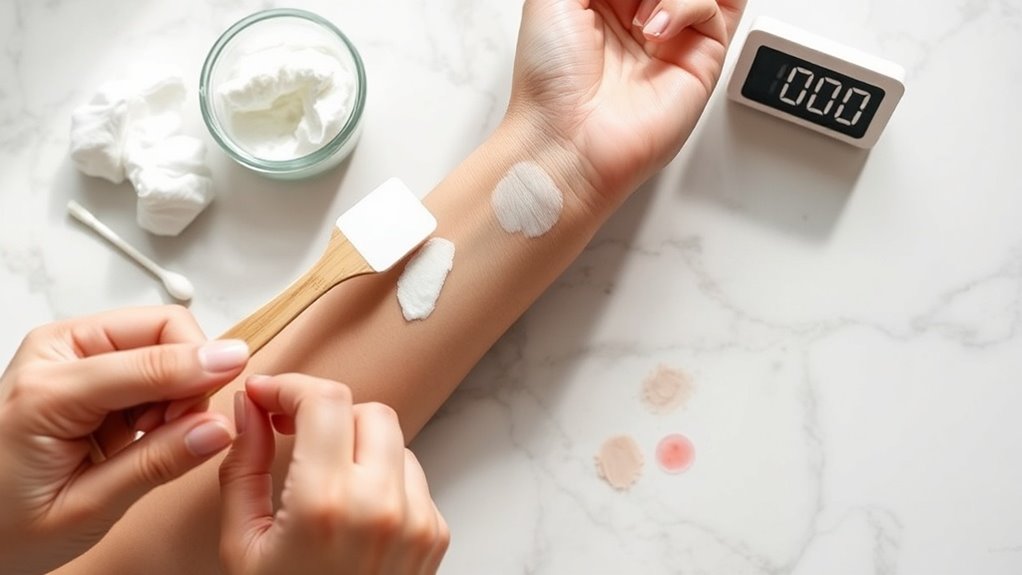
Before applying baking soda to your face, you must understand its highly alkaline nature (pH 8-9) can disrupt your skin’s natural acid mantle (pH 4.5-5.5), potentially causing irritation, dryness, or chemical burns. Always conduct a patch test on your inner forearm 24-48 hours before facial application, as individual reactions vary considerably based on skin type and existing barrier function.
You’ll need to avoid sensitive areas like the eye contour, lips, and any compromised skin where active breakouts, wounds, or conditions like rosacea or eczema exist. If irritation occurs during application, rinse immediately with lukewarm water and limit treatments to twice per week, followed by a moisturizer to restore your skin’s protective barrier.
Patch Test Before Applying
Given that baking soda’s pH of 8-9 vastly exceeds the skin’s natural pH of 4.5-5.5, you’ll need to conduct a patch test at least 24-48 hours before full facial application.
Proper Patch Test Protocol:
- Apply a dime-sized amount of your baking soda mixture to your inner forearm or behind your ear, areas with skin sensitivity comparable to facial tissue
- Monitor the test site for erythema, pruritus, burning sensations, or dermatitis indicators during the 24-48 hour observation period
- Document any adverse reactions including timing of symptom onset and severity level using photographic evidence if possible
- Discontinue use immediately if you observe persistent redness, vesicle formation, or disrupted stratum corneum integrity
Individuals with compromised epidermal barriers, rosacea, or eczema shouldn’t proceed even with negative patch test results.
Avoid Sensitive Skin Areas
Three anatomical regions demand complete exclusion from baking soda application: the periorbital area (including eyelids and tear troughs), the vermilion border and labial tissue, and any compromised epidermal sites exhibiting active lesions or abrasions.
You’ll risk chemical irritation in these zones due to thinner stratum corneum layers and elevated transepidermal water loss rates. The periorbital skin measures approximately 0.5mm thick—roughly four times thinner than facial regions—making it vulnerable to alkaline disruption.
Your lips lack sebaceous glands and possess a pH of 6.7-7.0, creating incompatibility with baking soda’s 8.3 pH.
If you’ve got active acne, eczema patches, or healing wounds, you’re compromising barrier function further. Clinical evidence doesn’t support baking soda’s safety profile for these vulnerable areas, regardless of dilution ratios or application duration.
Ph Levels and Balance
The alkalinity concern extends beyond specific anatomical zones to the fundamental chemistry of skin-product interaction. Your skin’s natural pH hovers around 4.5-5.5, maintaining the acid mantle that protects against pathogens. Baking soda’s pH of 9.0 disrupts this protective barrier, potentially compromising your skin’s defense mechanisms. You’re ideally/preferably forcing your epidermis into an alkaline state it wasn’t designed to tolerate.
Critical pH-Related Risks:
- Barrier dysfunction: Elevated pH weakens lipid structures, increasing transepidermal water loss
- Microbial vulnerability: Alkaline environments favor pathogenic bacteria colonization over beneficial flora
- Enzymatic disruption: Proteases and lipases function optimally/suitably at acidic pH; alkalinity impairs their regenerative activity
- Inflammatory cascade: pH deviation triggers cytokine release and potential dermatitis
The evidence suggests minimal benefit against substantial risk.
Expected Results and Best Practices for Glowing Skin
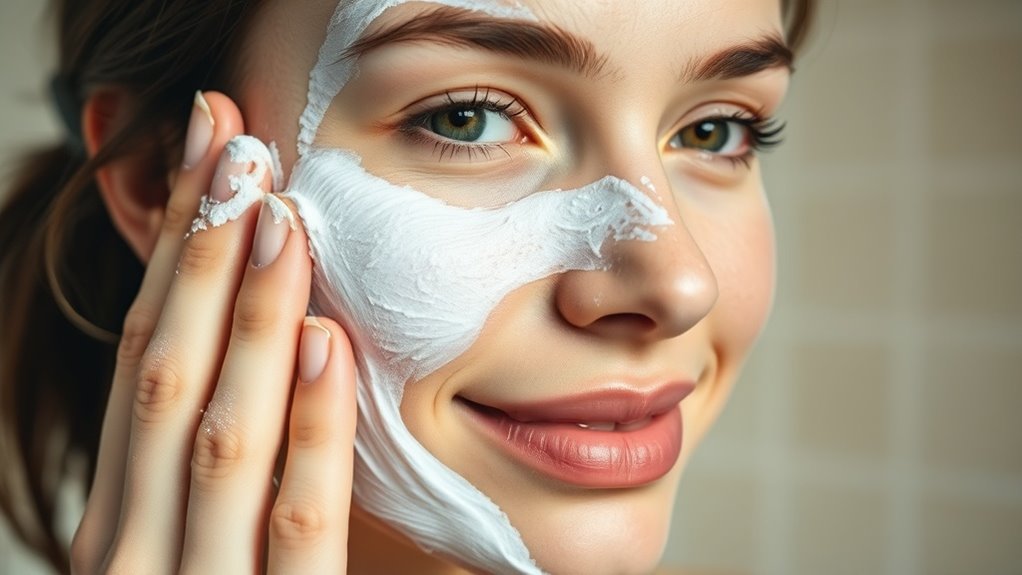
While anecdotal reports suggest baking soda masks produce immediate brightening effects, controlled clinical data supporting these claims remain limited. You’ll likely notice temporary surface smoothness from mechanical exfoliation rather than genuine cellular-level improvements. The alkaline pH (8-9) disrupts your skin’s acid mantle, potentially causing transient redness or sensitivity that paradoxically counteracts any perceived glow.
If you’re proceeding despite these concerns, limit application to 2-3 minutes maximum—not 10—and dilute thoroughly with water or neutral pH ingredients. Test patch first. Don’t expect sustained luminosity; effects dissipate within hours as your skin restores its protective barrier. More evidence supports gentler alternatives: alpha-hydroxy acids, enzymatic exfoliants, or niacinamide demonstrate superior efficacy for sustainable radiance without compromising barrier integrity. For long-term glow, prioritize products with hyaluronic acid or glycerin that strengthen your skin’s moisture barrier rather than alkaline treatments that strip away natural oils. Consider consulting dermatological literature before self-administered alkaline treatments.