
9 Back Acne Remedies for Smoother Skin This Winter
You step out of a hot winter shower, wrap yourself in layers, and wonder why your back still breaks out despite doing everything “right.” The good news: targeted back acne remedies can start showing visible improvement within 2-3 weeks when you address the real culprits—trapped sweat, dead skin buildup, and bacteria. You don’t need an elaborate routine or expensive treatments; most of these solutions take under 5 minutes and use ingredients you likely already have. Here’s what actually delivers smoother, clearer skin before you’re ready for spring.
Salicylic Acid Body Washes for Deep Pore Cleansing
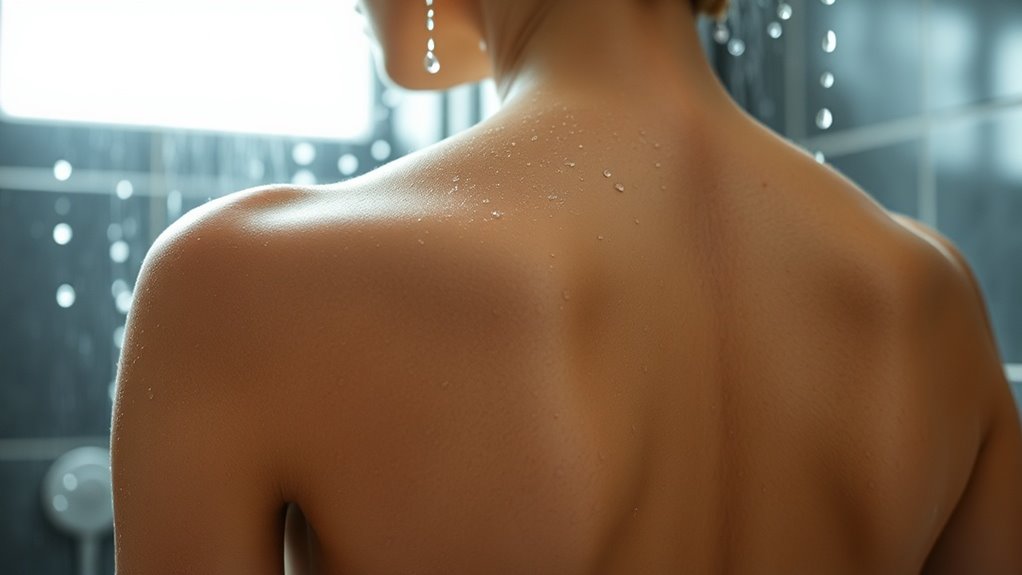
Salicylic acid body washes penetrate your pores to dissolve the oil and dead skin cells that trigger back acne breakouts. This beta hydroxy acid exfoliates beneath your skin’s surface, preventing clogged pores before they form painful blemishes.
You’ll find these back acne remedies most effective when you apply them during your shower, letting the formula sit for two minutes before rinsing. Look for products containing 2% salicylic acid concentration for optimal results without irritation.
Use these washes three times weekly initially, then adjust frequency based on your skin’s response. Consistent application clears existing breakouts while preventing new ones. For a natural alternative, willow bark contains salicylic acid that provides similar exfoliating benefits to unclog pores.
Benzoyl Peroxide Spot Treatments to Kill Acne-Causing Bacteria
Benzoyl peroxide destroys the Propionibacterium acnes bacteria that multiply in your clogged pores and cause inflammatory back acne. You’ll find it in concentrations ranging from 2.5% to 10%, though lower percentages often work just as effectively with less irritation.
Apply spot treatments directly to active breakouts after cleansing. Start with a 2.5% formula once daily, then increase frequency if your skin tolerates it well. You’ll notice results within one to two weeks.
Keep benzoyl peroxide away from colored fabrics since it bleaches clothing and towels. Wear white shirts after application until the product fully absorbs.
Wait 5 minutes after applying your benzoyl peroxide treatment to ensure proper absorption before moving on to moisturizer.
Tea Tree Oil Applications for Natural Antibacterial Relief

Tea tree oil offers a natural alternative to chemical treatments, but you’ll need to dilute it properly before applying it to your back. The key to success lies in mixing the right ratio—typically 1-2 drops of tea tree oil per teaspoon of carrier oil—and using techniques that ensure even coverage across hard-to-reach areas.
You can expect to see gradual improvements within 4-6 weeks when you apply the diluted solution consistently once or twice daily. The oil’s effectiveness comes from terpenes that target P. acnes bacteria, which are responsible for causing inflammation and breakouts in clogged hair follicles.
Dilution Methods and Ratios
Because undiluted tea tree oil can irritate your skin and worsen inflammation, you’ll need to mix it properly before application.
Safe Dilution Ratios:
-
Carrier oil blend: Mix 1-2 drops of tea tree oil with 12 drops of jojoba, coconut, or sweet almond oil for direct spot treatment.
-
Body wash addition: Add 5-10 drops to your regular cleanser for gentle antibacterial coverage across your back.
-
Spray solution: Combine 10 drops with 1 ounce of witch hazel in a spray bottle for easy reach.
-
Patch test first: Apply diluted mixture to your inner arm and wait 24 hours before using on acne-prone areas.
Application Techniques for Back
Apply the mixture with gentle circular motions****, allowing the oil to penetrate without irritating your skin. You’ll want to focus on problem zones while avoiding excessive rubbing.
Let the solution absorb for 20 minutes before showering. Pat your back dry afterward rather than rubbing vigorously.
For stubborn breakouts, target individual blemishes using a cotton swab dipped in your diluted mixture.
Frequency and Expected Results
-
Week 1-2: Reduced inflammation and redness as tea tree oil’s antibacterial properties begin working
-
Week 3-4: Fewer new breakouts appear; existing blemishes start healing
-
Week 6-8: Noticeable improvement in overall skin clarity and texture
-
Month 3+: Sustained results with continued maintenance application
If you experience dryness or irritation, reduce frequency to every other day. You’ll achieve optimal results by maintaining this routine throughout winter months.
Glycolic Acid Exfoliating Scrubs to Remove Dead Skin Cells
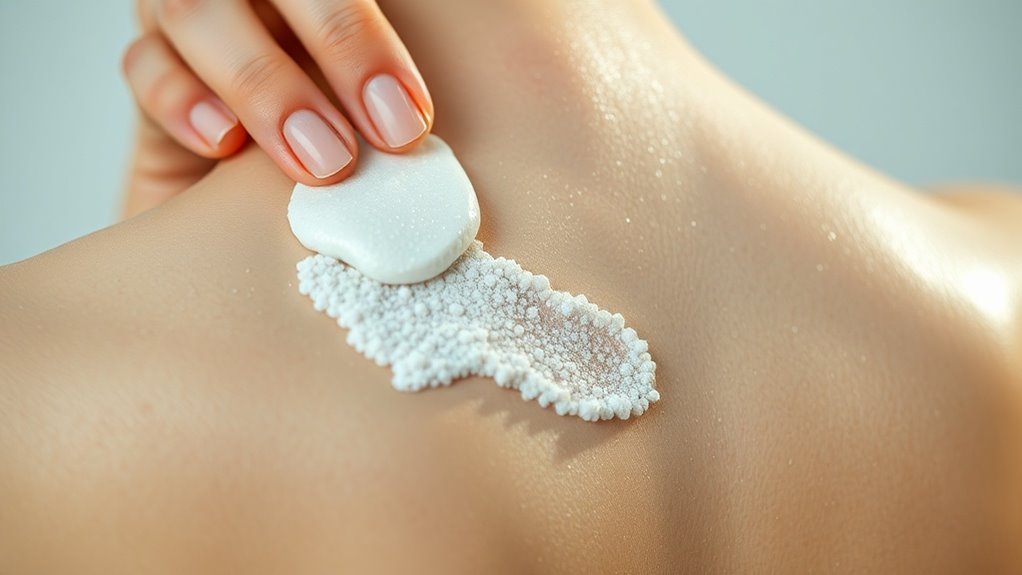
Glycolic acid works by breaking down the bonds between dead skin cells on your back’s surface, allowing them to shed naturally and preventing pore blockages that lead to acne. You’ll get the best results by applying the scrub in gentle circular motions during your shower, focusing on affected areas for 30-60 seconds before rinsing thoroughly.
Start with twice-weekly applications to assess your skin’s tolerance, then adjust to 3-4 times per week if your skin responds well without irritation. After exfoliating, apply a pH-balancing toner to restore your skin’s protective acid mantle and follow with a lightweight, non-comedogenic moisturizer.
How Glycolic Acid Works
Dead skin cells pile up on your back constantly, creating a perfect breeding ground for acne-causing bacteria. Glycolic acid penetrates your skin’s surface to break down the bonds holding dead cells together, revealing fresher skin underneath.
Dissolves cellular cement – Weakens the glue between dead skin cells
Unclogs pores – Removes debris trapped inside hair follicles
Accelerates cell turnover – Speeds up your skin’s natural renewal process
Reduces inflammation – Minimizes redness and swelling from existing breakouts
You’ll notice smoother texture and fewer breakouts with consistent use.
Best Application Techniques
When you’re ready to apply glycolic acid to your back, timing makes all the difference. Use it on clean, dry skin after showering, but wait five minutes to let your skin’s pH stabilize. Start with a lower concentration (5-8%) three times weekly, gradually increasing frequency as your skin adapts.
Apply the scrub using circular motions, focusing on problem areas without excessive pressure. Let it sit for one to two minutes before rinsing thoroughly with lukewarm water. Always follow with a non-comedogenic moisturizer to prevent dryness. Consider using a long-handled applicator for better reach and even coverage.
Recommended Usage Frequency
Finding the right balance with glycolic acid scrubs requires understanding your skin’s tolerance and acne severity. Start conservatively to prevent irritation and damage to your skin barrier.
Frequency Guidelines:
- Beginners: Use once weekly for the first month to assess your skin’s reaction
- Normal skin: Apply 2-3 times per week once tolerance builds
- Sensitive skin: Limit to once weekly, even after adjustment period
- Active breakouts: Reduce to once every 10 days until inflammation subsides
Monitor your skin’s response closely. If you experience redness, excessive dryness, or increased breakouts, scale back immediately and consult a dermatologist.
Clay Masks With Anti-Inflammatory Properties
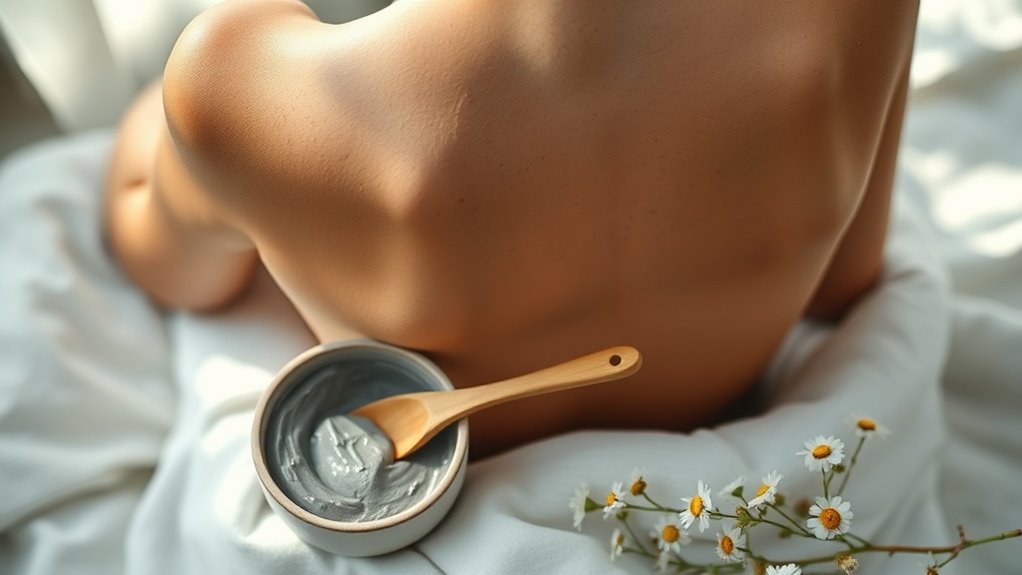
Clay masks offer a natural solution for calming inflamed back acne while drawing out impurities from congested pores. You’ll find kaolin and bentonite clays particularly effective for reducing redness and swelling. Apply a thin layer to affected areas, leaving it on for 10-15 minutes before rinsing with lukewarm water.
The masks absorb excess sebum without over-drying your skin. For enhanced anti-inflammatory benefits, look for formulations containing chamomile, green tea, or colloidal oatmeal. You can also create a simple paste using baking soda, which has antimicrobial properties that help reduce acne-causing bacteria on the skin. Use clay masks twice weekly to maintain clear skin. Always moisturize afterward to prevent dryness and support your skin’s natural healing process.
Shower Routine Adjustments to Prevent Clogged Pores
Since back acne often worsens due to product residue and prolonged moisture exposure, modifying your shower habits can significantly reduce breakouts.
- Rinse hair conditioner thoroughly before washing your body to prevent oily residue from settling on your back
- Use lukewarm water instead of hot temperatures that strip natural oils and trigger excess sebum production
- Cleanse your back last in your routine after shampooing and conditioning are complete
- Pat dry immediately after showering and change into clean, breathable clothing to minimize bacterial growth
- Maintain bedroom humidity between 40-50% to prevent skin irritation that can exacerbate back acne during winter months
These adjustments create an environment less conducive to acne formation.
Breathable Fabric Choices to Reduce Friction and Irritation

After establishing a cleaner post-shower routine, your clothing choices play an equally important role in preventing back acne flare-ups. Synthetic fabrics trap sweat and bacteria against your skin, creating an ideal environment for breakouts.
Choose cotton, bamboo, or moisture-wicking athletic wear that allows your skin to breathe. Avoid tight-fitting shirts that create friction, which irritates existing acne and damages your skin’s protective barrier. Loose clothing promotes air circulation and reduces heat buildup.
Wash workout clothes after each use, as bacteria accumulate quickly on sweat-soaked garments. During winter, layer breathable fabrics instead of wearing heavy, non-breathable materials directly against your back.
Hydration and Moisturization Balance for Winter Skin
Cold weather strips your skin of natural oils, leaving your back vulnerable to both dryness and compensatory oil production that clogs pores. You’ll need strategic hydration to prevent breakouts while maintaining moisture.
Balance your back’s moisture levels with these steps:
- Apply lightweight, non-comedogenic moisturizers within three minutes after showering to lock in hydration
- Drink eight glasses of water daily to support skin hydration from within
- Use hyaluronic acid serums before moisturizing to attract and retain moisture
- Avoid heavy body butters that can trap bacteria and trigger acne formation
Dietary Changes to Support Clear Skin From Within

While topical treatments address back acne externally, what you eat directly influences your skin’s oil production, inflammation levels, and healing capacity. Reduce refined sugars and dairy, which can trigger breakouts by spiking insulin and hormones.
Instead, load up on omega-3-rich foods like salmon, walnuts, and flaxseeds to combat inflammation. Add zinc-containing foods such as pumpkin seeds and chickpeas to support skin repair. Incorporate antioxidant-packed berries, leafy greens, and green tea to neutralize free radicals.
Stay hydrated with water throughout the day. These dietary shifts won’t produce overnight results, but they’ll strengthen your skin’s foundation for lasting clarity.