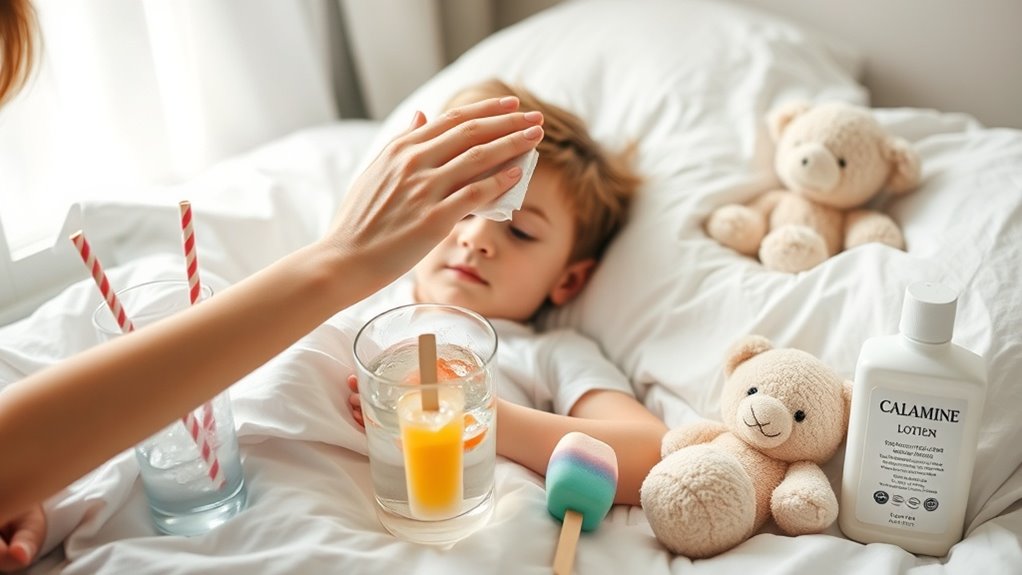
8 Hand Foot and Mouth Disease Comfort Tips for Kids
Your child’s in tears because every swallow hurts, and those angry blisters are making them miserable—hand, foot, and mouth disease has officially taken over your week. The good news? Simple comfort measures like cold foods, gentle mouth rinses, and strategic pain relief can ease their discomfort within minutes.
You don’t need complicated remedies or a pharmacy run for specialty items. Most of these soothing tricks use things you already have at home and take less than five minutes to set up. Here’s what actually delivers results when your little one needs relief fast.
Offer Cool, Soothing Foods and Drinks
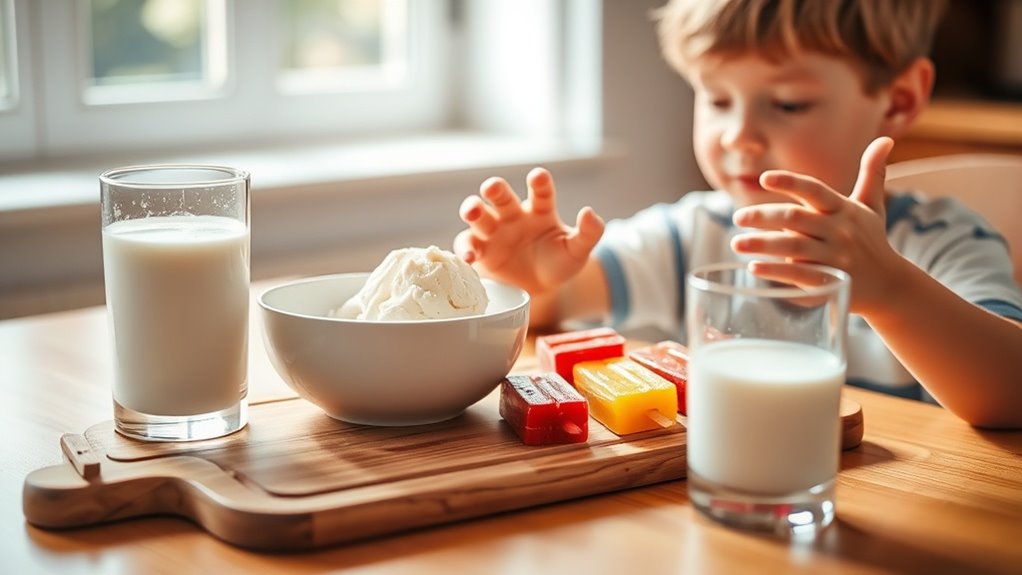
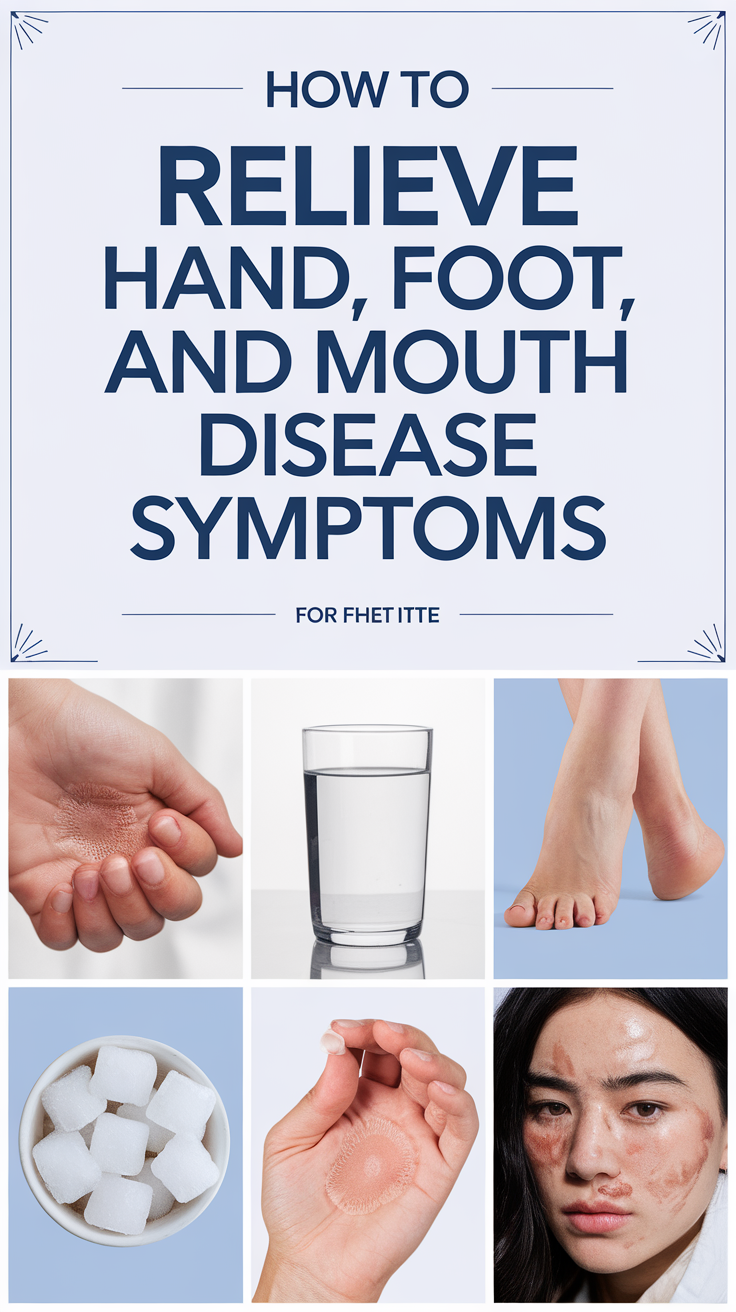
When your child has hand, foot, and mouth disease, eating and drinking often become painful due to mouth sores. Offering cool, soothing options is one of the most effective hand foot and mouth disease remedies. Try serving ice pops, smoothies, cold yogurt, or chilled applesauce. These foods won’t irritate tender mouths and provide necessary nutrition.
Avoid acidic items like citrus fruits and tomatoes, which cause stinging. Skip salty or spicy foods too. Cold milk and water work well for hydration. Blended smoothies with coconut water and frozen fruit provide added electrolytes while keeping your child hydrated. You’ll find that frozen treats particularly help numb discomfort while keeping your child nourished during recovery.
Maintain Proper Oral Hygiene Without Irritation
Keeping your child’s mouth clean during hand, foot, and mouth disease requires extra gentleness since their mouth sores are painful. Switch to a soft-bristled toothbrush that won’t aggravate tender gums and blistered areas.
You’ll also want to replace harsh mouthwashes with mild saltwater rinses or plain water to prevent stinging and discomfort.
Topical oral medications containing benzocaine can offer temporary relief for mouth sores between brushing sessions.
Use Soft-Bristled Toothbrushes
Since mouth sores make brushing painful, switching to a soft-bristled toothbrush becomes essential during hand, foot, and mouth disease. You’ll minimize irritation while maintaining oral hygiene effectively. Choose toothbrushes labeled “extra soft” or “ultra soft” for maximum gentleness on tender gums and sores.
You should use minimal pressure when brushing, letting the bristles do the work. Consider using a smaller toothbrush head for better control and reduced contact with painful areas. Replace the toothbrush once your child recovers to prevent reinfection.
If brushing remains too painful, you can temporarily use gauze wrapped around your finger with toothpaste instead.
Rinse With Gentle Solutions
Gentle mouth rinses provide effective relief from hand, foot, and mouth disease sores while keeping your child’s mouth clean between brushings. Mix one teaspoon of salt in a cup of warm water for a simple solution that reduces inflammation.
Alternatively, use baking soda dissolved in water to neutralize acids and soothe painful lesions.
Have your child swish the solution gently for 30 seconds, then spit it out. Repeat this process after meals and before bedtime. Avoid commercial mouthwashes containing alcohol, as they’ll burn the sores. For young children who can’t rinse independently, apply the solution with a soft cloth.
Use Pain Relief Medication Appropriately
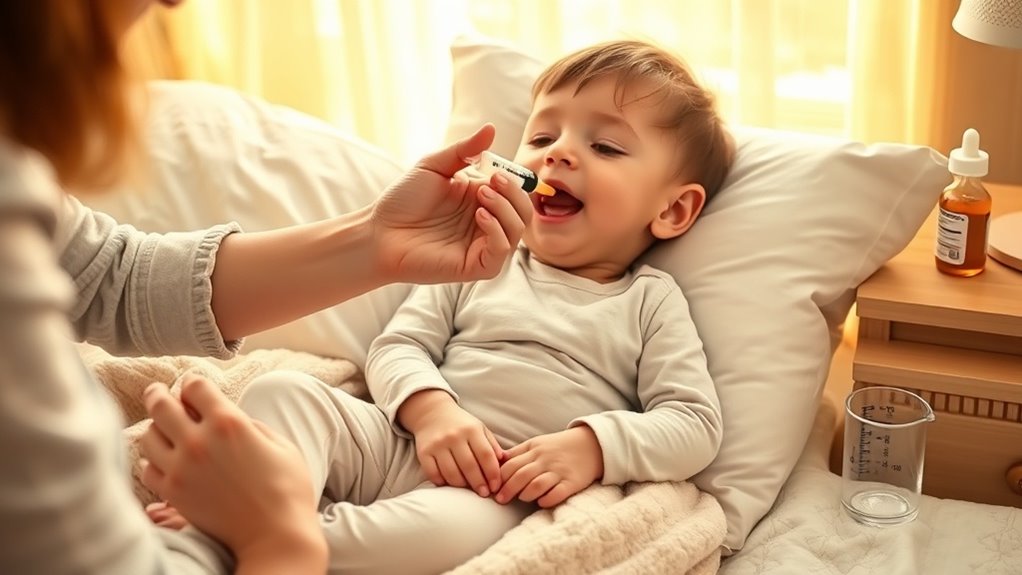
When your child’s discomfort becomes too much to manage with home remedies alone, over-the-counter pain relievers can provide significant relief. Acetaminophen and ibuprofen are safe options that’ll reduce pain and fever effectively.
Always follow these guidelines:
- Dose by weight, not age — Use the packaging chart or consult your pediatrician for accurate measurements
- Never give aspirin to children, as it’s linked to Reye’s syndrome
- Space doses properly — Wait 4-6 hours between acetaminophen doses and 6-8 hours for ibuprofen
- Track medication times to prevent accidental double-dosing
Contact your doctor if symptoms worsen despite medication. Time these medications before meals to help your child eat more comfortably, especially when painful mouth sores make swallowing difficult.
Keep Skin Lesions Clean and Protected
Keeping your child’s blisters clean prevents infection and promotes faster healing. You’ll want to wash affected areas gently with mild soap and water once or twice daily, then apply a thin layer of barrier cream to protect the skin.
Dress your child in soft, loose-fitting clothes that won’t rub against the sores and cause additional discomfort. For additional relief, you can add colloidal oatmeal to a lukewarm bath to soothe irritated skin on the hands and feet.
Gentle Cleaning Methods Daily
Proper cleaning of your child’s skin lesions helps prevent infection while promoting faster healing. You’ll want to establish a gentle routine that doesn’t cause additional discomfort.
Use these effective cleaning methods:
- Lukewarm water rinses – Avoid hot water that can irritate blisters and increase pain
- Mild, fragrance-free soap – Choose hypoallergenic options that won’t sting broken skin
- Soft cotton cloths – Pat gently rather than rubbing to prevent blister rupture
- Air-dry when possible – Let skin dry naturally or use gentle patting motions
Clean affected areas twice daily, especially after meals and diaper changes for younger children.
Barrier Creams and Ointments
After cleaning your child’s skin lesions, you’ll need to apply protective barriers that shield damaged areas from further irritation. Petroleum jelly creates an effective moisture seal over blisters and sores, preventing friction and bacterial contamination. You can also use zinc oxide cream, which soothes inflammation while forming a protective layer.
Apply these ointments gently with clean hands or cotton swabs, avoiding rubbing motions that might rupture blisters. Reapply after each handwashing or diaper change. Over-the-counter hydrocortisone cream may reduce itching, but consult your pediatrician before using it on broken skin or facial lesions.
Loose Clothing Reduces Irritation
While protective ointments shield your child’s skin from external irritants, the fabric touching those sensitive areas matters just as much. Tight clothing creates friction against blisters, increasing discomfort and potentially breaking open lesions.
Choose garments wisely during your child’s recovery:
- Select soft, breathable fabrics like cotton that won’t trap moisture or heat against inflamed skin
- Avoid elastic waistbands and cuffs that rub directly on common blister sites
- Size up temporarily to ensure clothing drapes loosely without constant contact
- Skip socks indoors when possible to let foot lesions breathe and heal faster
Comfortable clothing accelerates healing while reducing your child’s irritation.
Dress Your Child in Loose, Breathable Clothing
When your child’s skin is covered in painful blisters and sores, tight clothing can make them even more uncomfortable. Choose soft, loose-fitting garments made from natural fabrics like cotton. These materials allow air to circulate around affected areas, reducing friction and preventing additional irritation.
Avoid synthetic fabrics that trap heat and moisture, which can worsen discomfort. Opt for oversized pajamas, flowing dresses, or elastic-waist pants that won’t rub against blisters on hands, feet, or legs. Remove tags and seams that might irritate sensitive skin.
During warmer weather, dress your child in minimal, lightweight clothing to promote healing and keep them comfortable throughout their recovery. Maintaining home humidity levels between 30-50% can also help prevent the blisters from drying out and cracking, which may cause additional discomfort.
Create a Comfortable Rest Environment
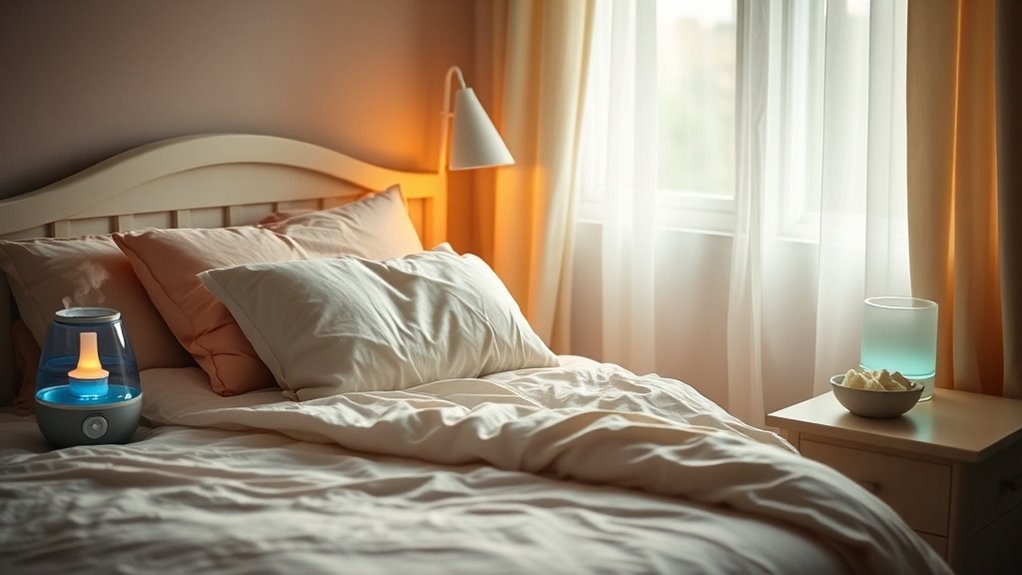
Your child’s bedroom should become a healing sanctuary where they can rest comfortably during their illness. Keep the room at a cool temperature since fever often accompanies hand, foot, and mouth disease.
Dim the lights to reduce stimulation and promote better sleep.
Essential comfort measures:
- Use soft, cotton bedding that won’t irritate painful skin lesions
- Place a humidifier nearby to ease throat discomfort and keep airways moist
- Keep water and approved pain medication within easy reach on the nightstand
- Maintain a quiet environment by limiting loud noises and minimizing visitors
Set your humidifier to maintain optimal 30-50% humidity levels throughout the night to prevent dry air from irritating your child’s throat and nasal passages.
These adjustments help your child heal faster while experiencing less discomfort.
Apply Cold Compresses to Affected Areas
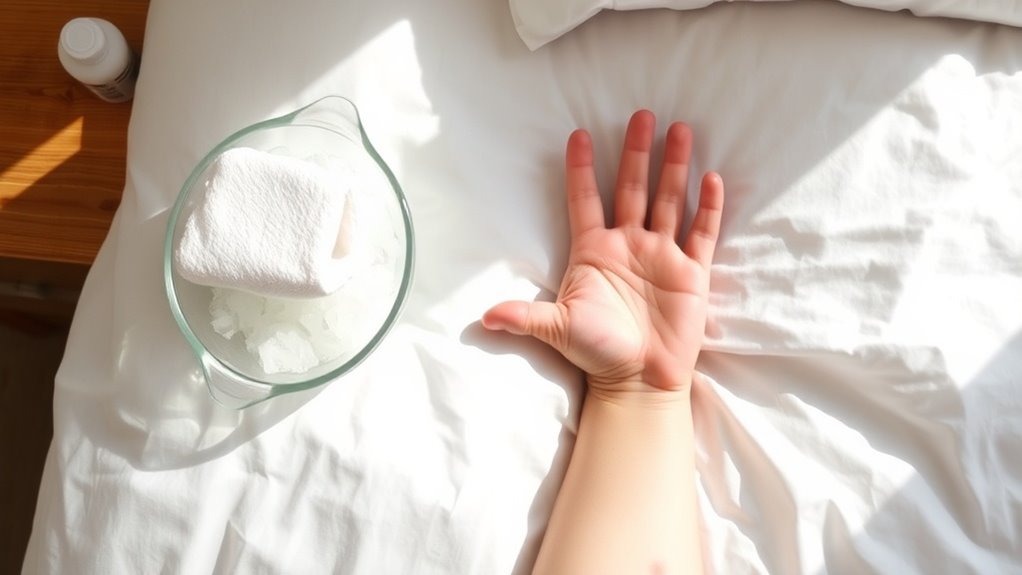
Beyond creating a restful space, you can provide direct relief to your child’s painful sores with cold compresses. Wrap ice packs in soft cloth and gently apply them to blisters on hands, feet, or mouth areas for 10-15 minutes. The cold numbs pain and reduces inflammation effectively. You’ll want to avoid direct ice contact with skin, which can cause damage.
Reapply compresses every few hours as needed. For mouth sores specifically, let your child suck on ice chips or frozen fruit popsicles. These cooling methods offer immediate comfort and help your little one feel better throughout their recovery.
Keep Your Child Hydrated Throughout the Day
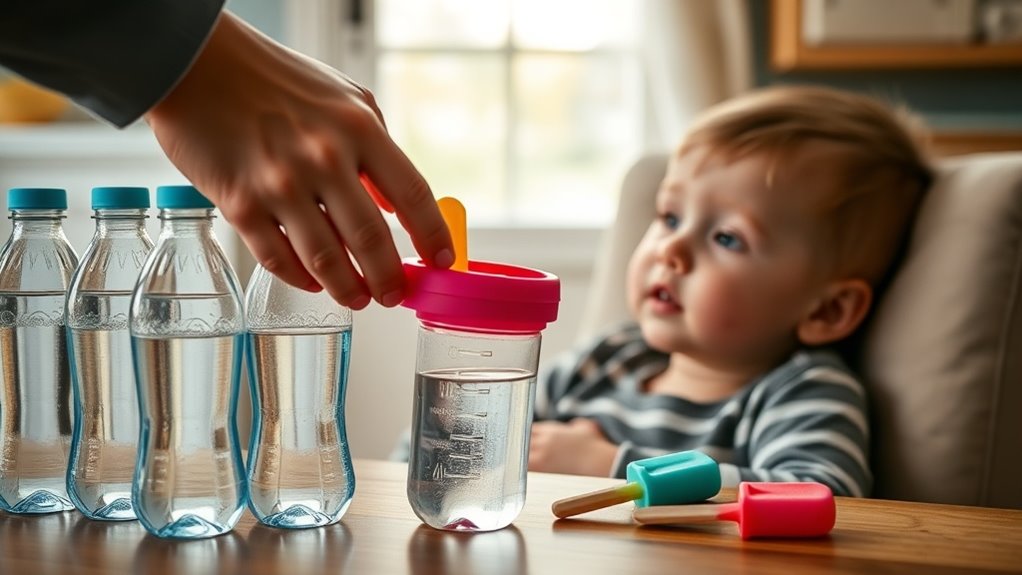
Pushing fluids becomes critical when your child has hand, foot, and mouth disease, as mouth sores often make swallowing painful and discourage drinking. Dehydration can quickly become a concern, so you’ll need creative strategies to encourage fluid intake.
Try these approaches:
- Offer cold liquids like ice water, popsicles, or smoothies that numb painful sores
- Use a straw to help liquid bypass the most sensitive areas
- Serve small amounts frequently rather than large quantities at once
- Avoid acidic drinks like orange juice that irritate mouth sores
Monitor your child’s urine output to ensure adequate hydration.