6 Psoriasis Care Tips for Managing Winter Flare-Ups
Wondering why your psoriasis seems to spiral out of control every winter? Cold weather disrupts your skin’s protective barrier while indoor heating strips away moisture—a perfect storm that intensifies inflammation and triggers those painful flare-ups you dread. This seasonal challenge affects most people with psoriasis because winter conditions accelerate moisture loss from your skin by up to 25%, making plaques more prone to cracking and irritation. Understanding what’s happening beneath the surface helps you get ahead of flare-ups before they take hold. You’ll discover why winter specifically targets psoriatic skin, which factors make it worse, and most importantly, six practical strategies to keep your symptoms under control when temperatures drop. Let’s break down what’s really happening.
Keep Your Skin Moisturized Throughout the Day
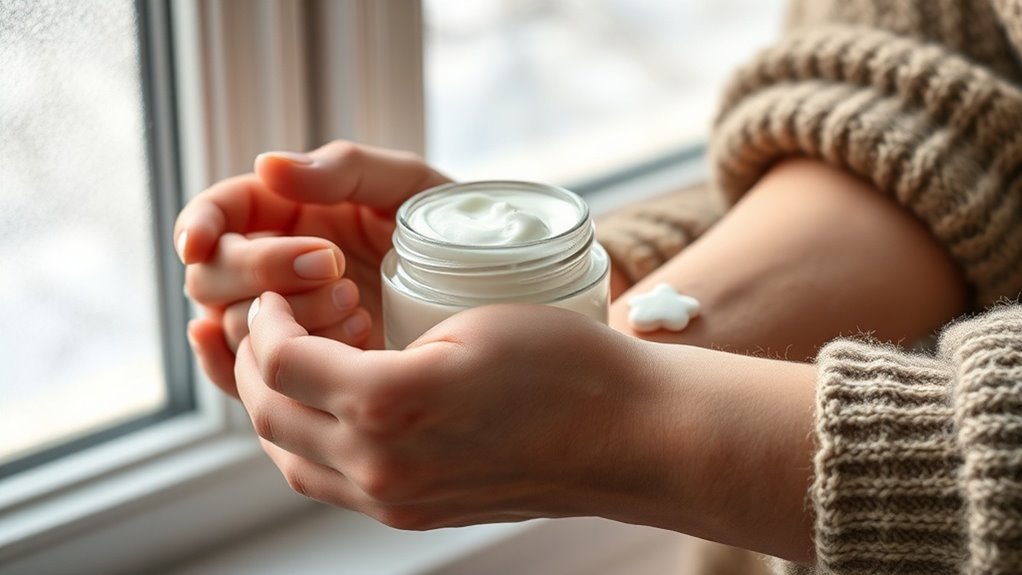
When temperatures drop and indoor heating systems activate, transepidermal water loss accelerates significantly in psoriatic skin, exacerbating plaque formation and increasing pruritus.
You’ll need to apply emollients containing ceramides, hyaluronic acid, or urea at least three times daily—immediately after bathing and throughout the day. Opt for ointment-based formulations over lotions, as they provide superior occlusive barriers. You should carry a travel-size moisturizer for workplace or outdoor application. Apply products while your skin’s still slightly damp to enhance absorption.
Consider prescription-strength emollients if over-the-counter options don’t provide adequate psoriasis relief. Don’t wait until visible scaling appears; preventive moisturization reduces flare severity. You can layer lighter hydrating serums beneath heavier creams for enhanced efficacy. This proactive approach maintains skin barrier integrity and minimizes inflammatory responses. Look for products with salicylic acid to help remove scales and further reduce inflammation during winter months.
Use a Humidifier to Combat Dry Indoor Air
Indoor heating systems significantly reduce ambient humidity levels, which exacerbates transepidermal water loss and compromises the skin barrier function in psoriasis patients. Installing a humidifier can restore moisture to the air and help maintain your skin’s hydration status during winter months.
You’ll need to select an appropriate device and maintain humidity levels between 30-50% to optimize therapeutic benefits without promoting mold growth. Low humidity is a common environmental trigger that can impair your skin’s ability to retain water and maintain its protective barrier, making humidification an essential component of winter psoriasis management.
Why Humidity Helps Psoriasis
Because heated indoor environments typically maintain relative humidity levels below 30%, they significantly compromise the skin’s natural barrier function and accelerate transepidermal water loss in psoriatic lesions. You’ll find that maintaining indoor humidity between 40-50% helps restore your stratum corneum’s moisture content, reducing plaque thickness and minimizing pruritus.
Adequate humidity levels enhance keratinocyte differentiation and support the lipid matrix within your epidermis. This creates conditions that reduce inflammation and prevent the rapid cell turnover characteristic of psoriasis. You’re essentially creating an environment where your skin doesn’t need to work as hard to maintain hydration.
The therapeutic effect becomes particularly evident when you combine humidification with your prescribed topical treatments, as moisturized skin demonstrates improved medication absorption and enhanced treatment efficacy for managing your psoriatic symptoms.
Choosing the Right Humidifier
Three primary humidifier types—evaporative, ultrasonic, and steam vaporizers—offer distinct advantages for managing psoriatic skin conditions during winter months. You’ll need to evaluate each option based on your specific dermatological needs and environmental factors.
| Humidifier Type | Therapeutic Benefits | Maintenance Requirements |
|---|---|---|
| Evaporative | Self-regulating humidity levels; prevents over-humidification | Weekly filter replacement; daily water changes |
| Ultrasonic | Cool-mist output reduces thermal irritation; quiet operation | Distilled water mandatory; daily cleaning prevents bacterial colonization |
| Steam Vaporizer | Eliminates 99% of waterborne pathogens; optimal moisture delivery | Mineral deposit removal every 3 days; burn risk mitigation |
Select units with built-in humidistats to maintain optimal humidity levels between 40-50%. You’ll achieve maximum symptom relief while preventing mold proliferation that can exacerbate inflammatory skin responses.
Optimal Humidity Level Guidelines
Your humidifier’s effectiveness depends entirely on maintaining indoor humidity between 30-50%, with psoriasis patients experiencing optimal symptom control at 45-50% relative humidity. Levels below 30% exacerbate transepidermal water loss and trigger plaque formation, while exceeding 50% promotes mold proliferation and dust mite activity.
Monitor your environment using a calibrated hygrometer:
- Position the device centrally in your primary living space, away from windows and moisture sources to ensure accurate readings
- Measure humidity twice daily during peak heating periods when indoor air becomes critically dry
- Adjust humidifier output incrementally based on readings, allowing 24 hours between modifications for environmental stabilization
Document correlation between humidity fluctuations and symptom severity to establish your personalized therapeutic range within recommended parameters.
Avoid Hot Showers and Baths
While hot showers may feel comforting during cold weather, water temperatures above 98°F (37°C) strip your skin’s natural lipid barrier and exacerbate psoriatic lesions.
You’ll achieve better symptom management by limiting bath and shower duration to 5-10 minutes using lukewarm water. This temperature-controlled approach prevents trans-epidermal water loss and reduces the inflammatory cascade that triggers psoriasis flare-ups.
After bathing, applying anti-inflammatory properties through essential oils like peppermint or chamomile can help soothe irritated skin and reduce flare-up severity.
Hot Water Damages Skin
Hot water strips your skin’s natural lipid barrier, exacerbating psoriasis symptoms through increased inflammation and moisture loss. When you expose psoriatic lesions to temperatures exceeding 98°F, you’ll trigger vasodilation and histamine release, intensifying pruritus and erythema. This thermal stress compromises your stratum corneum’s integrity, accelerating transepidermal water loss.
To protect your skin barrier, implement these evidence-based modifications:
- Limit water temperature to lukewarm (92-95°F) to preserve ceramides and natural moisturizing factors
- Restrict bathing duration to 5-10 minutes to minimize epidermal dehydration
- Apply emollients within 3 minutes post-bathing to maximize humectant absorption and occlusion
You’ll notice reduced scaling and inflammation when you consistently maintain cooler water temperatures. This simple intervention significantly improves treatment outcomes when combined with your prescribed topical therapies.
Optimal Temperature Guidelines
Maintaining water temperature between 92-95°F (33-35°C) represents the therapeutic sweet spot for psoriasis management during bathing. This range cleanses effectively while preserving your skin’s lipid barrier and natural moisture content. You’ll need a waterproof thermometer to verify temperatures accurately, as your perception becomes unreliable during winter months when you’re seeking warmth.
Limit your bathing duration to 10-15 minutes maximum. Extended exposure, even at optimal temperatures, compromises barrier function and triggers transepidermal water loss. Set a timer to maintain discipline.
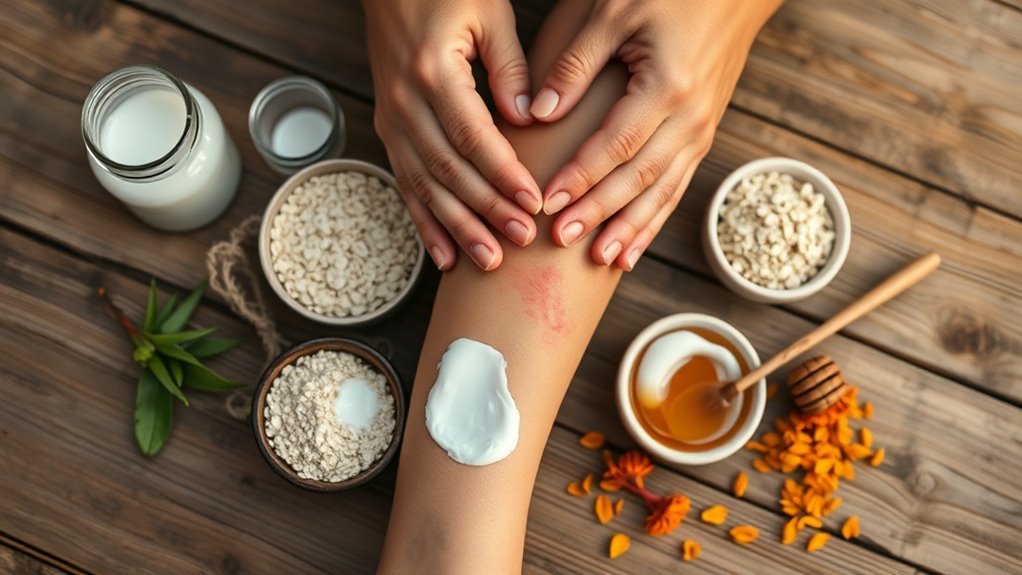
If lukewarm water feels uncomfortable initially, gradually decrease temperature over several days rather than making abrupt changes. Your tolerance will adapt. Add colloidal oatmeal or prescribed bath oils to enhance therapeutic benefits without requiring higher temperatures. These adjuncts provide anti-inflammatory effects while supporting hydration.
Shorter Bath Duration Benefits
Beyond temperature control, duration itself functions as a critical variable in preventing psoriasis exacerbations during winter bathing. You’ll optimize skin barrier preservation by limiting exposure to 5-10 minutes maximum. Prolonged water contact strips essential lipids and natural moisturizing factors, compromising your stratum corneum integrity.
Evidence supports these time-restricted bathing protocols:
- Lipid retention: Brief exposure minimizes trans-epidermal water loss by preserving ceramides and cholesterol
- Barrier function: Reduced contact time prevents excessive keratinocyte hydration and subsequent dehydration cycles
- Inflammation control: Shorter duration limits histamine release and inflammatory mediator activation
You’ll maintain therapeutic outcomes by immediately applying emollients post-bathing within three minutes. This pat-dry-and-moisturize technique traps residual hydration while reinforcing your compromised epidermal barrier during winter’s challenging conditions.
Protect Your Skin From Cold Weather Exposure
Cold weather strips moisture from your skin’s outer barrier, triggering inflammatory responses that can worsen psoriatic lesions. You’ll need to create a protective shield between your skin and harsh environmental conditions.
Wear layered clothing made from soft, breathable fabrics like cotton to minimize irritation against affected areas. Cover exposed skin with scarves, gloves, and hats when venturing outdoors. Avoid wool and synthetic materials that can aggravate plaques through friction.
Apply a thick emollient barrier cream to vulnerable areas 15 minutes before cold exposure. This occlusive layer prevents transepidermal water loss and reduces sensitivity to temperature changes.
Limit outdoor exposure during peak cold hours, typically early morning and evening. When you’re outside, protect your face with petroleum-based ointments on particularly sensitive patches. Consider using a humidifier to maintain indoor humidity levels between 30-50% to counteract the drying effects of indoor heating systems.
Maintain Your Treatment Plan During Winter Months
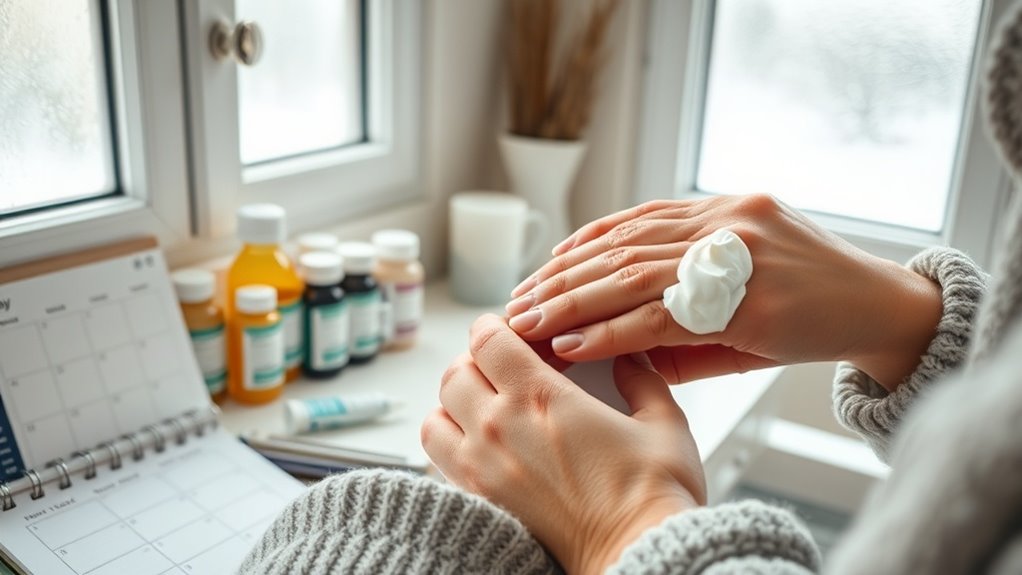
Don’t scale back your prescribed therapies when temperatures drop, as treatment discontinuity directly correlates with increased disease severity during winter months. You’ll need consistent medication adherence to maintain remission and prevent exacerbations triggered by environmental stressors.
Winter-specific treatment considerations include:
- Phototherapy scheduling: Coordinate narrowband UVB sessions before peak xerosis develops, as winter conditions compromise epidermal barrier function and enhance therapeutic response
- Biologic administration timing: Maintain your injection schedule despite holiday travel or routine disruptions, as lapses reduce drug efficacy and increase immunogenicity risk
- Topical application frequency: Increase corticosteroid or vitamin D analog applications during symptomatic periods while monitoring for adverse effects
Document symptom changes and treatment responses to facilitate dosage adjustments. Contact your dermatologist if current regimens prove insufficient for controlling winter-triggered inflammation. Remember that overactive sebaceous glands can contribute to both scalp conditions and psoriasis flare-ups, so maintaining consistent care routines becomes even more critical during winter when environmental factors stress the skin.
Stay Hydrated and Support Your Immune System
While external moisturization addresses epidermal barrier dysfunction, adequate hydration supports systemic immune regulation and maintains homeostatic mechanisms that modulate psoriatic inflammation. You’ll need to consume 2-3 liters of water daily to optimize cellular function and cytokine regulation. Winter’s reduced humidity increases transepidermal water loss, necessitating increased fluid intake. Consistent water intake is crucial for optimal gut motility and digestive health, which can indirectly influence inflammatory conditions throughout the body.
| Immune Support Strategy | Clinical Benefit |
|---|---|
| Vitamin D₃ supplementation (2000-4000 IU) | Modulates T-cell differentiation and reduces inflammatory cytokines |
| Omega-3 fatty acids (2-3g EPA/DHA) | Decreases TNF-α and IL-17 production |
| Adequate sleep (7-9 hours) | Maintains cortisol regulation and immune homeostasis |
You should monitor your hydration status through urine color and avoid excessive caffeine or alcohol, which impair barrier function and exacerbate inflammation.
Frequently Asked Questions
Can Stress During the Holiday Season Trigger Psoriasis Flare-Ups?
Yes, holiday stress can trigger your psoriasis flare-ups by activating inflammatory pathways. You’ll need to implement stress-reduction techniques like cognitive-behavioral therapy, mindfulness meditation, or prescribed anxiolytics to help control symptoms and prevent exacerbations during this period.
Are Certain Winter Foods Known to Worsen Psoriasis Symptoms?
Yes, you’ll want to avoid inflammatory foods like red meat, dairy, refined sugars, and alcohol during winter. These can trigger systemic inflammation and worsen your psoriasis symptoms. Instead, adopt an anti-inflammatory diet rich in omega-3s and vegetables.
Should I Adjust My Psoriasis Medication Dosage During Winter Months?
Don’t adjust your medication dosage independently. You’ll need to consult your dermatologist first, as they’ll evaluate your symptoms and may recommend treatment modifications, such as increasing topical corticosteroid strength or adding phototherapy during winter flare-ups.
Does Indoor Heating Affect Psoriasis Differently Than Cold Outdoor Air?
Yes, indoor heating affects your psoriasis differently. It depletes ambient moisture, compromising your skin’s barrier function and triggering xerosis-related flares. Cold outdoor air causes vasoconstriction and reduces blood flow. You’ll need targeted interventions for both environmental stressors.
Can Vitamin D Deficiency in Winter Make Psoriasis Worse?
Yes, you’ll likely experience worsened psoriasis symptoms with winter vitamin D deficiency. Low vitamin D levels impair immune regulation and keratinocyte proliferation. You should consider supplementation (1,000-2,000 IU daily) or phototherapy to maintain therapeutic levels and reduce inflammation.