
6 Foot Remedies for Tired, Achy Feet After Long Days
Your feet are screaming after another endless day on your feet, and you’d do anything for relief that doesn’t require leaving the couch. The good news: simple home remedies using ice, elevation, and gentle stretches may help ease that throbbing ache in as little as 15-20 minutes. You don’t need fancy equipment or expensive treatments—just a few everyday items and techniques that target tired muscles and inflammation. Here’s what actually delivers results when your feet need rescue fast.
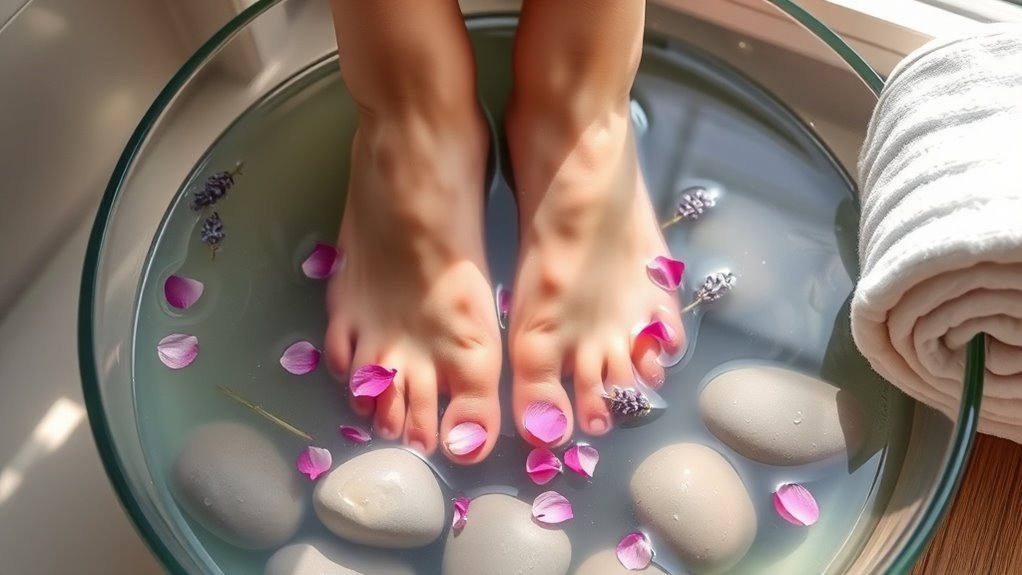
Soak Your Feet in Warm Epsom Salt Water

After a long day on your feet, few remedies provide faster relief than an Epsom salt soak. Fill a basin with warm water and add half a cup of Epsom salt, stirring until dissolved. Submerge your feet for 15-20 minutes while the magnesium sulfate reduces inflammation and eases muscle tension.
The warm temperature increases blood circulation, promoting faster healing. You’ll notice swelling decrease and pain diminish as the minerals work their magic. For enhanced therapeutic benefits, add 4-5 drops of peppermint or eucalyptus essential oils per gallon of water to invigorate tired feet. Among effective foot remedies, this simple treatment stands out for its accessibility and immediate results. Pat your feet dry afterward and apply moisturizer for added comfort.
Roll Out Tension With a Frozen Water Bottle
When your feet ache from standing or walking, nothing targets plantar fasciitis and foot fatigue quite like a frozen water bottle massage. Fill a standard water bottle and freeze it completely.
While seated, place the bottle under your arch and roll it back and forth for five to ten minutes per foot. The ice reduces inflammation while the rolling motion releases tight fascia and muscles.
This technique works especially well first thing in the morning or after work. You’ll feel immediate relief as the cold penetrates deep tissue and the pressure loosens stubborn knots throughout your sole. For additional relief, follow up with a Listerine foot soak that combines antiseptic properties with warm water to combat bacteria while soothing tired muscles.
Elevate Your Legs Against a Wall
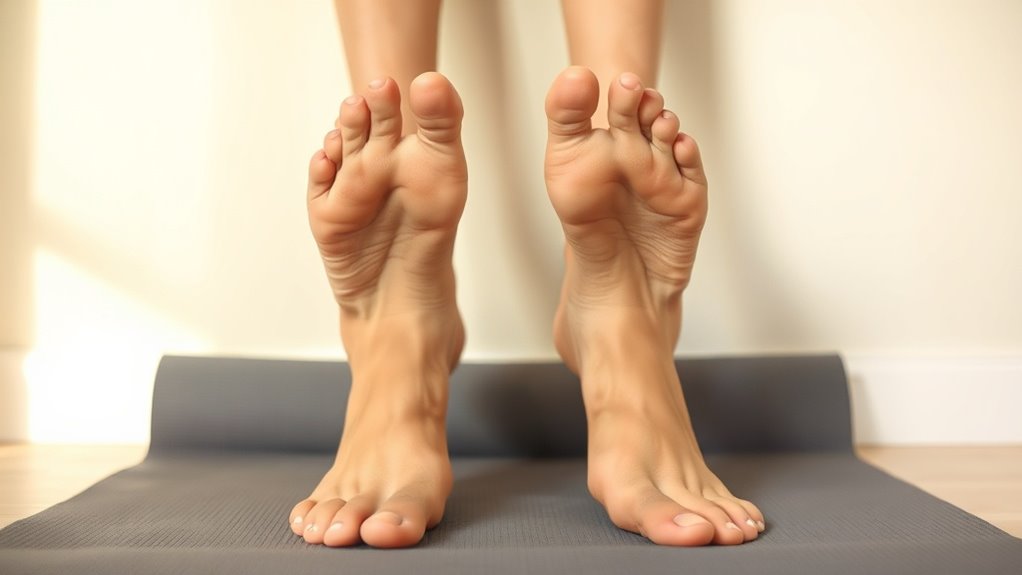
If your feet throb after hours on your legs, the legs-up-the-wall pose delivers powerful relief by reversing blood flow and draining excess fluid. Lie flat on your back near a wall, then swing your legs up so they rest vertically against it. Stay in this position for 10-15 minutes while gravity does its work.
Key benefits you’ll experience:
- Reduces swelling in your feet and ankles
- Alleviates pressure on tired muscles and joints
- Calms your nervous system while promoting relaxation
This simple restorative pose requires no equipment and provides immediate comfort after demanding days. For an additional treatment that improves foot circulation while softening rough skin, consider following up with a Listerine foot soak containing essential oils like menthol and eucalyptol.
Massage Your Feet With Essential Oils
A targeted foot massage with essential oils transforms ordinary self-care into therapeutic treatment that melts away tension and revives exhausted feet. Mix three drops of peppermint or lavender oil with a tablespoon of carrier oil like coconut or joba.
Sit comfortably and apply the blend to one foot, using firm thumb pressure along your arch from heel to toes. Knead the ball of your foot in circular motions, then gently pull and rotate each toe. Work around your ankle using small circles. Repeat on the other foot.
You’ll notice immediate relief and improved circulation throughout your lower legs. For an alternative treatment that tackles fungal issues and softens calluses, consider a Listerine foot soak combining the mouthwash’s antiseptic ingredients with warm water and vinegar.
Stretch Your Calves and Arches
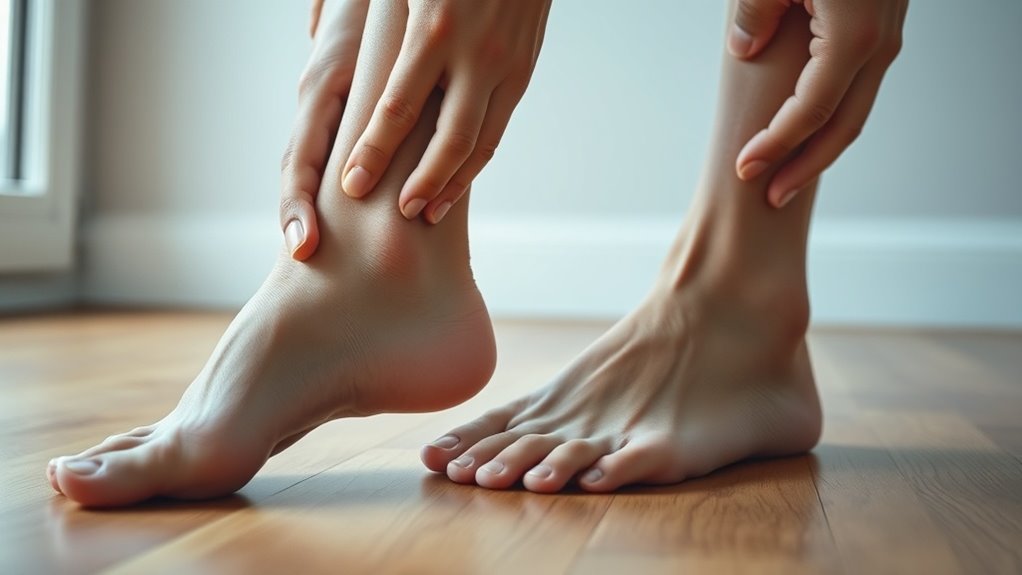
Stretching your calves and arches provides immediate relief for tired feet while preventing future discomfort. You’ll want to focus on basic calf stretches against a wall, followed by targeted toe and arch exercises that increase flexibility.
The best time to stretch is after a warm bath or at the end of your day when your muscles are already warm and pliable. Start with 5-10 repetitions of each stretch and avoid pushing through any sharp pain to prevent injury.
Basic Calf Stretch Techniques
Tight calf muscles often contribute to foot pain because they pull on your Achilles tendon and limit ankle mobility. You’ll find relief by performing simple stretches that target both the gastrocnemius and soleus muscles.
Basic calf stretches include:
- Wall stretch – Place your hands against a wall, step one foot back, keep your heel down, and lean forward for 30 seconds
- Step stretch – Stand on a stair’s edge with your heels hanging off, then lower them below the step level
- Seated towel stretch – Sit with legs extended, loop a towel around your foot, and gently pull your toes toward you
Toe and Arch Exercises
While calf stretches address the back of your lower leg, your feet need direct attention too. Strengthen your arches by placing a towel on the floor and using your toes to scrunch it toward you. This simple exercise activates muscles that support your foot’s structure.
For flexibility, try toe spreads—actively separate each toe for five seconds, then relax. You can also practice picking up small objects like marbles with your toes. These movements improve circulation, reduce cramping, and build the intrinsic foot muscles that prevent fatigue.
Perform these exercises daily, especially after standing for extended periods.
Best Time to Stretch
Timing makes a significant difference in how effectively your stretches relieve foot pain. You’ll get the best results when you stretch at strategic moments throughout your day.
Morning stretches prepare your feet for activity, while evening sessions help release accumulated tension.
Optimal stretching times:
- After waking up – Gentle stretches loosen stiff muscles and improve circulation before you stand
- Post-work or activity – Target built-up tightness when your muscles are warm and responsive
- Before bed – Reduce overnight cramping and promote recovery while you sleep
Hold each stretch for 30 seconds, breathing deeply to maximize tension release and pain relief.
Apply Ice Packs to Reduce Inflammation

Ice packs offer one of the quickest ways to soothe inflamed, aching feet after a long day. Apply ice for 15-20 minutes at a time, placing a thin towel between the pack and your skin to prevent frostbite. Focus on areas where you feel the most discomfort, such as your heels, arches, or the balls of your feet.
The cold temperature constricts blood vessels, reducing swelling and numbing pain signals. You’ll notice relief within minutes. Repeat this treatment several times throughout the evening, allowing 45-minute breaks between applications to let your skin return to normal temperature. For additional relief, consider following up with a Listerine foot soak, which contains antiseptic properties that can help eliminate odor-causing bacteria while providing a cooling sensation.