5 Ways Baking Soda for Hydrangeas Can Boost Garden Health
Tired of watching your hydrangeas battle fungal diseases or produce disappointing blooms? This simple baking soda solution costs pennies to make and works as a natural fungicide and soil amendment for healthier plants. You’ll mix just 1 tablespoon of baking soda with water to create five different garden treatments—no expensive chemicals needed! Ready to transform your hydrangeas naturally? Here’s exactly how to use baking soda to boost your garden’s health.
Adjust Soil Ph for Vibrant Pink and Blue Blooms
[SUBHEADING IMAGE SLOT 0]
How does soil pH fundamentally alter hydrangea bloom coloration? Aluminum availability directly determines pigmentation in Hydrangea macrophylla cultivars. Acidic soils (pH 5.0-5.5) facilitate aluminum uptake, producing blue flowers, while alkaline conditions (pH 6.0-6.5) restrict absorption, yielding pink blooms.
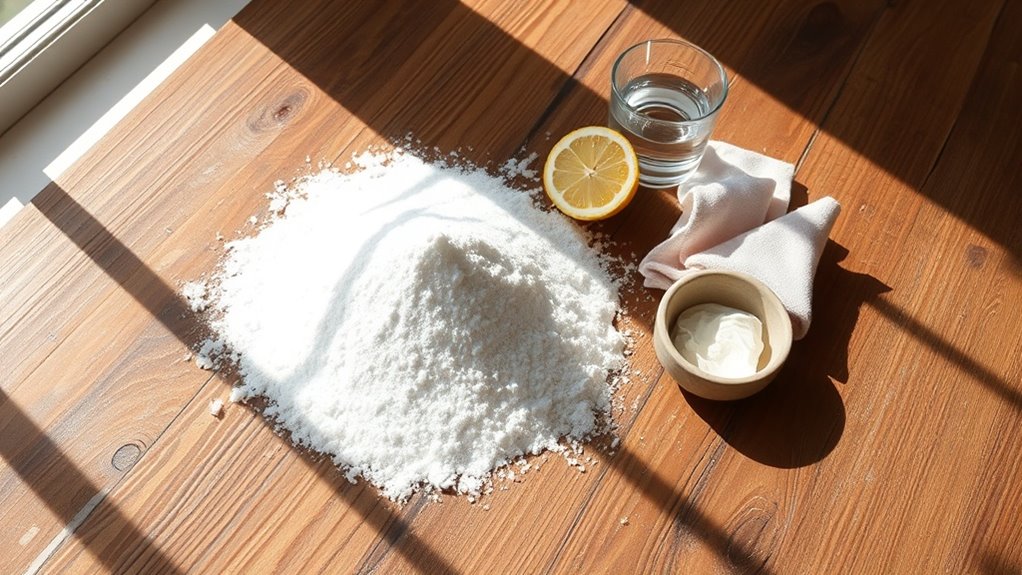
You can utilize baking soda for hydrangeas to increase soil alkalinity systematically. Dissolve one tablespoon of sodium bicarbonate per gallon of water, applying monthly during the growing season. This method raises pH incrementally—typically 0.5 units over 60-90 days.
Monitor soil pH biweekly using calibrated testing equipment. Excessive application of baking soda for hydrangeas can induce sodium accumulation, compromising soil structure and nutrient availability. Target pH adjustments should remain within species-specific tolerance ranges. White and green hydrangea varieties remain unaffected by pH manipulation, as they lack anthocyanin pigments responsive to aluminum concentration. Beyond pH adjustment, baking soda serves as a natural fungicide for preventing powdery mildew on hydrangea foliage.
Prevent and Treat Powdery Mildew Naturally
Beyond pH management, baking soda serves as an effective fungicide against powdery mildew (Erysiphe polygoni, Golovinomyces cichoracearum), a common foliar pathogen affecting hydrangeas. You’ll achieve ideal efficacy by creating a solution of 1 tablespoon sodium bicarbonate per gallon of water, adding ½ teaspoon horticultural oil to enhance leaf adhesion and spore penetration.
Apply biweekly during periods of high humidity (>60% RH) when infection pressure peaks. The elevated pH at the leaf surface inhibits conidial germination and mycelial growth. Spray thoroughly, targeting both adaxial and abaxial leaf surfaces during early morning hours to prevent phytotoxicity from rapid drying.
Begin applications preventatively when temperatures reach 60-80°F, the most suitable range for pathogen development. This treatment demonstrates 70-85% disease suppression in field trials when applied consistently. For existing fungal infections, increase the concentration to 2 tablespoons per gallon to combat established disease more aggressively.
Enhance Nutrient Absorption in Your Hydrangeas
[SUBHEADING IMAGE SLOT 2]
While baking soda doesn’t directly supply essential macronutrients, its application can optimize nutrient bioavailability through localized pH modulation in the rhizosphere. You’ll improve phosphorus and micronutrient uptake when soil pH shifts toward neutral ranges.
Implement these evidence-based strategies:
- Conduct soil testing to establish baseline pH levels before applying 1 tablespoon of baking soda per gallon of water monthly
- Monitor foliar chlorosis patterns indicating iron deficiency, which decreases as alkalinity facilitates chelation processes
- Apply during active growth phases when root systems demonstrate maximum cation exchange capacity
- Combine with organic amendments like compost to buffer pH changes and prevent sodium accumulation
You’ll observe enhanced vigor within 3-4 weeks as improved nutrient uptake stimulates chlorophyll synthesis and metabolic efficiency in your hydrangeas. Beyond garden applications, baking soda’s antimicrobial properties make it valuable for maintaining clean tools and equipment used in hydrangea care.
Create a Natural Fungicide Spray Solution
Because fungal pathogens like Erysiphe polygoni and Cercospora species thrive in acidic conditions, you can leverage baking soda’s alkaline properties to create an effective antifungal treatment for your hydrangeas. Mix one tablespoon of sodium bicarbonate with one gallon of water, adding half a teaspoon of horticultural oil to enhance foliar adhesion and spray penetration.
Apply this solution bi-weekly during periods of high humidity when fungal proliferation peaks. The elevated pH at the leaf surface inhibits spore germination and mycelial growth. Target both adaxial and abaxial leaf surfaces, ensuring complete coverage of symptomatic areas.
Studies demonstrate that sodium bicarbonate solutions maintain efficacy at concentrations between 0.3-0.5%, effectively managing powdery mildew while minimizing phytotoxicity risks when applied during cooler morning hours. Similar to its use in skincare applications, baking soda’s natural antibacterial properties help combat harmful microorganisms that threaten plant health.
Improve Overall Soil Health and Plant Vigor
[SUBHEADING IMAGE SLOT 4]
Baking soda applications extend beyond foliar disease management to influence the rhizosphere environment and nutrient bioavailability in hydrangea cultivation. Strategic sodium bicarbonate amendments ideal soil conditions through multiple mechanisms:
-
pH Moderation: Buffering capacity stabilizes fluctuating soil pH levels, particularly in acidic substrates, ensuring consistent nutrient uptake patterns.
-
Microbial Activity Enhancement: Low-concentration applications (0.5-1%) stimulate beneficial bacterial populations while suppressing pathogenic organisms in the root zone.
-
Sodium-Potassium Balance: Judicious use prevents excessive sodium accumulation that compromises cellular osmotic regulation and transpiration efficiency.
-
Phosphorus Mobilization: Alkalizing effects increase phosphate solubility in moderately acidic soils, enhancing root development and bloom production.
The natural antifungal properties of baking soda also help protect root systems from harmful fungal pathogens that commonly affect hydrangeas in moist soil conditions. You’ll achieve perfect results by limiting applications to 2-3 treatments annually, preventing sodium toxicity while maximizing physiological benefits.