4 Natural Sleep Remedies for Better Rest This January
Staring at the ceiling at 2 AM while your mind races through tomorrow’s to-do list? January’s short days and lingering holiday stress can seriously mess with your sleep—but you don’t need prescription pills to fix it. Four simple, natural remedies may help you fall asleep faster and wake up refreshed, often working within 30-60 minutes of trying them. These research-backed strategies work with your body’s own sleep signals, not against them. Here’s what actually delivers results without the next-day grogginess.
Establish a Consistent Evening Routine With Herbal Teas

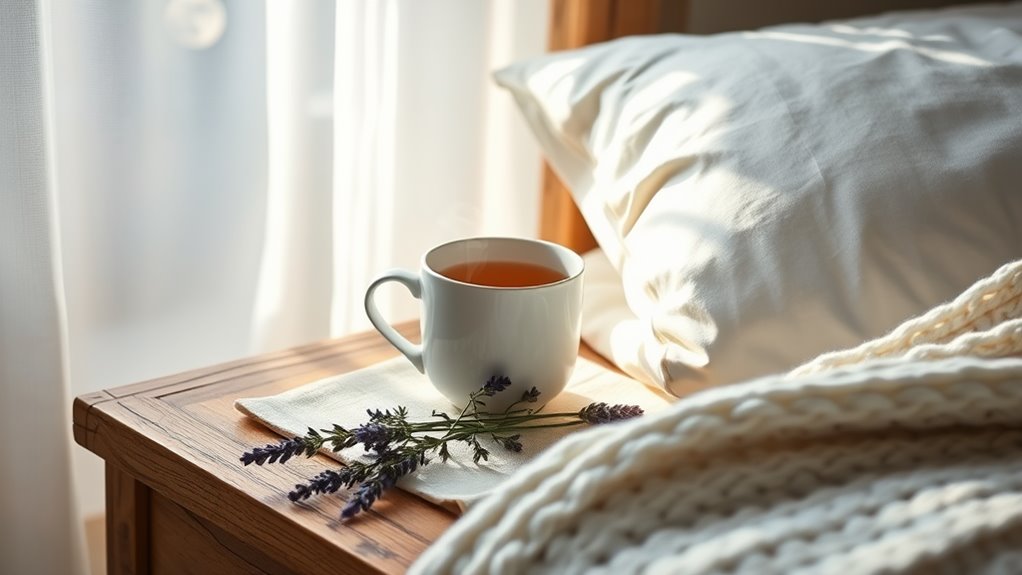
When you sip a warm cup of chamomile or valerian root tea each evening at the same time, you’re doing more than just enjoying a pleasant beverage—you’re training your body to recognize sleep signals. These natural sleep remedies work by activating your parasympathetic nervous system, which promotes relaxation.
Set a specific time, like 9 PM, to brew your tea. The ritual itself becomes a powerful cue for your brain to start winding down. Choose caffeine-free options such as passionflower, lavender, or lemon balm. Consistency is key—stick with your routine for at least two weeks to establish the habit. Both chamomile and valerian interact with GABA receptors in your brain to boost calming neurotransmitters that help you drift off to sleep more easily.
Optimize Your Sleep Environment for Winter Months
As temperatures drop and daylight dwindles, your bedroom needs specific adjustments to maintain optimal sleep conditions.
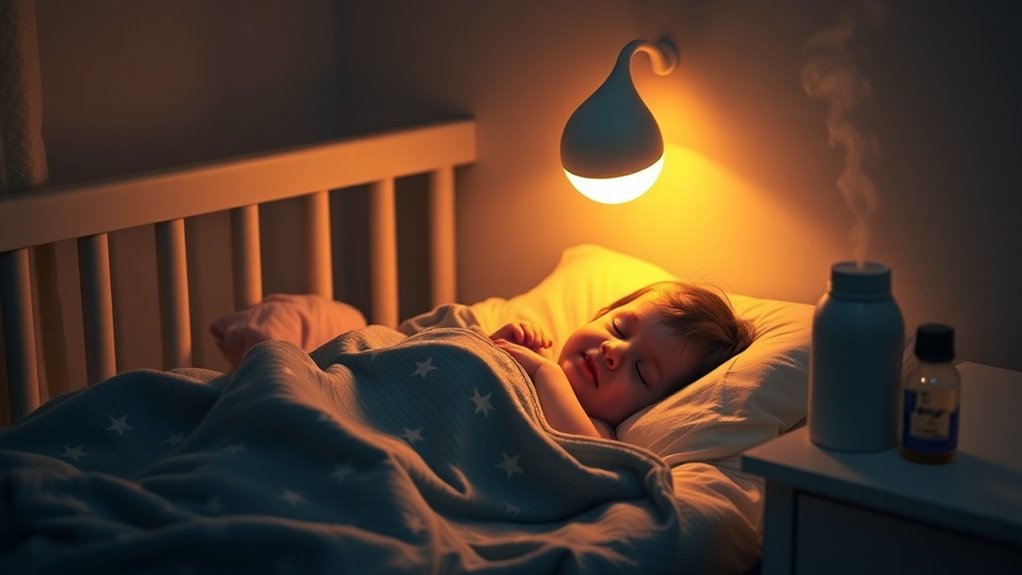
Keep your room between 60-67°F, as cooler temperatures promote deeper rest. Install blackout curtains to combat early winter darkness and block streetlight glare from snow. Use a humidifier to counteract dry indoor air that irritates airways and disrupts breathing.
Layer breathable bedding you can adjust throughout the night—thermal sheets topped with lightweight blankets work better than heavy comforters alone. Position your bed away from drafty windows and radiators to avoid temperature fluctuations that fragment sleep cycles. Consider using a white noise machine to mask disruptive sounds from heating systems and winter storms that commonly interrupt sleep during colder months.
Practice Meditation and Breathing Exercises Before Bed

While a well-prepared bedroom sets the stage for rest, your mental state at bedtime determines how quickly you’ll fall asleep. Meditation and breathing exercises calm racing thoughts and lower cortisol levels.
Try these techniques tonight:
- 4-7-8 breathing: Inhale for 4 counts, hold for 7, exhale for 8
- Body scan meditation: Progressively relax each muscle group from toes to head
- Box breathing: Inhale, hold, exhale, and pause for 4 counts each
- Guided sleep meditation: Use apps like Calm or Headspace for 10-minute sessions
Practice consistently for two weeks to see results. Establishing consistent sleep patterns of 7-9 hours nightly supports your body’s natural rejuvenation processes and overall health.
Use Essential Oils and Aromatherapy for Relaxation
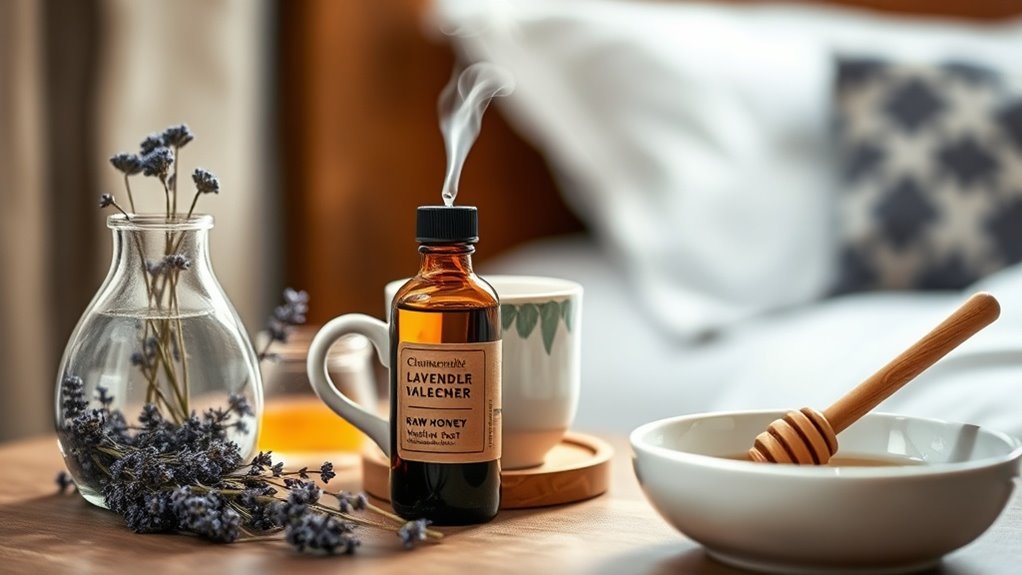
Certain scents can trigger your brain’s relaxation response within minutes of inhalation. Lavender oil reduces cortisol levels and slows heart rate, making it particularly effective for sleep. You can add 3-5 drops to a diffuser an hour before bed or apply diluted oil to your wrists and temples.
Chamomile and bergamot oils also promote calmness. If you don’t have a diffuser, place drops on your pillowcase or add them to a warm bath. Keep oils away from eyes and always dilute them with a carrier oil before skin application. Consistency amplifies their effectiveness over time.
The olfactory system directly influences the limbic system, which regulates both emotions and sleep, explaining why aromatherapy can be so effective for improving rest.